
Buttered Venison Steak
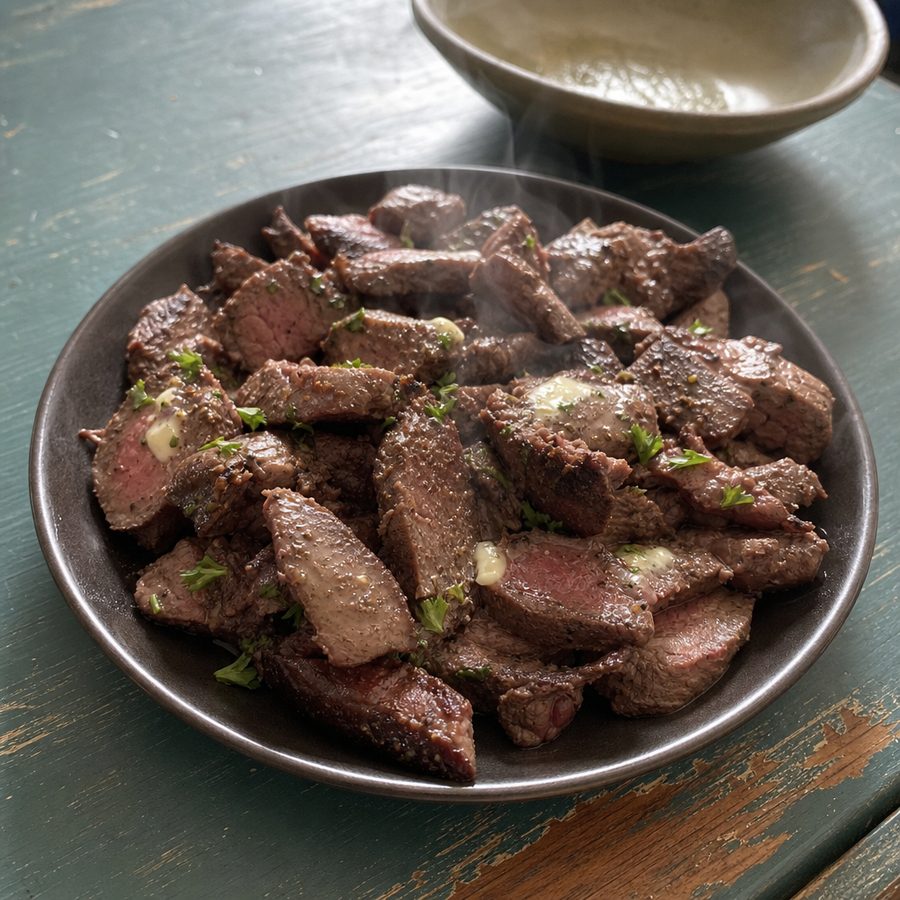
Venison steak seared hard for a deep brown crust, then basted in foaming butter and sliced thin, with just enough salt to bring the meat forward.
Why You'll Love This Recipe
This is a fast, honest plate of meat for anyone who wants a serious amount of protein with almost nothing standing between them and the flavor of the meat. Venison is a deeply savory red meat, and treating it simply, with a hot sear, good butter, and salt, lets its clean, mineral character come through. It suits a weekday lunch when you want something substantial and quick, and it suits anyone cooking their way through a wild-game harvest who does not want to bury it under a heavy sauce.
The technique is what makes it work, because venison punishes overcooking. Searing in a very hot dry pan builds a browned crust through the Maillard reaction, which is where much of the roasted, meaty flavor lives, and it happens fast so the inside stays rosy and tender. Finishing with a butter baste adds richness that venison does not have on its own; the fat carries flavor across the surface and rounds out the meat's edge. Pulling the steak at medium-rare and slicing thin against the grain are the two moves that keep every bite tender rather than dry and tight.
Venison on its own is spare, and the butter is what rounds it out into something that eats like a full meal. Venison is naturally full of iron and B vitamins, and the butter supplies the richness and staying power that keep you full through the afternoon. It is a plainly nourishing plate: warm, savory, and simple, the kind of food that leaves you satisfied without feeling heavy.
Ingredients
- 1 3/4 lb venison steak
- 5 1/2 tbsp butter
- 3/4 tsp salt
Instructions
- Salt and temper the meat: Pat the venison steak dry on both sides with a paper towel, then salt it evenly all over. Let it sit on a plate at room temperature for about 30 minutes so it cooks more evenly and takes on a better crust.
- Heat the skillet: Set a heavy skillet, ideally cast iron, over high heat and let it get very hot, until a drop of water flicked onto the surface skitters and vanishes almost instantly. A hot pan is what gives you a browned crust instead of gray, steamed meat.
- Sear the steak: Lay the venison into the dry hot skillet away from you and leave it undisturbed for 2 to 3 minutes, until the underside is deeply browned. Flip once and sear the second side another 2 to 3 minutes. Because venison overcooks quickly, pull it at medium-rare; an instant-read thermometer in the thickest part should read about 125 to 130°F (52 to 54°C), and the meat will climb a few degrees while it rests.
- Baste with butter: Lower the heat to medium so the butter will not burn, then add the butter to the skillet. As it melts and foams, tilt the pan slightly and spoon the butter over the steak continuously for about a minute, coating the surface and picking up the browned flavor from the pan.
- Rest the steak: Transfer the venison to a cutting board and let it rest, loosely tented, for 5 minutes. Resting lets the muscle fibers relax and settle so the slices stay moist rather than shedding juice the moment you cut.
- Slice and serve: Slice the venison thin against the grain, that is, across the direction the muscle fibers run, which shortens each fiber and keeps every bite tender. Spoon any butter left on the board over the slices and serve warm.
Variations
- Swap the game for beef or bison: Use a beef or bison steak in place of the venison and cook it the same way. Both are a little more forgiving than venison, so watch the internal temperature and still pull them at medium-rare.
- Finish with ghee: Baste with ghee instead of butter for a nuttier, more browned flavor and a higher smoke point. Ghee is still made from dairy, so this keeps the same makeup as the original.
- Top with a fried egg: Crown the sliced venison with a runny fried egg cooked in butter so the yolk becomes a rich sauce for the meat. This adds egg.
- Melt hard cheese over the slices: Lay thin shavings of a hard aged cheese over the hot sliced venison so it softens against the warm meat. This adds dairy.
- Sear in tallow, baste in butter: Start the sear in a film of beef tallow for an even more roasted crust, then finish the baste with butter as written. This leans on rendered animal fat and keeps the dish rich and meaty.
Storage & Leftovers
Store leftover sliced venison in an airtight container in the refrigerator for up to 3 days. Keep any butter from the pan with it, since that fat helps protect the meat from drying out in cold storage.
Reheat gently, because venison turns tough and dry when it is blasted with high heat a second time. Warm the slices briefly in a skillet over low heat with a little butter just until they lose their chill, or eat them cold; already cooked venison reheated hard will overshoot and toughen quickly.
To get ahead, salt the raw steak and keep it uncovered on a rack in the refrigerator up to a day in advance. The surface dries slightly, which gives you an even better crust when you sear, and you only need to temper and cook it when you are ready to eat.
Notes & Tips
- Choose the right cut: Backstrap and loin steaks are the most tender and forgiving for a quick sear. If you are working with a tougher cut like a leg steak, slice it especially thin against the grain after resting to keep it tender.
- Use a thermometer: Venison gives you a narrow window between perfect and overdone. An instant-read thermometer pulled at about 125 to 130°F (52 to 54°C) for medium-rare takes the guessing out and is the single best guard against dry, tough meat.
- Dry the surface well: A wet steak steams instead of searing. Patting the venison thoroughly dry before it hits the pan, or letting the salted steak sit uncovered in the fridge beforehand, is what lets you build a real crust.
- Do not crowd the pan: If you are cooking several steaks, leave space between them or work in batches. A crowded skillet drops in temperature and traps steam, and you lose the browning that gives the meat its flavor.
- Let the butter foam, not burn: Add the butter only after you lower the heat. When it foams gently it is basting the meat with flavor; if it goes from foaming to smoking and smells acrid, the pan is too hot and the butter will taste bitter.
- Save the pan butter: The browned butter left in the skillet is full of flavor. Spoon it over the sliced meat instead of pouring it off, or keep it to reheat leftovers so the slices stay rich.
Nutrition & Mindful Eating
- Venison, butter and salt is a short list and every part matters. The steak wants high heat and a short cook, the salt brings the deep savory flavor forward, and the butter adds the richness that makes the finished slices feel round and full.
- Venison has a close, dense grain and a flavor people describe as clean and slightly sweet, and it carries heme iron and B12 in generous amounts, which is part of where that deep mineral taste comes from.
- Butter is the one thing venison really wants. Basted over the steak in the last minute it keeps the surface glossy, adds vitamin A, and rounds off the wild note that puts some people off the meat.
- Cook it hot and briefly, then rest it well. Venison is at its best rare to medium rare, when the middle is deep red and the crust is dark, and a couple of minutes of resting makes the difference between tender and tough.
- Venison eats dense and satisfying. The protein in it does most of that work and the butter carries it along, so a single steak sits comfortably with you for a long time.
- As you eat, let the mineral, faintly sweet flavor come through under the butter, and take the slices slowly enough that you feel the meal settle rather than rushing to the end of it.
Frequently Asked Questions
Why does my venison taste tough or dry?
Almost always it is overcooked. Venison has very little fat to keep it moist, so once it climbs past medium it tightens and dries fast. Pull it at medium-rare using a thermometer, rest it, and slice thin against the grain, and it will be tender.
What cut of venison should I use?
A tender cut like backstrap or loin is ideal for this quick sear because it stays tender at a fast, high-heat cook. Tougher leg or round steaks can work too, but slice them especially thin against the grain to keep them from eating chewy.
Do I need to cook venison to well done for safety?
Whole intact steaks are safe cooked to medium-rare, since any bacteria live on the surface and the sear takes care of them. Ground venison is different and should be cooked through, but for a solid steak, medium-rare is both safe and far more tender.
Can I use frozen venison?
Yes. Thaw it fully in the refrigerator first, then pat it very dry, because thawed game often releases extra moisture that will keep it from searing. Once it is dry and tempered, cook it exactly as written.