
Cannellini Bean and Tomato Breakfast Skillet
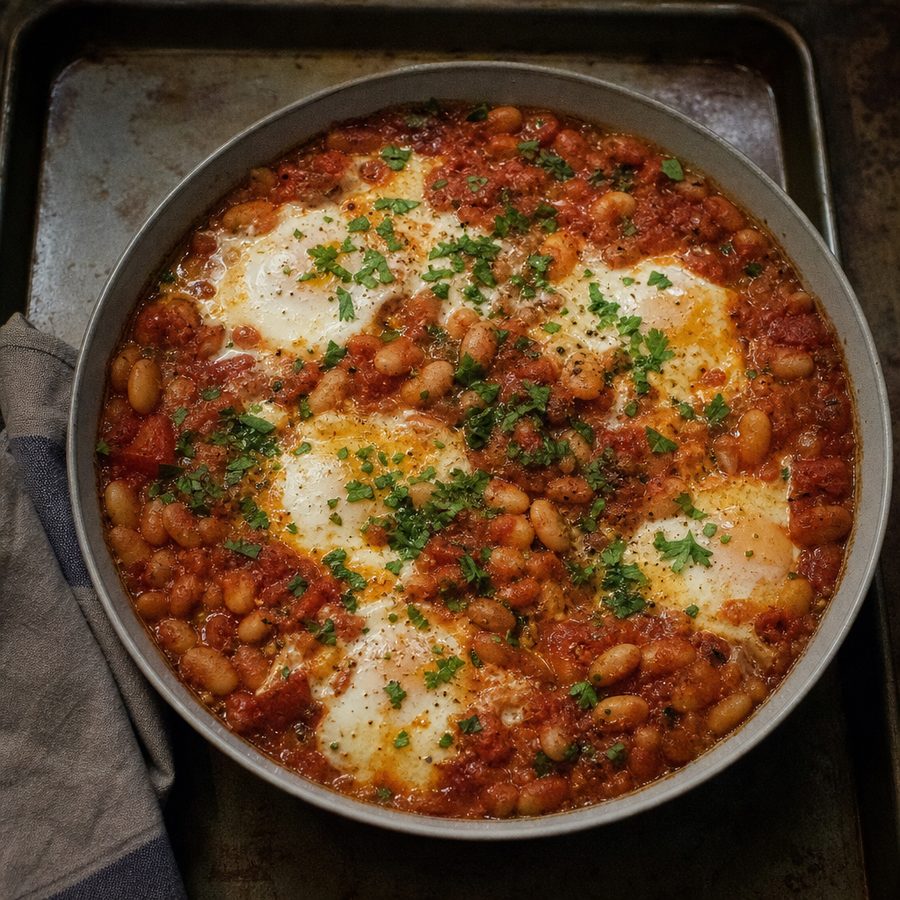
Creamy cannellini beans simmered with crushed tomatoes, onion, and garlic, finished with eggs poached right in the sauce and showered with fresh parsley.
Why You'll Love This Recipe
Hearty in the morning, with no pile of dishes and no sweet start to the day. It comes together in a single skillet from mostly pantry staples, which makes it as workable on a slow weekend as it is on a weekday when you want real food fast. It is filling enough to anchor the morning and gentle enough to sit well before a busy day.
Poach the eggs directly in the simmering tomato-and-bean sauce rather than cooking them separately. The sauce holds a steady, moist heat under the lid, so the whites set softly while the yolks stay runny and rich. Cooking the onion until truly translucent before the garlic goes in builds a sweet base, and giving the sauce a full simmer concentrates the crushed tomatoes so they cling to the beans instead of pooling as thin liquid.
Creamy beans, bright tomato, and a soft yolk that turns the whole thing silky the moment you break it. The beans bring plant protein and fiber, the eggs add more protein and real staying power, and the olive oil carries the flavor through. It is also almost entirely made of things that keep: a can of beans, a can of tomatoes, an onion, and eggs, which is why this is the breakfast that survives a week when nothing fresh was bought.
Ingredients
- 2 cans cannellini beans, drained
- 1 1/2 cups crushed tomatoes
- 6 large eggs
- 1 onion, diced
- 3 garlic cloves, minced
- 3 tbsp olive oil
- 1 tsp dried oregano
- 3 tbsp chopped parsley
- 1/4 tsp salt
Instructions
- Rinse the beans until the foam stops: Dice the onion small and even, mince the garlic, and drain the cannellini beans in a colander, rinsing them under cool water until the foam stops rising. That foam is the starchy canning liquid, and rinsing it away is what keeps the sauce clear and bright instead of cloudy and slightly metallic. Chop the parsley and set it aside for the end.
- Soften the onion, then the garlic: Warm the olive oil in a wide skillet over medium heat, add the diced onion, and cook for about 5 minutes, stirring now and then, until soft and translucent. Add the garlic and cook about 30 seconds more, just until fragrant, so it does not brown and turn bitter under the tomatoes that follow.
- Build the sauce and let it thicken, 8 minutes: Pour in the crushed tomatoes, add the drained beans, the oregano, and the salt, stir, and bring it to a gentle simmer. Cook for about 8 minutes, stirring occasionally, until the sauce has thickened and no longer looks watery. That thickening matters more than it seems, because a thin sauce will not hold a well for an egg and the whites spread out across the pan instead of setting in place.
- Make wells and cook the eggs 6 to 8 minutes: Use the back of a spoon to press shallow wells into the sauce, spacing them evenly, and crack one egg into each. Cover the skillet and cook over medium-low for 6 to 8 minutes, until the whites are fully set and opaque and the yolks are still soft. The lid is what cooks the tops of the eggs, trapping steam so the surface sets without the bottoms turning tough. Give them a minute or two longer for firmer yolks.
- Parsley on, and serve from the pan: Turn off the heat, scatter the parsley over the top, and serve straight from the skillet, spooning up beans, sauce, and an egg for each portion. Bring it to the table promptly, since the eggs keep setting in a hot pan and the yolks firm up within a few minutes of the burner going off.
Variations
- Add a green: Stir a few big handfuls of baby spinach or chopped kale into the sauce and let it wilt before you make the wells for the eggs.
- Bring some heat: Add a pinch of red pepper flakes with the garlic, or stir a spoonful of harissa into the tomatoes for a smoky, spicy edge.
- Creamy finish: Crumble feta or dollop spoonfuls of ricotta over the top before serving; note that this adds dairy.
- Swap the beans: Use chickpeas or butter beans in place of the cannellini for a different texture while keeping the dish plant-forward.
- Herb and citrus lift: Finish with fresh basil or dill in place of the parsley and a squeeze of lemon over the top for a brighter, fresher flavor.
Storage & Leftovers
Store leftovers in an airtight container in the refrigerator for up to 3 days. The beans and sauce keep especially well; the eggs are best eaten within a day, since cooked yolks firm up and lose their softness over time.
Reheat gently in a covered skillet or saucepan over low heat, adding a splash of water to loosen the sauce as it warms. Warm just until heated through so the egg does not turn rubbery. If you are microwaving it, drop the power and go slowly, easing the sauce around the egg rather than stirring through it.
To get ahead, make the tomato-and-bean sauce up to 3 days in advance and keep it refrigerated. When you want breakfast, bring it back to a simmer, make the wells, and add the eggs fresh so they finish soft and just-set.
Notes & Tips
- Rinse the beans well: Draining and rinsing canned cannellini beans washes off the starchy, salty liquid, which keeps the sauce clean-tasting and lets you control the salt yourself.
- Watch the garlic: Garlic burns fast and turns bitter, so add it only after the onion is soft and cook it just until you can smell it, about half a minute.
- Judge the sauce by look: The sauce is ready for the eggs when it has thickened enough to hold a spoon-drag mark for a moment before closing back up; too thin and the eggs will spread and sink.
- Dial in the yolks: For runny yolks, pull the pan as soon as the whites turn opaque; for set yolks, leave the lid on a couple of minutes longer and check that the whites are firm at the center.
- Season at the end: Crushed tomatoes vary in acidity, so taste before serving and adjust with a little more salt, or a pinch of the oregano, if it tastes flat.
- Serve with something to scoop: This is made for mopping, so set out crusty bread or toast to catch the sauce and soft yolk; the beans and eggs are also good over a bowl of grains.
Nutrition & Mindful Eating
- The beans, the tomatoes and the eggs work together here. The beans bring softness and body, the tomatoes bring sweetness and acidity, and the eggs settle into the sauce on top, so the pan carries fiber, protein and good fat in one warm spoonful.
- Cannellini beans are the reason this skillet turns creamy. They break down a little at the edges and thicken the sauce around them, and the soluble fiber doing that softening is also what feeds the bacteria in your gut.
- Crushed tomatoes cook down with the olive oil until the raw edge is gone and what is left is sweet and savory, and cooking them in fat is what makes their lycopene easier for your body to take up.
- The eggs go in whole and finish in the sauce, so the whites just set and the yolks stay loose enough to run when you break them. That richness is where the choline sits, tucked into the yolk along with the color.
- Dried oregano goes in early so it has time to soften into the tomato, and the parsley goes on at the end while it is still green and sharp. Those two are what keep a pan of beans from tasting flat.
- As you eat, break the yolk into the tomato and watch it thread through the beans, and let those first few spoonfuls set the pace for the rest of the pan so you can feel when you have had enough.
Frequently Asked Questions
How do I keep the eggs from overcooking?
Cook them covered over medium-low heat and start checking early. As soon as the whites turn opaque and firm, the yolks are still soft; every extra minute under the lid firms the yolk further, so pull the pan the moment the eggs look the way you want them.
Can I make this without eggs?
Yes. Simmer the beans and tomatoes as written and serve the sauce on its own over toast or grains. Without the eggs you lose some protein, so a heartier side helps keep it filling.
My sauce turned out watery. What happened?
The sauce probably needed a longer simmer before the eggs went in. Crushed tomatoes and bean liquid release water, so let it bubble uncovered until it thickens and clings to the beans; a thin sauce lets the eggs spread instead of sitting in neat wells.
Can I use fresh tomatoes instead of crushed?
You can. Use ripe tomatoes, chopped, and simmer them longer so they break down and lose their raw wateriness. You may want to cook the sauce a few extra minutes to reach the same thickness the crushed tomatoes give.