
Crispy Bacon and Eggs
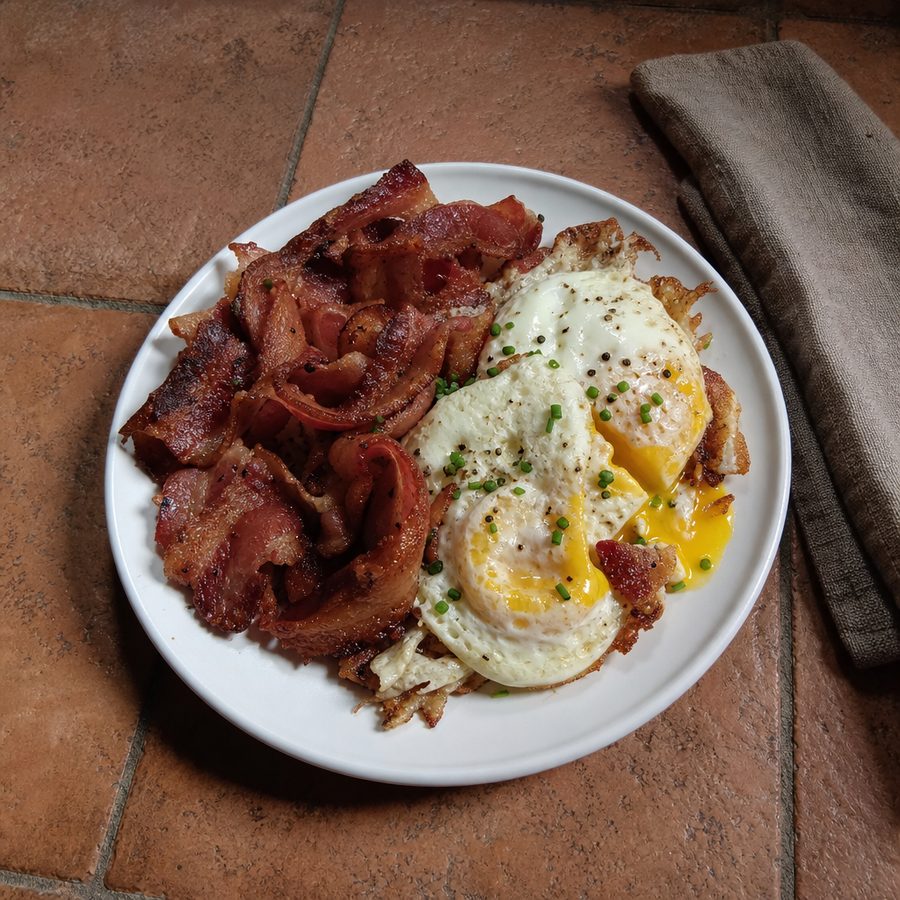
Thick-cut bacon cooked until crisp alongside eggs fried and basted in melted butter.
Why You'll Love This Recipe
This is breakfast stripped down to its most satisfying essentials: crisp bacon and rich, buttery eggs, with nothing to distract from either. It is for anyone who wants a filling, savory morning meal that comes together in one skillet in about fifteen minutes, and for cooks who appreciate that a few good ingredients handled well beat a long list handled carelessly. It is also a reliable choice on days when you want real food fast and do not want to think much about it.
Butter basting is the entire method. Instead of flipping the eggs and risking a broken yolk, you tilt the pan and spoon the hot melted butter over the tops. That moving film of fat gently sets the surface of the whites and warms the yolk from above, so you get fully cooked, tender whites and a yolk that stays exactly as loose or as firm as you want. Cooking the bacon from a cold pan over medium heat is the other quiet trick: it renders the fat slowly so the meat crisps evenly instead of scorching before the fat lets go.
Texture and richness play off each other here. The bacon brings a salty, crackling crunch and deep savory flavor, while the eggs stay soft and silky, their yolks turning into a golden sauce when broken. Eggs deliver complete, high-quality protein and the butter carries fat that keeps you full well past mid-morning, so a small plate holds you. It is warm, hearty, and nourishing without any fuss.
Ingredients
- 8 slices bacon
- 8 large eggs
- 2 tbsp butter
Instructions
- Cook the bacon: Lay the bacon slices in a cold skillet in a single layer without overlapping, since starting them cold renders the fat out slowly and crisps the slices evenly instead of curling them. Set the heat to medium and cook, turning the slices occasionally, until the fat has rendered and the bacon is deep golden and crisp, about 8 to 10 minutes. Transfer the bacon to a plate lined with paper towels to drain.
- Prepare the pan: Pour off most of the bacon fat and wipe the skillet with a paper towel, leaving just a thin film. Return the skillet to medium heat and add the butter, letting it melt and foam but not brown, because browned butter would take over a plate this plain.
- Fry and baste the eggs: Crack the eggs one at a time into the pan, spacing them apart so they do not run together. Cook until the whites begin to set at the edges, then tilt the pan slightly and spoon the melted butter over the whites and yolks repeatedly. Continue basting until the whites are fully set and opaque and the yolks are cooked to your liking, about 2 to 3 minutes for a runny yolk.
- Season the eggs: Taste the eggs while they are still in the pan and season lightly only if the bacon has not already carried them.
- Serve: Divide the crisp bacon and the buttery basted eggs among warm plates and serve right away while everything is hot, since a basted yolk firms up quickly once it leaves the pan.
Variations
- Cheesy eggs: Grate a hard cheese over the eggs during the last minute in the pan so it melts into the whites. This adds more dairy alongside the butter.
- Soft scramble: Instead of basting, beat the eggs and cook them low and slow in the butter, stirring gently, for a creamy, folded scramble to serve with the bacon.
- Basted in bacon fat: Skip the butter and fry the eggs in a spoonful of the reserved bacon drippings for a smokier, more savory flavor that leans fully into the meat.
- Add a sausage patty: Cook a seasoned pork or beef breakfast patty in the same skillet and serve it alongside. This adds more meat to the plate.
- Extra-crispy eggs: Leave the eggs undisturbed a little longer in the hot butter so the edges of the whites turn lacy and golden brown before you baste the tops.
Storage & Leftovers
Store leftover bacon and eggs in an airtight container in the refrigerator for up to three days. Keep them together or separate; either way, let the plate cool before sealing so condensation does not make the bacon soggy.
Reheat gently to protect the eggs. A skillet over low heat with a small knob of butter works best, warming everything just until hot without overcooking the yolks. If you use a microwave, heat in short bursts at reduced power, since eggs turn rubbery quickly and bacon can spatter.
To get ahead, cook a larger batch of bacon in advance and refrigerate it; it reheats and re-crisps in a hot dry skillet in a minute or two. Fry the eggs fresh when you are ready to eat, using a little of the reserved bacon fat or butter, so the whites stay tender and the yolks stay bright.
Notes & Tips
- Choose the bacon: Thick-cut bacon holds up best here, staying meaty and crisp rather than shattering. Look for slices with an even ratio of meat to fat so they render and brown at the same rate.
- Start in a cold pan: Bacon laid into a cold skillet renders its fat gradually and crisps evenly. Starting it in an already-hot pan tends to scorch the surface before the fat melts out.
- Save the drippings: Pour the rendered bacon fat into a small heatproof jar and keep it in the fridge. It is excellent for frying the eggs another day or searing meat.
- Fresher eggs hold their shape: The fresher the egg, the tighter the white sits around the yolk, giving you a neat round fry instead of one that spreads thin across the pan.
- Season at the end: Bacon is already salty, so season the eggs only, and taste before you add anything more. A very light hand keeps the plate balanced rather than harsh.
- Warm the plates: Eggs and bacon lose heat fast. Set the plates somewhere warm while you cook, or rinse them under hot water and dry, so the food stays hot to the last bite.
Nutrition & Mindful Eating
- Bacon, eggs and butter is about as short as a breakfast gets, and the three of them cover a lot of ground: protein from both the bacon and the eggs, and enough fat to make a plate this simple eat like a real meal.
- Bacon rendered low and slow rather than blasted over high heat gives up its fat gradually and comes out properly crisp, and that rendered fat becomes the cooking medium for everything else in the pan.
- Eggs cooked in the bacon fat pick up smoke and salt at their edges while the yolks stay soft, and those yolks are where the choline and the fat-soluble vitamins sit, along with all the color.
- Butter added at the end, once the heat has come down, foams around the whites and browns them just slightly. It is a small amount of fat doing a large amount of flavor work.
- A plate like this holds you for a long stretch. The protein is doing most of that, with the fat alongside it slowing everything down, which is why a modest portion eats bigger than it looks.
- As you eat, listen for the crack when the bacon breaks and watch the yolk run into it, and give the plate a few unhurried minutes rather than finishing it standing over the stove.
Frequently Asked Questions
How do I keep the yolks runny but the whites fully cooked?
Basting is the key. Keep the heat at medium, and instead of flipping, spoon the hot butter over the tops of the eggs. The moving fat sets the whites from above while the yolks stay warm and loose. Pull the eggs off the heat as soon as the whites turn opaque.
Can I cook the bacon and eggs in the same pan at the same time?
It is better to cook them in sequence. Crisp the bacon first, then pour off most of the fat and wipe the pan before adding butter for the eggs. Cooking both at once crowds the pan and leaves the eggs sitting in too much grease.
My bacon comes out chewy instead of crisp. What am I doing wrong?
Usually it is heat that is too high, too little time, or a crowded pan. Start the bacon in a cold skillet over medium heat, give it room in a single layer, and let the fat render fully until the slices are deep golden. Draining on paper towels also helps it firm up.
Do I need the butter if the bacon leaves fat in the pan?
You do not have to use butter; frying the eggs in the reserved bacon fat works well and adds a smokier flavor. Butter gives a rounder, richer taste and foams nicely for basting, so it comes down to which flavor you prefer.