
Classic Steak and Eggs
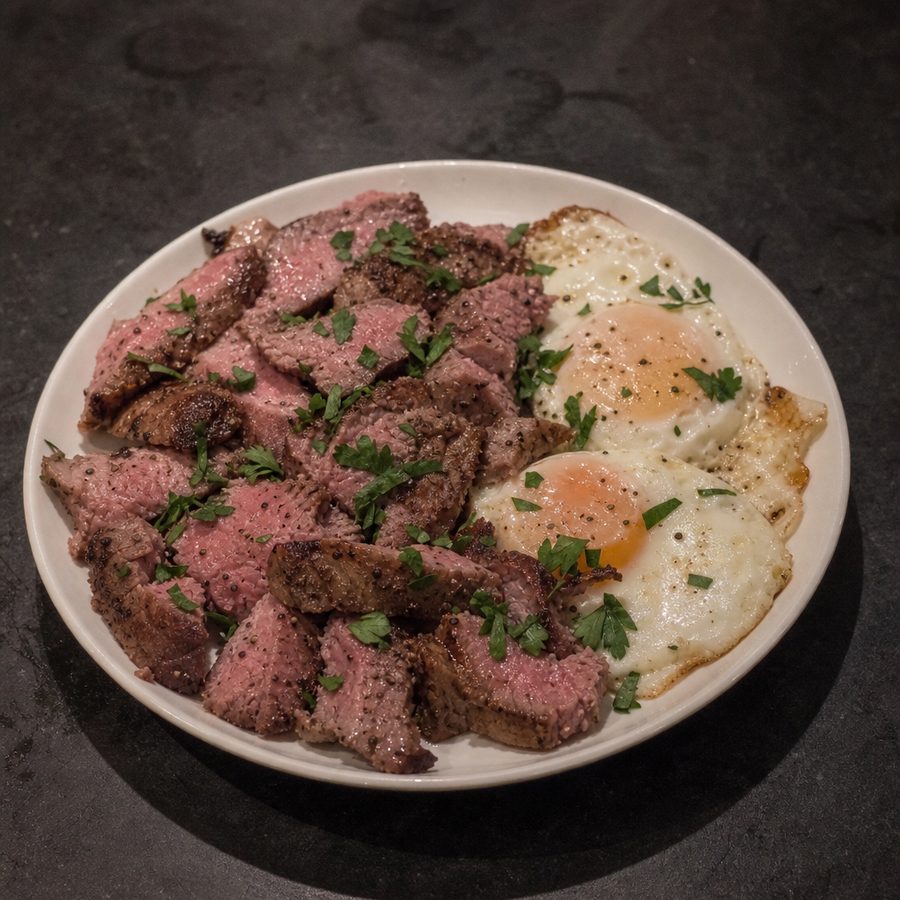
Thick-cut sirloin seared in butter until deeply browned, rested, and sliced against the grain over eggs fried in the same butter, finished with a little salt.
Why You'll Love This Recipe
This is a warm, filling breakfast for anyone who wants a plate built almost entirely around protein and fat, with nothing else competing for space. It is quick enough for a weekday and generous enough to feel like a treat, and it asks for only four things you likely already have: sirloin, eggs, butter, and salt. With a list that short, everything rests on how the steak is cooked, which is the one part worth slowing down for.
Heat, and the patience to leave it alone. A dry, well-salted steak laid in hot butter develops a deep brown crust through the browning reaction that builds savory flavor, while resting the meat before you slice keeps those juices where you want them. Frying the eggs in the same skillet picks up the browned bits left behind, so the eggs taste of the steak instead of arriving as an afterthought. Slicing against the grain is the small move that turns a firm cut into tender strips.
It satisfies because protein and fat are slow to digest and steady to burn, so a plate like this tends to hold you for hours without a mid-morning slump. The steak brings iron, zinc, and B12; the yolks bring choline and fat-soluble vitamins; the butter carries flavor and richness. It is simple, honest food that eats like a full meal, and it is the breakfast to make on a morning that has to carry you past a missed lunch.
Ingredients
- 4 sirloin steaks (about 6 oz each raw)
- 8 large eggs
- 3 tbsp butter
- 3/4 tsp salt
Instructions
- Prep the steak: Take the sirloin out of the fridge and let it sit at room temperature for about 30 minutes so it cooks evenly. Pat both sides completely dry with paper towels, since a dry surface is what lets the meat brown, then season all over with salt.
- Sear: Melt some of the butter in a heavy skillet over medium-high heat until it stops foaming. Lay the sirloin in the pan and sear undisturbed for 3 to 4 minutes, until a deep brown crust forms, then flip and sear the second side. For medium-rare, pull it at an internal temperature of 130 to 135°F (54 to 57°C) on an instant-read thermometer; go a few degrees higher for medium.
- Rest: Transfer the steak to a board or warm plate and let it rest, loosely tented, for about 5 to 10 minutes while you cook the eggs. Resting lets the juices redistribute so they stay in the meat when you slice.
- Fry the eggs: Melt the remaining butter in the same skillet over medium heat, using the browned bits left behind for flavor. Crack in the eggs and fry to your liking, 2 to 3 minutes for runny yolks with set whites, a minute or two longer for firm yolks. Season the whites lightly with salt.
- Slice: Look at the direction of the muscle fibers on the sirloin and slice the rested steak across them (against the grain) into thin strips, which keeps each bite tender.
- Plate: Divide the sliced steak and the fried eggs among the plates, spooning any butter and resting juices over the top, and serve hot.
Variations
- Richer cut: Swap the sirloin for ribeye, which is more marbled and cooks up juicier and more tender; this adds more fat.
- Cheese-topped steak: Lay a slice of a hard cheese over the hot sliced steak so it melts into the juices; this adds dairy.
- Soft scramble: Instead of frying, whisk the eggs and cook them low and slow in the butter, stirring, into soft folds that mingle with the steak.
- Tallow sear: Cook in rendered beef tallow in place of the butter for a beefier flavor and a slightly higher searing heat.
- With crisp bacon: Crisp a few strips of bacon and lay them alongside the steak, then use a little of the rendered fat for the eggs; this adds pork.
Storage & Leftovers
Store leftover steak and eggs in an airtight container in the refrigerator for up to 3 days. Keep the sliced steak and the eggs together or separate, whichever is easier. Both hold well once cooled.
Reheat gently so the steak does not overcook and turn gray. Warm the slices in a skillet over low heat with a little butter just until heated through, or microwave in short bursts at reduced power. Fried eggs are best reheated briefly in a buttered pan rather than the microwave, which can make the yolk rubbery.
To get ahead, sear the steak the night before, rest and refrigerate it whole (unsliced holds moisture better), then slice and warm it in the morning while you fry fresh eggs. The eggs take only a couple of minutes and are far better made to order.
Notes & Tips
- Pick an even thickness: Choose sirloin steaks of a consistent thickness so they cook at the same rate; a thicker, uniform cut is more forgiving than a thin one that overcooks in seconds.
- Dry beats a hot pan alone: The single biggest factor in a good crust is a dry surface, so pat the steak thoroughly and season it right before it hits the butter rather than letting it sit and weep.
- Trust a thermometer: Doneness is easiest to judge by internal temperature, around 130 to 135°F (54 to 57°C) for medium-rare, because color and firmness vary with the cut and the pan.
- Watch the butter: Let the butter stop foaming before the steak goes in; the foam is water cooking off, and once it settles the pan is hot enough to sear rather than steam.
- Save the whole cut cold: If you are cooking ahead, refrigerate the steak whole and slice it only when you reheat. A whole piece loses far less moisture in the fridge than pre-sliced strips.
- Season the eggs on the whites: Salt the egg whites rather than the yolks; salt sitting directly on a raw yolk can leave faint spots, while a light sprinkle on the whites seasons evenly.
Nutrition & Mindful Eating
- Steak, eggs and butter in one pan means the second thing cooks in what the first left behind. The beef gives the plate its body and its iron, the eggs give it softness, and the fat carries flavor between them.
- Sirloin has real beef flavor and enough structure to hold a hard sear, so a deep brown crust forms while the middle stays pink. Let it rest before slicing, and it gives you protein in the most straightforward form there is.
- Eggs cooked in the pan after the steak comes out pick up the browned bits and the beef fat, and the yolks stay soft if the heat has come down. Those yolks carry the choline and the color.
- Butter basted over the steak in the last minute browns and smells nutty, and salting the meat well before it hits the pan gives the seasoning time to work inward so the crust flavors the whole slice.
- A plate like this holds you for hours. The protein is doing most of that, along with the zinc and B12 that beef carries, and it is why steak and eggs eats like a meal that settles the question of breakfast.
- As you eat, cut across the grain and notice how much the rest changed the meat, then slow down between bites so the plate lasts longer than the few minutes it took to cook.
Frequently Asked Questions
What doneness works best for the steak here?
Medium-rare to medium keeps sirloin tender and juicy; it is a firm, close-grained cut, so cooking it well-done tends to make it dry and chewy. Pull it at 130 to 135°F (54 to 57°C) for medium-rare and let it rest before slicing.
Why slice against the grain?
Sirloin has long muscle fibers, and cutting across them shortens those fibers so each bite is far more tender. Look for the lines running through the meat and slice perpendicular to them.
Can I cook the steak and eggs in the same pan?
Yes, and it is better that way. After the steak rests, fry the eggs in the same skillet so they pick up the browned bits and butter left behind. Just lower the heat to medium so the eggs cook gently.
How do I keep the eggs from overcooking while the steak rests?
Cook the eggs after the steak, not before. The steak needs several minutes of rest anyway, which is exactly the window you use to fry the eggs fresh, so both land on the plate hot.