
Crab and Egg Omelet
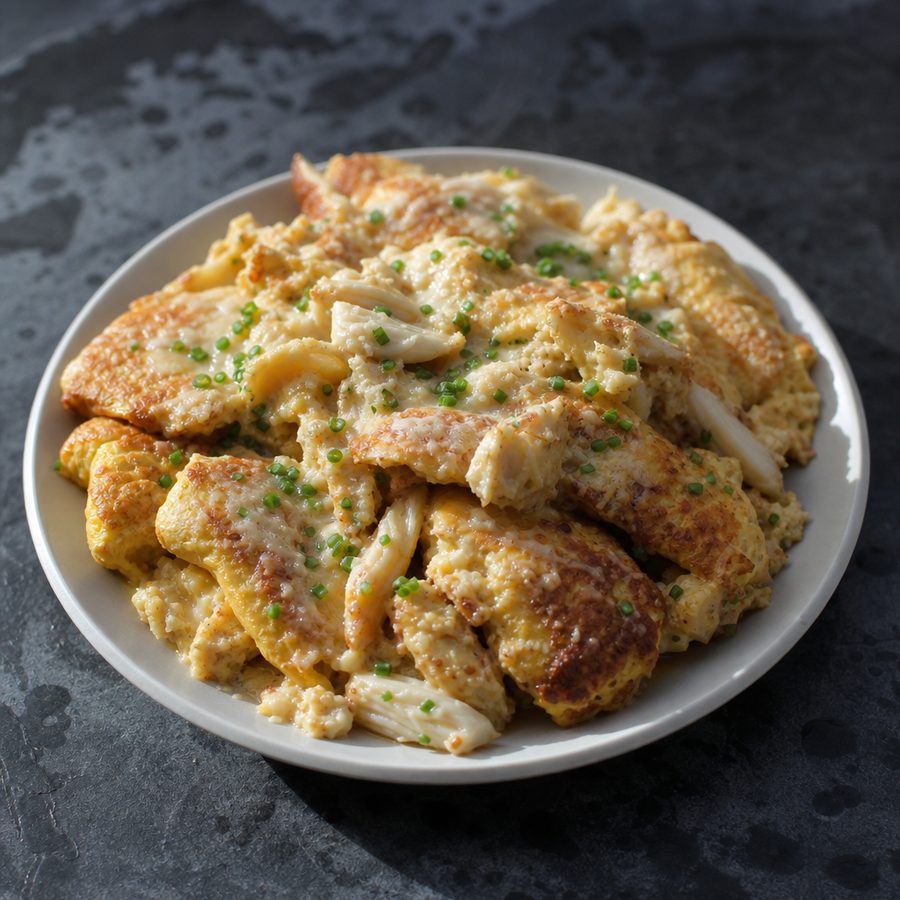
A soft folded butter omelet with barely-set eggs wrapped around sweet lump crab and nutty grated parmesan.
Why You'll Love This Recipe
This is a quiet luxury of a breakfast: a tender butter omelet folded around sweet lump crab and salty parmesan. It is for anyone who wants a rich, protein-forward start to the day that still feels special enough for a slow weekend morning. Everything comes together in one skillet in minutes, and the short ingredient list means each component has to be good, so it rewards fresh crab and a wedge of parmesan you grate yourself.
Medium-low heat, and knowing when to fold. Cooking the eggs over medium-low with foaming butter, then folding while the surface is still glossy, gives you a custardy interior instead of a dry, rubbery one. Adding the crab and parmesan to a warm but not blazing omelet lets the cheese melt and the crab heat through gently, so the crab stays sweet and delicate rather than turning tough. The parmesan does double duty here, seasoning the eggs and adding a savory, nutty depth that plays off the natural sweetness of the crab.
It is filling because eggs, crab, and cheese are all rich in protein and the butter adds satisfying fat, the combination that keeps you full and steady rather than hungry an hour later. The crab brings minerals and a sweet, delicate protein, the yolks carry the parts of the egg richest in nutrients, and the whole thing lands as satisfying comfort food that also does real nutritional work.
Ingredients
- 10 large eggs
- 12 oz lump crab meat
- 2/3 cup grated parmesan
- 3 tbsp butter
Instructions
- Prep the filling: Turn the lump crab out onto a plate and gently run your fingers through it to feel for any bits of shell or cartilage, removing what you find while keeping the lumps as whole as possible. Grate the parmesan if it did not come grated. Have the crab and parmesan within arm's reach of the stove, because the eggs cook quickly and you will not have time to prep once they are in the pan.
- Whisk the eggs: Crack the eggs into a bowl and whisk thoroughly until the yolks and whites are fully blended and the mixture is uniform and slightly frothy. Whisking well now is what gives the finished omelet an even, tender texture rather than streaks of set white.
- Melt the butter: Set a nonstick or well-seasoned skillet over medium-low heat and add a share of the butter, swirling it to coat the bottom and up the sides as it melts. Let it foam but not brown; browned butter will color the eggs and change the flavor.
- Cook the egg base: Pour in a portion of the whisked eggs and let them sit for a few seconds until a thin layer sets on the bottom. Using a spatula, push the set edges toward the center while tilting the pan so the raw egg runs into the gaps. Continue until the eggs are mostly set but the surface is still glossy and slightly wet, which keeps the omelet soft once folded.
- Add the filling: Sprinkle a share of the crab and parmesan over one half of the omelet while the surface is still just moist enough to hold them. The residual heat will warm the crab and melt the cheese as you finish.
- Fold and serve: Slide the spatula under the bare half and fold it over the filling to make a half-moon. Let it sit for a few seconds so the cheese softens, then tilt the pan and slide the omelet onto a plate. Wipe the pan, add more butter, and repeat with the remaining eggs, crab, and parmesan.
Variations
- Lobster instead of crab: Swap the lump crab for cooked, chopped lobster meat for a firmer, slightly sweeter bite. This keeps it shellfish-based.
- Sharper cheese: Trade the parmesan for grated aged gruyere or a sharp aged cheddar for a different kind of nuttiness. This still adds dairy.
- Bacon and crab: Fold crisp, cooked and crumbled bacon in with the crab for a smoky, salty edge. This adds pork.
- Smoked salmon: Add flaked hot-smoked salmon alongside or in place of the crab for a richer, smokier filling. This adds fish.
- Cooked in tallow: Use rendered beef tallow or ghee in place of the butter for a deeper, more savory background flavor.
Storage & Leftovers
Store leftover omelets in an airtight container in the refrigerator for up to three days. Let them cool before sealing so condensation does not make the eggs watery.
Reheat gently, since egg and crab both toughen with aggressive heat. A covered skillet over low heat or short bursts in the microwave at reduced power work best; stop as soon as it is warmed through and still soft.
To get ahead, pick through the crab and grate the parmesan the night before and keep each in a sealed container in the refrigerator. With the filling ready, the omelets themselves cook in just a few minutes in the morning.
Notes & Tips
- Choose the right crab: Fresh or refrigerated pasteurized lump crab has the best texture and sweetest flavor. If you use canned crab, drain it well and press out excess liquid, or the omelet turns watery.
- Grate the parmesan yourself: A wedge grated fresh melts smoothly and tastes cleaner than pre-shredded parmesan, which is coated to keep it from clumping and can stay grainy.
- Go easy on the added salt: Both the crab and the parmesan are already salty, so taste before you add more. It is easier to season a little at the table than to fix an oversalted omelet.
- Bring eggs closer to room temperature: Eggs taken straight from the refrigerator cook unevenly. Letting them sit out while you prep the crab helps them set into a smoother, more tender omelet.
- Use a pan that matches the portion: A smaller skillet gives you a thicker omelet that is easy to fold, while a large one spreads the eggs thin. Pick the size that suits how big you want each omelet.
- Serve it right away: This omelet is at its best the moment it comes out of the pan, when the eggs are soft and the cheese is just melted. Plate and eat each one before starting the next if you can.
Nutrition & Mindful Eating
- Eggs, crab and parmesan are a gentle set of flavors that add up to something rich. The eggs stay soft, the crab brings sweetness and its own protein, and the parmesan adds the salt and savor that make the fold taste finished.
- Eggs beaten well and cooked over low heat set into a smooth, tender sheet rather than a browned one, which is what lets the crab stay the star. The yolks bring the choline and the pale gold color.
- Crab is sweet and comes apart in soft threads, so it folds into eggs without any resistance. Warm it through rather than cooking it hard, and it brings protein along with the selenium and zinc shellfish carry.
- Parmesan grated fine melts almost invisibly into the eggs and seasons them from the inside, and it brings calcium along with the deep savory note that makes people think there is more in here than there is.
- Butter in a low pan foams rather than browns, and that soft foam is what keeps the omelet from catching. The smell of butter and warm crab together is most of the pleasure before you even fold it.
- As you eat, pick out how sweet the crab is against the mild egg, and take this one sitting down with a fork rather than folded into a napkin on the way out the door.
Frequently Asked Questions
Can I use canned or frozen crab instead of fresh lump crab?
Yes. Fresh or refrigerated pasteurized lump crab has the best texture, but canned crab works if you drain it thoroughly and gently press out the liquid first. If using frozen crab, thaw it completely and pat it dry so it does not release water into the eggs.
Why did my omelet turn out rubbery or browned?
That usually means the heat was too high. Cook over medium-low so the butter foams without browning and the eggs stay soft, and fold while the surface is still glossy rather than fully dry. Egg and crab both toughen when overcooked.
Do I need to cook the crab first?
No. Lump crab meat is already cooked when you buy it, so you only need to pick through it for shell and warm it through in the omelet. Adding it to the still-warm eggs is enough to heat it without overcooking.
Can I make these for several people at once?
Cook the omelets one at a time for the best texture, wiping the pan and adding fresh butter between each. Prep the crab and parmesan ahead so you can move quickly, and serve each omelet as it comes out of the pan while the eggs are still soft.