
Ground Lamb and Egg Skillet
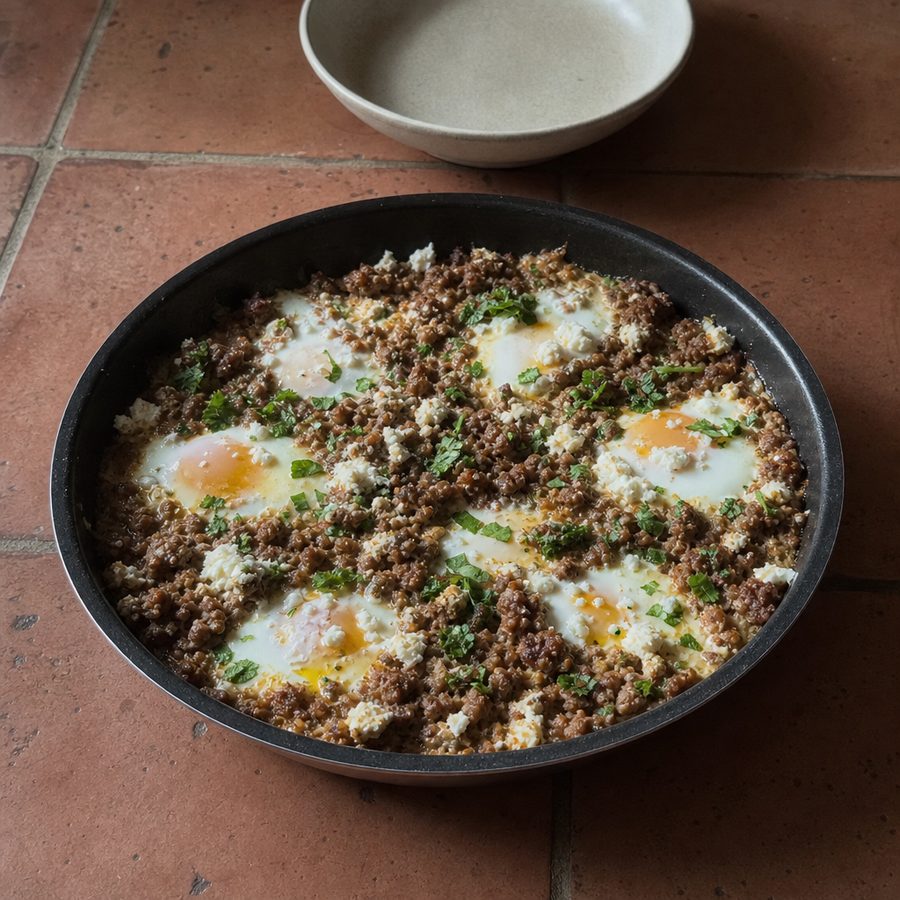
Rich, browned ground lamb seasoned with salt and cooked in butter, topped with eggs cracked and set right in the skillet.
Why You'll Love This Recipe
This is a hearty, one-pan breakfast for anyone who wants a substantial, savory start to the day with nothing but meat, eggs, and salt. It comes together in a single skillet with almost no cleanup, and it eats like a proper hot meal rather than a quick bite. It suits cooks who want maximum flavor from minimal ingredients, and anyone feeding a household that likes eggs cooked in the drippings of a good browned meat.
Let the lamb brown deeply before the eggs go in. As the meat cooks in butter over medium-high heat, its surface caramelizes and its own fat renders out, building the rich, slightly gamey flavor lamb is known for. Cracking the eggs directly into wells in that meat means they set in the seasoned fat and take on its taste, while the lid traps steam so the whites cook through gently without the bottoms turning tough.
Protein and fat, packed tight, and that combination keeps you full for hours. The lamb brings iron, zinc, and B vitamins, while the eggs contribute complete protein and the yolks add choline along with the fat-soluble vitamins that come with them. There is no filler here at all, just two whole animal foods and butter, cooked in one pan and eaten out of it, which is about as simple as a hot meal gets.
Ingredients
- 1 lb ground lamb
- 8 large eggs
- 1 tbsp butter
- 3/4 tsp salt
Instructions
- Melt the butter across the pan: Set a large skillet over medium-high heat, add the butter, and swirl it as it melts until it coats the pan right out to the edges, about 1 minute. The butter is only there to start things off, since a pound of ground lamb renders plenty of its own fat within a couple of minutes, but a dry pan at the start is what makes the first of the meat stick and tear.
- Brown the lamb properly, 8 to 10 minutes: Add the ground lamb and the salt, break the meat apart with a spoon, and cook for 8 to 10 minutes, stirring occasionally, until it is deeply browned with no pink left. Leave the rendered fat in the pan and spread the meat into an even layer, because that fat is what the eggs will cook in and it carries most of the flavor lamb has to give.
- Press eight wells down to the pan: Using the back of a spoon, press eight shallow wells into the layer of meat, spacing them evenly and pushing right down to the bottom of the skillet. Down to the metal matters, since an egg cracked onto a bed of loose meat sits above the heat and its white stays slack while the yolk overcooks.
- Add the eggs and cover, 4 to 6 minutes: Crack one egg into each well, cover the skillet, and cook over medium heat for 4 to 6 minutes for soft yolks, a minute or two longer for firm ones, until the whites are fully set and opaque. The lid does the work on the tops, trapping steam so the surface of each egg sets without the bottoms toughening against the pan.
- Rest it a minute, then scoop: Turn off the heat and let the skillet stand for a minute, which lets the eggs firm just enough to hold together when they are lifted. Scoop out each portion with a spoon or spatula, keeping two eggs together with the lamb underneath them so nothing arrives at the plate in pieces.
Variations
- Swap the meat: Use ground beef or ground pork in place of the lamb for a milder, less gamey flavor. Fattier grinds render more fat for the eggs to cook in.
- Add hard cheese: Grate a hard aged cheese over the meat just before the eggs set so it melts into the layer. This adds dairy.
- Fold in bacon: Cook chopped bacon first, then brown the lamb in its fat and crumble the bacon back over the top. This adds pork.
- Change the cooking fat: Brown the meat in beef tallow instead of butter for a fully meat-based fat and a richer, more savory edge.
- Firm or runny yolks: Cook the eggs briefly for soft, runny yolks that coat the meat, or leave them under the lid longer for fully firm yolks you can lift out cleanly.
Storage & Leftovers
Store leftovers in an airtight container in the refrigerator for up to three days. The lamb keeps well, though eggs are always best the day they are cooked, so plan to finish set-yolk portions first.
To reheat, warm a portion in a covered skillet over low heat with a small pat of butter until heated through, or microwave in short bursts at reduced power. Gentle heat keeps the eggs from turning rubbery; avoid high heat, which overcooks the yolks and dries out the meat.
To get ahead, brown the lamb a day in advance and refrigerate it. When you are ready to eat, return the meat to a skillet, warm it through, press the wells, and cook the eggs fresh so they are just set.
Notes & Tips
- Pick the right grind: A lamb grind with visible fat gives you more rendered fat to cook the eggs in and a juicier result. Some grinds cook up drier than others, so add an extra pat of butter if that is all you can find.
- Do not drain the fat: The rendered lamb fat is what flavors and cooks the eggs. Leave it in the pan rather than pouring it off, and only spoon out excess if the pan is swimming.
- Judge whites by opacity: The whites are done when they turn fully opaque with no clear, jelly-like patches. If the tops still look glassy, keep the lid on another minute.
- Use a lid that fits: A snug lid traps the steam that sets the tops of the eggs. If your skillet has no lid, a sheet pan or another wide pan inverted over the top works just as well.
- Season at the meat stage: Salting the lamb as it browns seasons it from the inside. Taste a bit of the cooked meat before adding the eggs and add a pinch more salt then if it needs it, since the yolks are hard to season later.
- Scale by the egg: This dish grows easily for a crowd. Keep it to two eggs per person and use a pan wide enough that every well has room, or cook in two skillets rather than crowding one.
Nutrition & Mindful Eating
- Lamb, eggs and butter in one skillet work as a single dish. The lamb renders its own fat and browns deeply, the eggs set into the gaps and soften the whole thing, and between them the pan carries protein and iron in one go.
- Ground lamb has a distinct sweetness and a fat that melts at a lower temperature than beef fat, so it coats the pan quickly and everything else cooks in it. The meat brings iron in the form your body absorbs most readily.
- Eggs cracked into wells in the lamb set gently in the residual heat, and pulling the pan off just before the whites are fully firm keeps the yolks loose. The yolks bring the choline and the color that lifts a brown skillet.
- Lamb fat smells like nothing else once it hits a hot pan, and salt added while the meat is still browning draws moisture out early so the edges crisp instead of steaming.
- A skillet this rich satisfies well before the pan is empty. The protein from the lamb and eggs is doing most of that, with the zinc red meat carries riding along, and the fat is what makes it linger.
- As you eat, breathe in how fragrant the lamb is before the first bite, and check in halfway through the skillet to see whether you want more or are simply finishing what is in front of you.
Frequently Asked Questions
Why are my eggs cooking unevenly?
Uneven eggs usually mean the wells are different depths or the heat is too high on one side. Press each well down to the bottom of the pan so the eggs sit in a consistent layer, keep the heat at a steady medium once the eggs go in, and cover so the tops set from trapped steam rather than direct heat.
My lamb released a lot of fat. Should I pour it off?
Not usually. That rendered fat is what the eggs cook in and where much of the flavor lives. Only spoon off the excess if the pan is deep in fat to the point that the eggs would poach rather than set; otherwise leave it.
Can I get runny yolks in this skillet?
Yes. After the whites turn opaque, the yolks will still be soft. Pull the pan off the heat as soon as the whites are set for runny yolks, or leave the lid on a couple of extra minutes if you want them firm.
Can I make this with a different ground meat?
Yes. Ground beef or ground pork work the same way in this method. Choose a grind with some fat so there is enough rendered fat to cook the eggs, and brown it just as deeply as you would the lamb.