
Seared Pork Tenderloin and Eggs
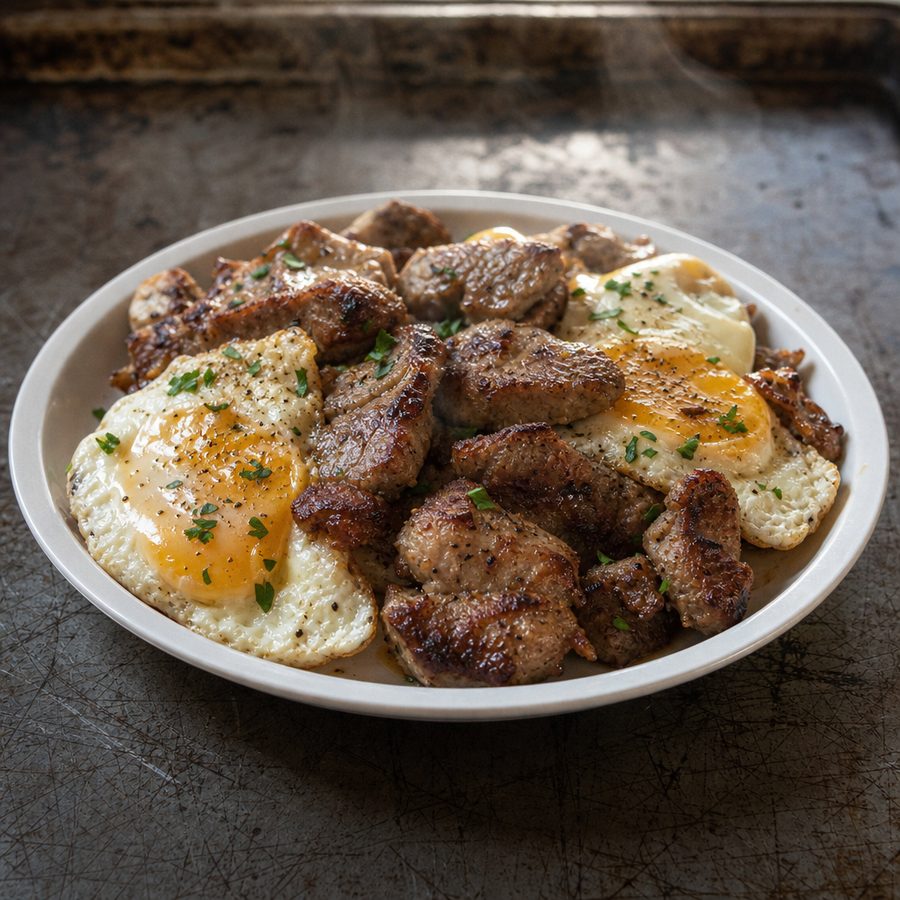
Tender medallions of pork tenderloin, seared in butter until golden and juicy, plated alongside buttery fried eggs and finished with a little salt.
Why You'll Love This Recipe
Two simple animal foods, pork tenderloin and eggs, both cooked in nothing but butter and salt. It is aimed at anyone who wants a substantial, protein-forward start to the day without any starch or sweetness, and at cooks who like a plate that comes together in one skillet in under twenty minutes. Tenderloin is the cut that makes it quick, since it slices thin and cooks in about the time an egg does.
Everything rides on the sear. Pork tenderloin is the least marbled cut on the pig, so it can turn dry if you overcook it or steam it. Getting the butter properly hot and giving each medallion undisturbed contact with the pan builds a golden, flavorful crust through browning, while pulling the meat at 145°F (63°C) keeps the inside juicy. Cooking the eggs in the same skillet afterward means they pick up the browned butter and pork drippings left behind, which is where a lot of the flavor lives.
The result is satisfying: the pork is meaty and tender, the fried eggs add richness and a soft yolk that acts almost like a sauce, and the butter ties the two together. It leans heavily on complete protein and stays filling for hours, which is why it holds up as a real meal rather than a quick bite you are hungry after. Break the yolks over the pork rather than eating them separately, since that is where the sauce comes from.
Ingredients
- 1 lb pork tenderloin, sliced into medallions
- 8 large eggs
- 3 tbsp butter
- 3/4 tsp salt
Instructions
- Slice the pork: Pat the pork tenderloin dry with paper towels, then slice it crosswise into medallions about an inch thick. A dry surface browns far better than a wet one, so blot again if the meat looks damp.
- Season: Season the medallions on both sides with salt, pressing it in lightly so it adheres to the surface.
- Sear the pork: Melt some of the butter in a heavy skillet over medium-high heat until it foams and the foam begins to subside. Add the medallions in a single layer without crowding and sear about 3 minutes per side, until deeply golden and just firm to the touch; the center should read 145°F (63°C) on an instant-read thermometer with a faint blush of pink.
- Rest the pork: Transfer the medallions to a plate and let them rest while you cook the eggs. Resting lets the juices redistribute so they stay in the meat when you cut it rather than running out onto the plate.
- Fry the eggs: Add the remaining butter to the same skillet over medium heat. Once it foams, crack in the eggs and fry until the whites are fully set and opaque while the yolks stay soft, about 3 minutes; spoon a little of the hot butter over the tops to set the surface if you prefer firmer yolks.
- Plate and serve: Divide the rested pork medallions among plates, set two fried eggs alongside each portion, and season the eggs with a little salt. Serve right away while everything is hot.
Variations
- Crispy-edged eggs: Cook the eggs in a little more butter over slightly higher heat so the whites frizzle and brown at the edges for a crisp, lacy border against the soft yolk.
- Cheese-topped pork: Lay a thin slice of a hard cheese over each hot medallion as it rests so it melts into the meat. This adds dairy.
- Bacon fat sear: Render a few strips of bacon first, set them aside, and sear the pork in the rendered fat for a smoky, meatier crust. This adds pork belly.
- Scrambled instead of fried: Skip the fried eggs and softly scramble the eggs in the browned butter for a looser, creamier texture alongside the pork.
- Steak swap: Trade the pork tenderloin for medallions of beef tenderloin, searing to your preferred doneness. This swaps in beef.
Storage & Leftovers
Store leftover pork and eggs in an airtight container in the refrigerator for up to three days. Keep them together or separate; either works, though the eggs are always best the day they are cooked.
Reheat the pork gently to avoid drying out this tender cut. Warm the medallions in a covered skillet over low heat with a small pat of butter just until heated through, or microwave in short bursts. Fried eggs do not reheat gracefully, so if you can, cook fresh eggs to go with reheated pork.
To get ahead, sear the pork medallions in advance and refrigerate them, then fry fresh eggs and rewarm the pork in the same skillet in the morning. You can also slice the tenderloin into medallions the night before and keep them seasoned and covered in the fridge so the meat is ready to hit the pan.
Notes & Tips
- Buy the right cut: Make sure you are getting pork tenderloin, not pork loin. The tenderloin is the long, slender muscle about the thickness of your wrist; the loin is a wide roast and will cook very differently at this thickness.
- Trim the silverskin: Before slicing, peel off the thin, pearly membrane running along the tenderloin. It never softens and can make medallions curl and toughen as they sear; slide a knife under it and pull it away in strips.
- Use a thermometer: With tenderloin, the window between juicy and dry is small. An instant-read thermometer pulled at 145°F (63°C) takes the guesswork out and is the single best way to keep the meat tender.
- Let the butter brown, not burn: Butter is ready for the pork when the foam subsides and it smells nutty, but pull the heat back if it turns dark brown fast, since burnt milk solids taste bitter under the eggs.
- Season the eggs at the end: Salt the fried eggs just before serving rather than in the pan; salt sitting on raw whites can leave speckled spots on the surface as they cook.
- Double the pork: Sear extra medallions while the skillet is hot and refrigerate them for later; the pork reheats far better than the eggs, so cook fresh eggs each morning to pair with it.
Nutrition & Mindful Eating
- The pork, the butter and the eggs come together in one pan. The tenderloin gives the plate its clean savory center, the butter browns it and seasons everything that follows, and the eggs bring the soft texture that makes it breakfast.
- Tenderloin is the most tender cut on the pig and it cooks in minutes, so pull it while the middle is still faintly pink and let it rest. It brings protein dense enough to carry a morning, plus the thiamine pork is known for.
- Eggs cooked in the buttery pan after the pork comes out take on the browned bits left behind, and their yolks bring choline along with the richness that rounds the whole plate out.
- Butter spooned over the pork as it finishes browns and turns nutty, and that smell is the signal the meat is close. Salt it well before it hits the pan so the seasoning has time to work inward.
- Sliced pork with eggs holds you well past the morning. The protein is doing most of that, with the zinc and B vitamins pork carries alongside it, and the medallions eat like something you chose rather than grabbed.
- As you eat, watch how much juice the rested pork gives back when you slice it, and let the meal take longer than the cooking did so you can feel yourself arriving at full.
Frequently Asked Questions
Why did my pork tenderloin turn out dry?
Tenderloin is a fine-grained, delicate cut, so it dries out quickly if it goes past medium. Sear it about 3 minutes a side and pull it at 145°F (63°C) on a thermometer, then let it rest; the carryover heat finishes it while keeping the inside juicy.
Is a little pink in the pork safe to eat?
Yes. Whole cuts of pork are safe at an internal temperature of 145°F (63°C), which leaves a faint blush of pink in the center. Use an instant-read thermometer rather than judging by color alone.
Can I cook the eggs and pork at the same time to save time?
It is better to sear the pork first, then rest it while you fry the eggs in the same skillet. The eggs benefit from the browned butter and drippings left behind, and cooking them separately keeps you from overcrowding the pan.
What can I do with the browned butter left in the pan?
Spoon it over the fried eggs or the rested pork before serving. It carries the toasty flavor from searing and is one of the best parts of cooking everything in a single skillet.