
Salmon and Scrambled Eggs
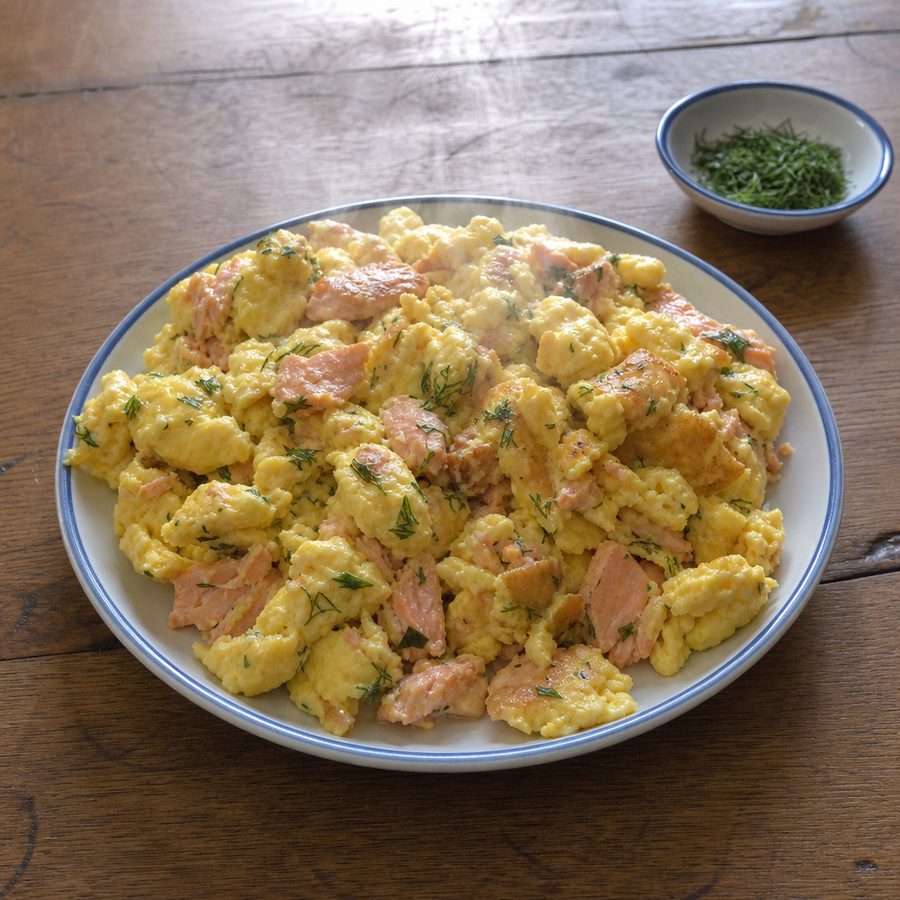
Soft, buttery scrambled eggs folded around warm flakes of seared salmon, finished with just a little salt for a rich, savory breakfast.
Why You'll Love This Recipe
This is a slow-morning breakfast for anyone who wants something warm, rich, and filling without a plate full of extras. It leans on two simple foods most kitchens already have and turns them into something that tastes far more considered than the short ingredient list suggests. Because it comes together in one skillet in under fifteen minutes, it works just as well on a quiet weekday as it does when you want to feed a few people at the table.
Salmon and eggs want different things from a pan. The salmon gets a hot pan and time to build a golden, savory crust, which gives it depth and a firm, flaky texture. The eggs get the opposite: low heat, constant gentle folding, and butter that stays foamy rather than browned, so the curds stay soft and custardy. Folding the salmon in at the very end, off a hard boil of heat, keeps the flakes intact and the eggs from overcooking into something rubbery.
The result is satisfying on more than one level. The eggs and salmon together deliver a generous amount of complete protein, which is what keeps you full and steady through the morning, and the butter and salmon fat carry the flavor and richness that make the dish feel like a treat. Salmon brings the kind of fats and nutrients you do not get from eggs alone, so the two foods round each other out into a breakfast that eats light on the plate but holds you until lunch.
Ingredients
- 4 small salmon fillets (about 4 oz each)
- 8 large eggs
- 3 tbsp butter
- 3/4 tsp salt
Instructions
- Prep the eggs: Crack the eggs into a bowl and whisk them thoroughly with a fork until the yolks and whites are fully blended and the mixture is a uniform pale yellow with no streaks. Set the bowl within reach of the stove.
- Sear the salmon: Pat the salmon fillets dry with a paper towel and season them on both sides with some of the salt. Melt a portion of the butter in a nonstick or well-seasoned skillet over medium-high heat. Lay the fillets in skin-side down (or flattest side down if skinless) and cook, undisturbed, for about 4 minutes until the underside is golden. Flip and cook 2 to 4 minutes more, until the flesh turns opaque, flakes easily with a fork, and reaches an internal temperature of 125 to 130°F (52 to 54°C) for a moist center. If you would rather follow the FDA figure of 145°F (63°C) for seafood, take it further and expect a firmer flake.
- Flake the salmon: Transfer the fillets to a plate. Peel off and discard the skin, then break the flesh into bite-size flakes with a fork, checking for and removing any pin bones as you go.
- Scramble the eggs: Wipe out the skillet and reduce the heat to low. Melt the remaining butter until it foams but does not brown, then pour in the whisked eggs. Let them sit for a few seconds, then push them slowly across the pan with a spatula, folding the set curds over and letting the loose egg run underneath. Season with the remaining salt. Keep the heat low and the eggs moving so they stay glossy and soft.
- Fold and serve: When the eggs are still slightly wet and just short of fully set, gently fold in the flaked salmon so it warms through without breaking apart the soft curds. Remove from the heat immediately, divide among plates, and serve right away while the eggs are creamy.
Variations
- Cheesy scramble: Fold a handful of grated hard cheese into the eggs as they set, just before adding the salmon, for a saltier, richer curd. This adds dairy.
- Smoked salmon swap: Skip the searing step and fold cold-smoked salmon into the finished eggs off the heat. It brings a cured, briny flavor and a silkier texture, and adds cured fish.
- Crispy bacon addition: Cook chopped bacon until crisp, fold the pieces in with the salmon, and use a little of the rendered bacon fat in place of some butter. This adds pork.
- Extra-rich custard curds: Whisk a spoonful of heavy cream into the eggs before scrambling for looser, more custardy curds that stay soft longer. This adds dairy.
- Ghee finish: Cook the eggs in ghee instead of butter for a nuttier, deeper flavor and a slightly higher smoke point that makes the low-and-slow scramble more forgiving.
Storage & Leftovers
Store leftovers in an airtight container in the refrigerator for up to three days. Cool the scramble to room temperature within an hour of cooking before sealing it, since trapped steam turns the eggs watery.
Reheat gently to protect the soft texture. Warm the scramble in a skillet over low heat with a small pat of butter, stirring just until heated through, or use short bursts in the microwave at reduced power, stirring between each. High heat will make the eggs weep and toughen, so stop as soon as it is warm.
To get ahead, sear and flake the salmon up to two days in advance and keep it chilled in a covered container. In the morning you only need to scramble the eggs fresh and fold in the ready salmon, which cuts the cooking down to a few minutes.
Notes & Tips
- Buy the right salmon: Look for fillets that smell clean like the ocean, not fishy, with firm flesh that springs back when pressed. Center-cut pieces of even thickness cook at the same rate, so they finish together without thin edges drying out.
- Pull the salmon early: Salmon keeps cooking off the heat, so take it out of the pan when the center is just barely opaque. Folding warm, slightly underdone flakes into hot eggs finishes them perfectly rather than leaving them dry.
- Save the crispy skin: Instead of discarding the salmon skin, lay it flat in the hot pan and crisp it until it shatters, then break it over the top as a crunchy, savory garnish.
- Keep the heat low for eggs: The most common mistake here is a pan that is too hot. Low heat and patience give you soft, glossy curds; high heat gives you dry, squeaky eggs in seconds.
- Salt in layers: Season the salmon before it sears and the eggs as they cook rather than all at once at the end. Salting in stages seasons each component evenly instead of leaving salty spots.
- Double the salmon batch: Salmon is the slowest part of this dish, so sear extra while the pan is hot and refrigerate the surplus. A future morning becomes a five-minute scramble.
Nutrition & Mindful Eating
- Salmon and eggs are richness of two different kinds. The eggs are soft and mild, the salmon is oily and savory and falls into large flakes, and together they bring protein and the sort of fat that makes a small plate feel generous.
- Salmon flakes into big soft pieces once it is just cooked through, and pulling it early keeps it silky. It is one of the best food sources of the long-chain omega-3 fats, sitting right in the oiliness you can taste.
- Eggs scrambled low and slow, stirred constantly and taken off the heat while they still look slightly underdone, set into soft curds. The yolks bring the choline and the color.
- Butter is what keeps the curds glossy, and a little cold butter stirred in off the heat at the end stops the eggs cooking further and gives them their sheen.
- A plate like this holds you well into the day. The protein from the salmon and eggs is doing most of the work, and the fat in the fish is why a modest amount eats so satisfyingly.
- As you eat, watch the salmon fall apart into the eggs as you fold them together, and take the first few bites slowly enough to register how soft everything on this plate is.
Frequently Asked Questions
Can I use canned salmon instead of fresh fillets?
Yes. Drain it well, flake it, and skip the searing step, folding the salmon straight into the finished eggs to warm through. The texture is softer and the flavor milder, and you may want a touch more salt to make up for the browning you lose.
My eggs keep turning out dry and rubbery. What am I doing wrong?
Almost always the heat is too high or you are cooking too long. Keep the burner on low, move the eggs constantly with a spatula, and pull the pan off the heat while the curds still look slightly wet, since they finish setting on the plate.
Do I have to remove the salmon skin?
For folding into the eggs, yes, because the skin will not soften among the soft curds. That said, you can crisp the skin separately in the hot pan and crumble it over the top as a crunchy garnish rather than throwing it away.
Is this good cold or does it have to be eaten hot?
It is best hot and fresh, when the eggs are creamy. Leftovers are fine chilled, but the eggs firm up in the fridge, so a gentle reheat with a little butter brings back much more of the original soft texture.