
Pan-Seared Trout and Eggs
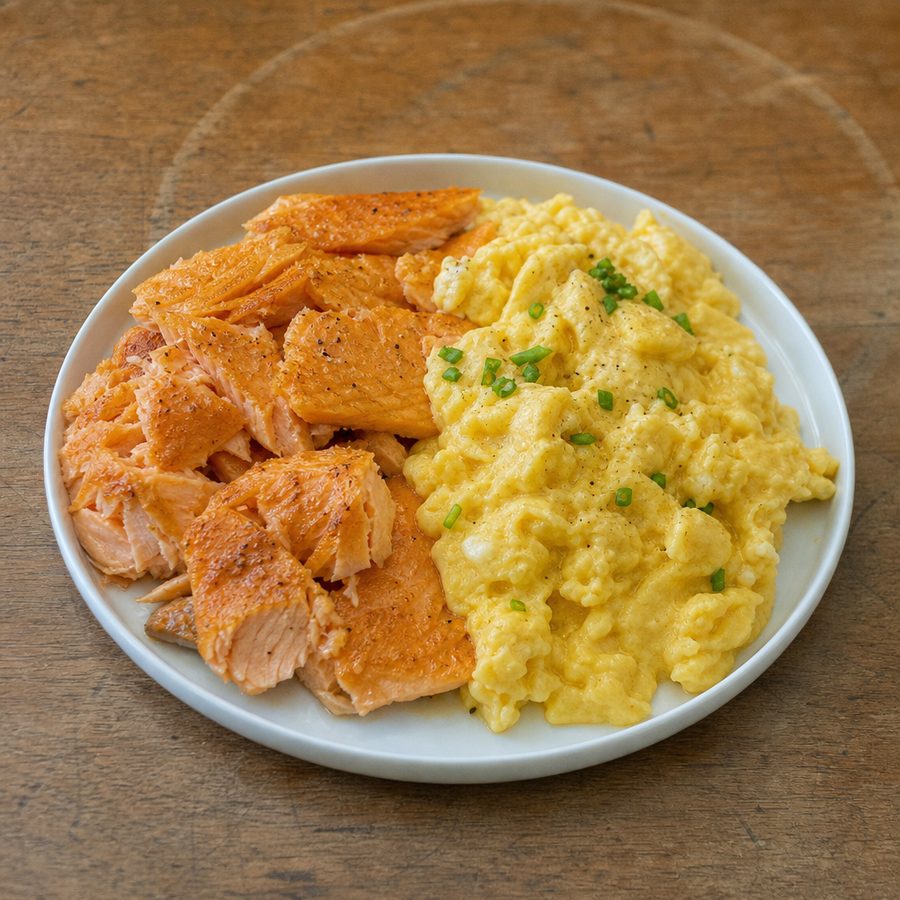
Crisp-skinned pan-seared trout fillets plated alongside soft, buttery scrambled eggs, seasoned simply with salt.
Why You'll Love This Recipe
This is a quiet, protein-forward breakfast for anyone who wants something more substantial than a bowl of cereal but still light on the stomach. It comes together in a single skillet in well under fifteen minutes, which makes it realistic for a weekday, and it uses only four ingredients, so there is nothing to shop for beyond fish, eggs, butter, and salt. It suits people who are cutting back on starch and sweeteners and want a plate that runs on animal protein and fat instead.
Two temperature choices decide the whole plate. The trout goes into a hot, foaming pan skin-side down and stays put, so the skin dehydrates and crisps into a thin, crackly layer while the delicate flesh cooks gently from below. The eggs go the opposite direction: low heat and constant slow stirring keep the proteins from tightening into dry, squeaky curds, so they stay soft and custardy. Butter carries both, browning slightly under the fish and enriching the eggs.
Crisp fish skin and tender flake against loose, silky eggs, with enough complete protein on the plate to keep you full through the morning. Trout brings the natural fats that give it a rich, clean flavor, the eggs add their own protein and richness, and the whole thing stays gentle and unfussy rather than heavy. It is a warm, honest breakfast that does not leave you hungry an hour later.
Ingredients
- 4 trout fillets (about 4 oz each)
- 8 large eggs
- 3 tbsp butter
- 3/4 tsp salt
Instructions
- Prep the fish and eggs: Pat the trout fillets dry on both sides with a paper towel, which helps the skin crisp rather than steam. Season both sides with salt. Crack the eggs into a bowl and whisk until the yolks and whites are fully blended and slightly frothy; set the bowl near the stove.
- Sear the trout skin-side down: Melt part of the butter in a nonstick or well-seasoned skillet over medium-high heat until it foams. Lay the fillets in skin-side down and press each gently with a spatula for the first several seconds so the skin stays flat against the pan. Cook without moving them until the skin is crisp and browned and the flesh turns opaque most of the way up, about 3 to 4 minutes.
- Flip and finish: Turn each fillet and cook the flesh side just until the fish is opaque throughout and flakes with light pressure, about 1 minute more; it is done at an internal temperature of 145°F (63°C). Transfer the fillets to a warm plate.
- Scramble the eggs: Wipe the skillet if needed, lower the heat to low, and melt the remaining butter until it coats the pan. Pour in the whisked eggs and let them sit for a few seconds, then stir slowly and constantly with a silicone spatula, pushing the eggs from the edges toward the center. Cook until they form soft, glossy curds that are just set but still moist, then pull the pan off the heat while they look slightly underdone, since they keep cooking from residual heat.
- Season and plate: Taste the eggs and add a little more salt if needed. Set a trout fillet on each plate with a portion of scrambled eggs alongside and serve warm.
Variations
- Trade the fish: Swap the trout for another quick-cooking fillet such as salmon, arctic char, or mackerel, all of which sear the same way skin-side down and bring their own richness.
- Cheese-topped eggs: Fold a handful of grated hard cheese into the eggs during the last few seconds of cooking for a saltier, richer curd; this adds dairy.
- Poached instead of scrambled: Serve the seared trout with poached eggs instead of scrambled, so a soft yolk runs over the crisp fish when you break it.
- Add a second protein: Lay a few slices of crisp cooked bacon alongside the plate for a smokier, meatier breakfast; this adds pork.
- Butter-basted finish: After flipping the trout, tilt the pan and spoon the foaming butter over the fillet for the last minute to deepen the flavor and keep the flesh moist.
Storage & Leftovers
Cooked trout and scrambled eggs both keep in an airtight container in the refrigerator for up to three days. Store them in separate containers if you can, since the fish holds up better on its own and the eggs pick up odors quickly.
Reheat gently, because high heat turns both fish and eggs rubbery. Warm the trout in a low oven or a skillet over low heat with a small pat of butter just until heated through, and bring the eggs back in a nonstick pan over low heat, stirring, or in short bursts in the microwave at reduced power so they do not overcook.
To get ahead, you can pat and season the trout the night before and keep it covered in the refrigerator so it is ready to sear, and you can whisk the eggs and refrigerate them covered as well. Both cook fast enough that it is usually best to cook fresh in the morning rather than reheating.
Notes & Tips
- Buy the freshest trout you can: Look for fillets that smell clean and briny rather than fishy, with firm, springy flesh and moist, intact skin. Fresher fish crisps better and tastes sweeter.
- Dry skin is crisp skin: The single biggest factor in crackly skin is a dry surface. If you have time, leave the salted fillets uncovered in the refrigerator for an hour before cooking so the skin dries out further.
- Pull the eggs early: Eggs carry enough residual heat to keep cooking after they leave the burner, so take them off while they still look a touch wet. Waiting until they look perfect in the pan means they will be dry on the plate.
- Watch the fish, not the clock: Trout is thin and cooks fast. The reliable cue is the flesh turning opaque and flaking with gentle pressure at 145°F (63°C), rather than a set number of minutes, since fillet thickness varies.
- Salt the eggs at the end: Season the scrambled eggs after they are cooked and taste first; the fish is already salted, so the plate can come together saltier than you expect.
- Use a nonstick pan for the eggs: Soft curds cling and tear in a bare stainless pan. A nonstick or well-seasoned skillet with enough butter lets you keep the eggs moving and loose.
Nutrition & Mindful Eating
- Trout and eggs make a soft, mild plate lifted by one crisp element. The fish flakes apart easily, the eggs stay tender, the skin gives the crunch, and between them you get protein and the kind of fat that comes with an oily fish.
- Trout has thin fillets that cook through in a few minutes, so it goes into a hot buttered pan skin down and stays there almost the whole time. It is an oily fish, which is where its omega-3 fats and its gentle flavor both come from.
- Dry the skin properly and press the fillet flat for the first minute, and it comes out crisp enough to hear. That crackle against the soft flesh underneath is the best thing about cooking trout at home.
- Eggs cooked in the same buttery pan pick up a little of the fish and a little of the browned butter, and their soft yolks bring choline and the richness that rounds out a delicate fillet.
- Trout and eggs hold you longer than their size suggests. The protein is doing most of that work, and the fat in the fish keeps it going quietly behind.
- As you eat, press a piece of the crisp skin against the soft flake underneath and notice how different they are, then let the meal take a few unhurried minutes at the table.
Frequently Asked Questions
How do I keep the trout skin from sticking to the pan?
Make sure the fillets are patted dry, the butter is hot and foaming before the fish goes in, and then leave the fillets alone. Skin releases on its own once it is crisp; if it resists when you try to flip, it needs a little more time.
Should I cook the fish or the eggs first?
Cook the trout first and move it to a warm plate, then scramble the eggs in the same pan. The fish holds its heat well while the eggs cook in just a couple of minutes, so both land on the plate warm.
How do I know when the trout is done?
The flesh turns from translucent to opaque and flakes apart with gentle pressure, and the internal temperature reaches 145°F (63°C). Because the fillets are thin, this happens quickly, so start checking soon after you flip them.
Can I use a whole butterflied trout instead of fillets?
Yes. Sear it skin-side down the same way, pressing it flat so the skin makes full contact with the pan, and give it a little longer to cook through since a whole fish is thicker than a single fillet.