
Cassava and Coconut Breakfast Mash
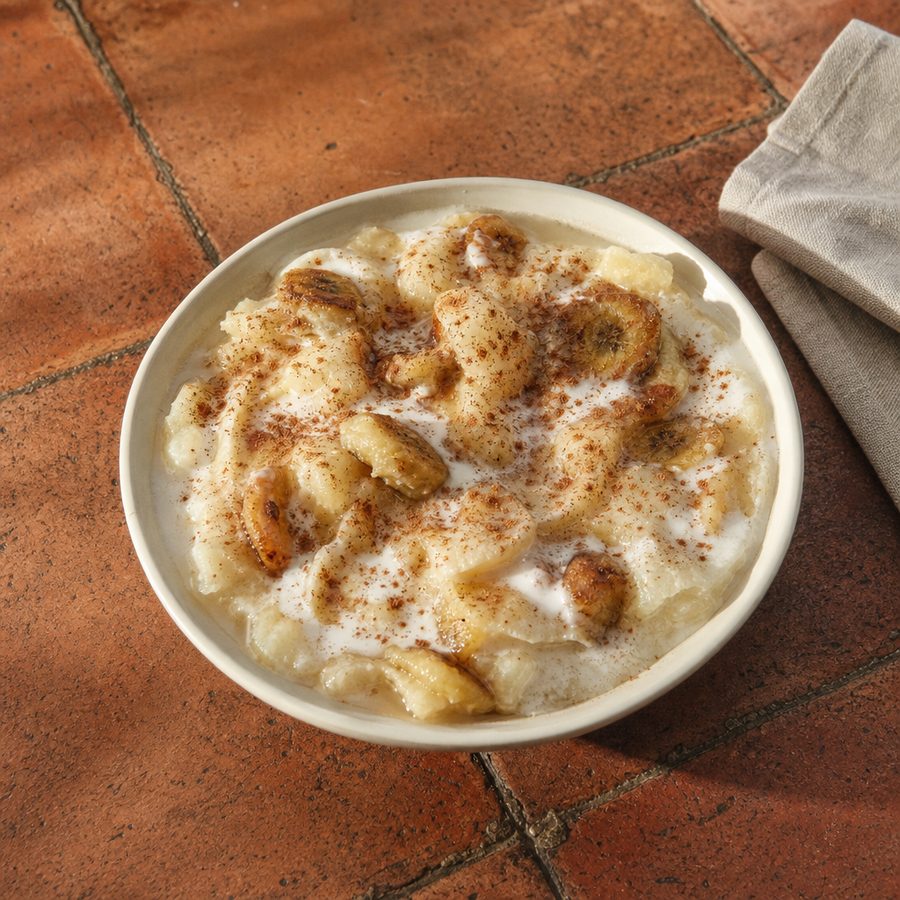
A creamy, cinnamon-warmed breakfast porridge of soft mashed cassava simmered with full-fat coconut milk and minced dates, finished with ripe banana.
Why You'll Love This Recipe
This is a warm, spoon-soft breakfast built around cassava, the starchy tropical root that cooks down into something between mashed potato and porridge. It is a gentle, filling morning bowl for anyone who wants a hot breakfast without grains, eggs, or dairy, and it suits cooks who like a make-once, reheat-all-week routine. The flavors are mild and comforting, so it works equally well for a picky child or for an adult easing back onto simple, soothing foods.
Boil the cassava all the way to fork-tender before it ever meets the coconut milk. Fully soft cassava breaks down under a masher into a creamy, almost dumpling-like base, while the coconut milk loosens it into a pourable porridge and carries the cinnamon through every bite. Minced dates are stirred in early so they dissolve as the mixture warms, sweetening the whole pot from within rather than sitting on top, and ripe banana adds a second layer of natural sweetness and a soft, fresh finish.
It satisfies because cassava is dense and slow to eat, so a bowl stays with you. The coconut milk brings richness and a smooth mouthfeel, the banana and dates supply natural sweetness and fiber, and the cinnamon gives warmth without any need for added sugar. Together they make a breakfast that feels like a treat but leans entirely on whole roots and fruit for its comfort.
Ingredients
- 3 cups cooked cassava, cubed
- 1 1/4 cups full-fat coconut milk
- 2 ripe bananas, sliced
- 2 to 3 pitted dates, minced
- 1 tsp ground cinnamon
- pinch of salt
Instructions
- Peel the cassava and cut out the core: Trim both ends off the cassava, run a knife down through the thick, waxy, bark-like skin, and peel it away completely along with the pink layer beneath it. Cut the flesh into cubes and slice out the tough woody cord running down the center of each piece. That cord never softens however long it boils, so anything left behind turns up as a string in a finished bowl that is otherwise smooth.
- Boil it until it is completely soft: Put the cubes in a pot, cover them with cold water, add a pinch of salt, and bring it to a boil. Simmer for about 20 minutes, until a fork goes through a piece with no resistance and there is no waxy, firm center left anywhere. Cassava has to be cooked fully soft all the way through before it is eaten; undercooked is not an option here, so test more than one piece before you drain it.
- Mince the dates while it boils: While the cassava cooks, mince the pitted dates as finely as you can and slice the ripe bananas into rounds, setting the banana aside for the top. The dates need to be small enough to dissolve, because a coarse chop leaves chewy lumps in the mash instead of sweetening the whole pot from the inside.
- Warm everything together in one pan: Put the drained cassava, the coconut milk, the minced dates, the cinnamon, and the salt into a saucepan and set it over medium heat, giving it 2 to 3 minutes to come up to a gentle steam before you start mashing. Everything goes in together and cold, so the cassava reheats in coconut milk rather than in water, which is what makes the finished mash taste of coconut all the way through instead of only on top.
- Mash it for about 8 minutes: As the mixture warms, mash it with a fork or a potato masher for about 8 minutes, until it is thick and mostly smooth with a little texture left. The dates should have disappeared into it by then, and the mash should hold soft, spoonable peaks.
- Loosen it further than looks right: Stir in more coconut milk a splash at a time, until the porridge falls slowly off a spoon rather than sitting on it in a stiff mound. Make it a shade looser than you want to eat it, because cassava keeps drinking liquid and setting up as it cools, and a mash that looks perfect in the pan is stiff by the time it reaches the table.
- Top it rather than stir it: Spoon the warm mash into bowls, lay the banana rounds over the top, and finish each with a swirl of coconut milk. The banana goes on top rather than into the pan so it stays cool and distinct against the warm mash; stirred in while everything is hot it turns to a sweet paste and you lose it entirely.
Variations
- Ginger and turmeric: Stir a little grated fresh ginger and a pinch of ground turmeric into the pot as it warms for a golden, gently spiced bowl that plays well with the cinnamon.
- Richer and thicker: Swap some or all of the coconut milk for thick coconut cream to make a denser, more custard-like mash with a more pronounced coconut flavor.
- Plantain in place of banana: Peel and slice a ripe plantain, simmer it in water until soft, and mash it in with the cassava for a starchier, less sweet base; top with fresh banana as usual.
- Fresh fruit topping: Finish the bowl with diced mango or pineapple instead of, or alongside, the banana for a brighter, more tropical flavor.
- Vanilla warmth: Add a pinch of vanilla powder or the scraped seeds of a vanilla bean while the mash warms to round out the sweetness.
Storage & Leftovers
Store leftover mash in an airtight container in the refrigerator for up to four days. It will firm up considerably as it chills, because cooked cassava starch sets when cold; this is normal and loosens again with gentle reheating.
Reheat in a saucepan over low heat with a splash of coconut milk or water, stirring often, until it is warmed through and creamy again. The microwave is fine. Thirty seconds at a stretch, stirring between and loosening it with a little liquid as you go. Slice the banana on top at the last minute, since it darkens sitting in the mash.
To make ahead, boil and drain the cassava up to two days in advance and keep it refrigerated, then mash it with the coconut milk, dates, and cinnamon when you want a hot bowl. The full porridge also reheats well, so cooking a larger batch at the start of the week gives you several fast breakfasts.
Notes & Tips
- Frozen cassava is your friend: Peeling whole cassava is the fussiest part of this dish. Bagged frozen cassava chunks are already peeled and cored; just boil them straight from frozen until fork-tender, and the mash comes out the same.
- Pick firm, clean roots: If you buy whole cassava, choose roots that are hard with no soft spots, and cut into one before cooking; the flesh should be bright white. Discard any piece with gray or bluish streaks or a sour smell.
- Let the bananas get spotty: The riper the banana, the sweeter and softer the bowl. Bananas with brown freckles blend in smoothly and let you use fewer dates.
- Sweeten to taste with the dates: Dates are the sweetness dial here. Start with less, taste after mashing, and add more minced date if you want a dessert-like bowl or skip it for something plainer.
- Shake the coconut milk: Full-fat coconut milk separates in the can into thick cream and thin water. Shake the can well or whisk it smooth before measuring so every bowl gets the same richness.
- Control the texture as you mash: For a rustic bowl, mash lightly and leave some soft lumps; for a silky porridge, keep mashing and add extra coconut milk. It is entirely up to how smooth you like it.
Nutrition & Mindful Eating
- Cassava, coconut milk and banana come together into one smooth spoonful here. The cassava gives the bowl its body, the coconut milk loosens it into something creamy, and the banana melts in and sweetens the whole pot.
- Cassava is a starchy root that turns fluffy and slightly fibrous when boiled, closer to a potato than to any grain, and the whole-food carbohydrate in it is the reason a bowl this soft still eats like breakfast.
- Coconut milk is what turns mashed root into something rich. The fat in it coats the spoon, carries the cinnamon through every corner of the pot, and keeps the mash from setting up stiff as it cools.
- Chopped dates soften in the warm mash until they go almost caramel, and the fiber they carry alongside their sugars is part of why their sweetness arrives gradually rather than all at once.
- Cinnamon and a pinch of salt are the two things that keep this from tasting flat. The salt sharpens the coconut, the cinnamon gives the steam its smell, and that smell is most of the pleasure of a bowl like this.
- As you eat, let the coconut and cinnamon steam reach you before the first spoonful does, take it slowly since a soft bowl disappears faster than you expect, and stop when you feel comfortably full.
Frequently Asked Questions
Do I really have to cook the cassava fully?
Yes. Cassava must be peeled and boiled until it is completely soft, never eaten raw or undercooked. Cooking it thoroughly to fork-tender is both what makes the mash creamy and what makes it safe to eat, so do not rush this step.
Can I use frozen cassava instead of a whole root?
Absolutely, and it saves the hardest work. Frozen cassava comes already peeled and cored. Boil it from frozen until fork-tender, drain, and continue with the recipe exactly as written.
My mash turned gummy and sticky. What happened?
Cassava can get gluey if it is mashed very hard while extremely hot or over-worked. Mash gently just until thick and mostly smooth, and loosen with coconut milk rather than mashing longer. A little texture in the finished bowl is a good thing.
Can I make it less sweet?
Yes. The dates and banana are what make it sweet, so use fewer dates, or leave them out and let the ripe banana carry it. Taste after mashing and adjust before you top and serve.