
Cauliflower Cheddar Bake
Tender cauliflower florets folded into a velvety cheddar-parmesan sauce built from milk and butter, seasoned with Dijon, thyme, and nutritional yeast, then baked until golden and bubbling.
Why You'll Love This Recipe
This is a warm, home-style baked dish for anyone who wants a comforting, meat-free main that still eats like a full meal. Cauliflower gives it body, the cheddar sauce gives it richness, and the whole thing comes together in one baking dish, which makes it an easy weeknight dinner that feels a little more generous than the effort it takes. It also reheats well in a hot oven, where the top crisps up again rather than going soft.
The flavor comes from a few well-chosen partners for the cheddar. Dijon mustard sharpens the sauce and keeps it from tasting flat, nutritional yeast deepens the savory, cheesy note, and thyme adds a gentle herbal backbone. Par-cooking and draining the cauliflower very well before it goes in the dish is the key move: excess water is the usual reason a cheese bake turns thin and soupy, so shedding it up front keeps the finished sauce clingy and rich.
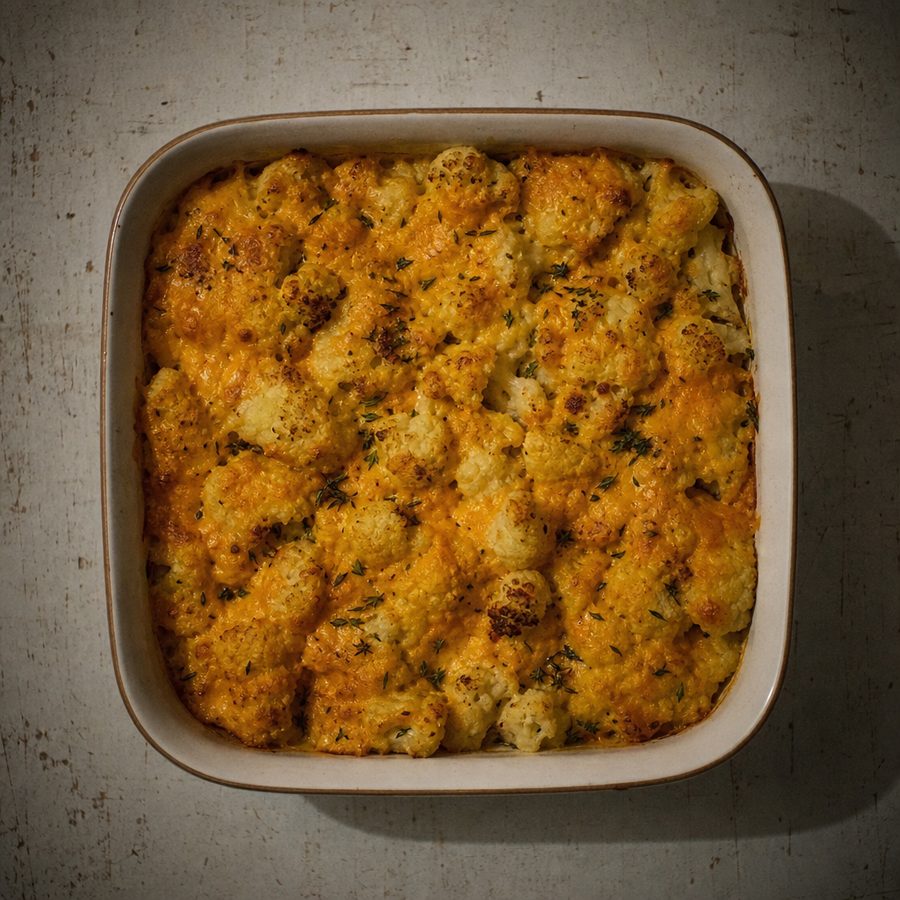
Soft, creamy, and golden, all at the same time. The cauliflower stays tender without collapsing, the sauce clings to every floret instead of pooling at the bottom, and the browned parmesan-cheddar top gives you the crisp, savory contrast that makes a bake worth digging into. It is hearty and nourishing without needing anything on the side, though it welcomes one, and a green salad with something sharp in the dressing is the thing it welcomes most.
Ingredients
- 1 large cauliflower, in florets
- 2 1/4 cups shredded cheddar
- 1 1/4 cups milk
- 2 tbsp butter
- 1/3 cup almond flour
- 2 tsp Dijon mustard
- 2 tbsp nutritional yeast
- 2 tbsp olive oil
- 1/2 tsp salt
- 1/4 cup grated parmesan
- 1 tsp fresh thyme leaves
Instructions
- Preheat and cut the cauliflower: Preheat the oven to 400°F (200°C). Pull off the outer leaves and cut the cauliflower head into bite-sized florets, keeping them roughly even in size so they cook at the same rate. Trim any thick stems flush with the florets.
- Par-cook the cauliflower: Bring a pot of water to a boil, or set up a steamer basket, and cook the florets until just fork-tender but still holding their shape, about 6 minutes. Drain them very thoroughly and give the colander a shake to shed extra water. Toss them with the olive oil while they are still warm, then spread the florets in an even layer in a baking dish.
- Start the sauce: Melt the butter in a saucepan over medium heat. Whisk in the almond flour and let it cook for about a minute so it loses its raw taste. Gradually whisk in the milk a little at a time, then bring it to a gentle simmer, whisking often, until it thickens slightly and coats the back of a spoon, about 5 minutes.
- Melt in the cheese and seasonings: Take the saucepan off the heat. Stir in most of the shredded cheddar (reserve a handful for the top), along with the Dijon mustard, nutritional yeast, thyme, and salt. Keep stirring until the cheese melts and the sauce is smooth and glossy.
- Assemble and bake: Pour the sauce evenly over the cauliflower, nudging it into the gaps. Sprinkle the reserved cheddar and all of the grated parmesan over the top. Bake until the top is golden and the sauce bubbles at the edges, about 22 minutes. Let it rest a few minutes so the sauce sets before serving.
Variations
- Add a crunchy top: Sprinkle a layer of breadcrumbs over the cheese before baking for a crisp crust. This adds gluten.
- Mix in broccoli: Swap in half broccoli florets for half the cauliflower, par-cooking them together, for a greener, slightly grassier bake.
- Sweet caramelized onion: Cook thinly sliced onion slowly in butter until deep golden and stir it into the sauce for a mellow, sweet depth.
- Give it heat: Whisk a pinch of cayenne or a spoonful of smoked paprika into the sauce for a warm, smoky kick against the creamy cheese.
- Extra sharp and nutty: Replace part of the cheddar with shredded gruyère for a nuttier, more complex melt. This adds dairy.
Storage & Leftovers
Refrigerator: Cool any leftovers, then store them covered in an airtight container for up to 4 days. The sauce firms up as it chills, which is normal and loosens again with heat.
Reheating: Warm individual portions in a 350°F (175°C) oven or toaster oven until heated through and the top re-crisps, about 15 minutes, or microwave a portion in short bursts, stirring the sauce gently once it softens so it warms evenly. A splash of milk stirred in helps loosen a sauce that has thickened in the fridge.
Make-ahead: You can assemble the whole dish up to a day in advance, cover it unbaked, and refrigerate. Bake it straight from the fridge, adding a few extra minutes since it starts cold, until the center is hot and the top is golden.
Notes & Tips
- Dry the cauliflower well: After par-cooking, let the florets steam-dry in the colander for a minute and blot away obvious water. Any liquid clinging to them thins the sauce as it bakes.
- Shred your own cheese: Block cheddar you grate yourself melts smoother than pre-shredded bags, which are dusted with anti-caking starch that can make the sauce grainy.
- Nutritional yeast is flexible: It boosts the savory, cheesy depth, but if you do not keep it on hand you can leave it out and lean a little harder on the parmesan for that same umami note.
- Judge doneness by the top and edges: It is ready when the cheese on top is golden brown and the sauce is bubbling around the rim, not just warm in the center.
- Season the sauce to taste: Cheddar and parmesan both bring salt, so taste the sauce before it goes in the dish and adjust the added salt from there rather than salting blind.
- What to serve alongside: It stands on its own, but a simple green salad or a slice of crusty bread rounds it into a fuller plate and soaks up extra sauce.
Nutrition & Mindful Eating
- Cauliflower, cheddar and milk are the whole dish, and they work because each one covers what the others miss. The cauliflower brings bulk and a nutty edge, the cheddar brings salt and fat, and the milk carries both into every floret.
- Cauliflower drained properly after par-cooking is the difference between this and the watery version. A hard shake of the colander keeps the sauce thick, and the florets hold on to their fiber and vitamin C either way.
- Sharp cheddar melts into the warm milk and butter and turns the sauce glossy, and the calcium and protein it brings ride in with the same fat that makes the sauce cling to everything it touches.
- Dijon mustard and nutritional yeast are the two quiet ones. The mustard sharpens the dairy and keeps the sauce lively on the tongue, and the yeast adds a savoury, almost cheesy depth along with its B vitamins.
- The almond flour on top toasts in the oven into a crumb that goes deep gold and crisp, and it is that crackle against soft cauliflower underneath that sends people back for a second spoonful.
- As you eat, break through the browned crumb first and notice how much sweeter roasted cauliflower is than you remember, then let the dish be something you sit down with rather than something you finish over the pan.
Frequently Asked Questions
Why did my sauce turn out watery?
Almost always it is the cauliflower holding onto cooking water. Drain the par-cooked florets very thoroughly and let them steam-dry before they go in the dish. The sauce also firms up as it rests out of the oven, so give it a few minutes before serving.
Can I use frozen cauliflower?
Yes, but it releases more water, so thaw it fully and pat it dry, and cut the par-cooking time short since frozen florets are already soft. Draining it well matters even more here to keep the sauce from thinning.
My sauce got grainy. What happened?
Grainy cheese usually means it was added over too much heat. Pull the pan off the burner before stirring in the cheddar and let the residual warmth melt it gently. Cheese you shred yourself from a block also melts more smoothly than pre-shredded.
Can I use frozen cauliflower?
Yes, with one change. Frozen florets already have some cooking behind them and hold a lot of water, so skip the par-cook entirely. Thaw them, press them between clean towels until they stop weeping, and take them straight into the dish. The florets will be softer than fresh, which is no trouble at all in a bake like this.