
Cauliflower Chickpea Cheddar Bake
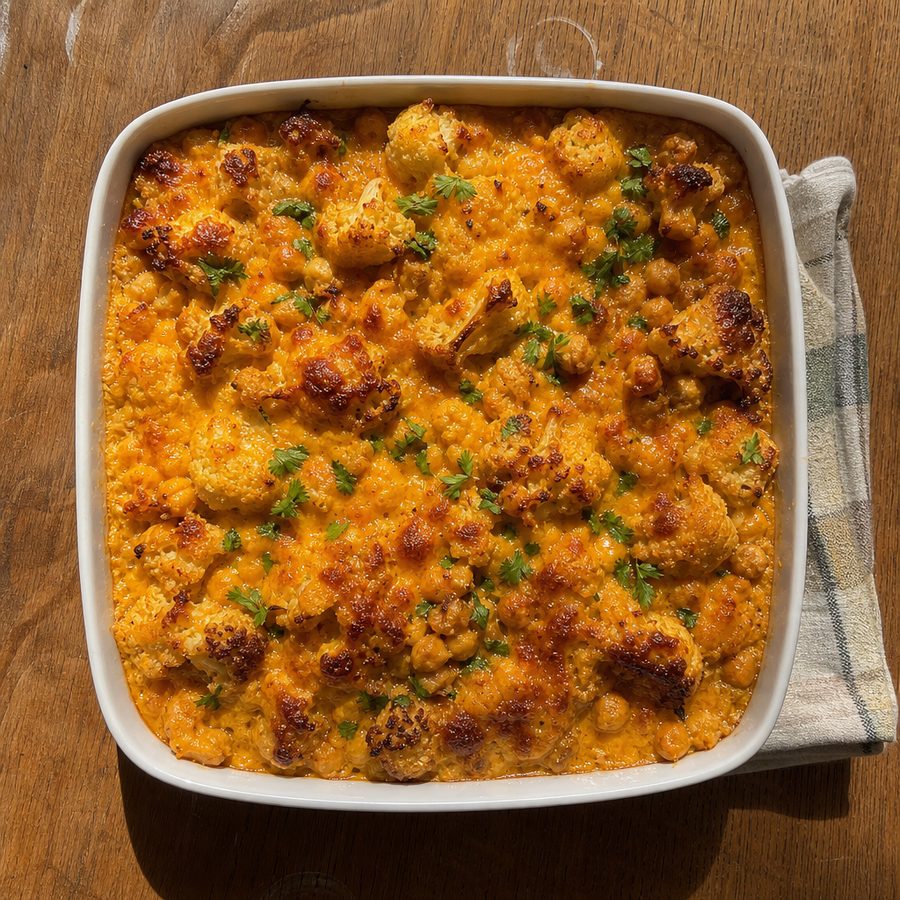
Roasted cauliflower and chickpeas folded into a silky cheddar sauce brightened with Dijon and nutritional yeast, then baked until the top is bubbling and golden.
Why You'll Love This Recipe
A gratin-style bake with no meat in it, for anyone who still wants a lunch that eats like real comfort food. Roasted cauliflower and creamy cheddar give it the cozy, casserole feeling of a classic bake, while the chickpeas quietly turn it into something filling enough to carry you through an afternoon. It suits a make-ahead lunch, a low-effort weeknight dinner, or a potluck side that happens to stand on its own.
Roast the cauliflower and chickpeas before they ever meet the sauce. Roasting at high heat drives off moisture and browns the edges, which builds a nutty, caramelized flavor you simply cannot get by simmering everything together. The other quiet trick is finishing the cheese sauce off the heat: cheddar melted gently into warm milk stays glossy and smooth, whereas boiling it can make the cheese seize and turn grainy. Dijon and nutritional yeast round out the sauce with a savory, faintly tangy depth.
Texture on one side, staying power on the other. The cauliflower keeps a little roasted bite, the chickpeas are tender and substantial, and the cheddar sauce ties it all together with richness. It is high in fiber and a good source of protein, so it feels nourishing rather than just indulgent, and that combination is what keeps you comfortably full instead of reaching for a snack an hour later.
Ingredients
- 1 large head cauliflower, in florets
- 2 cans chickpeas, drained
- 1 1/4 cups shredded cheddar
- 1 1/4 cups milk
- 1 medium onion, diced
- 3 1/2 tbsp olive oil
- 2 tsp Dijon mustard
- 2 tbsp nutritional yeast
- 3 garlic cloves, minced
Instructions
- Preheat and prep: Preheat the oven to 425°F (220°C). Cut the cauliflower into bite-size florets. Drain and rinse the chickpeas and pat them dry with a towel so they crisp rather than steam. Dice the onion and mince the garlic; set them aside for the sauce.
- Roast the cauliflower and chickpeas: Spread the florets and chickpeas on a large rimmed baking sheet, drizzle with about half of the olive oil, and toss to coat, then spread them in a single layer with a little space between pieces. Roast for about 20 minutes, until the cauliflower edges are golden brown and a fork slides in easily. Give the pan a shake halfway through so everything colors evenly.
- Start the sauce: While the vegetables roast, warm the remaining olive oil in a saucepan over medium heat. Add the diced onion and cook, stirring, until soft and translucent, about 5 minutes, then add the minced garlic and cook another 30 seconds until fragrant. Slowly whisk in the milk and bring it to a gentle simmer, whisking now and then, until it thickens just enough to coat the back of a spoon, about 3 to 4 minutes.
- Finish the cheese sauce: Take the saucepan off the heat so the sauce stays smooth and does not break. Whisk in the shredded cheddar a handful at a time until melted, then stir in the Dijon mustard and nutritional yeast. The sauce should be glossy and pourable, and the cheddar has already seasoned it, so taste it and leave the salt alone.
- Combine: Fold the roasted cauliflower and chickpeas into the cheese sauce until every piece is well coated, then transfer everything to a baking dish and spread it into an even layer.
- Bake: Reduce the oven to 400°F (200°C) and bake for 12 to 15 minutes, until the sauce is bubbling at the edges and the top is lightly browned. Let it rest for a few minutes so the sauce sets slightly before serving.
Variations
- Add a green vegetable: Toss broccoli florets or halved Brussels sprouts onto the sheet pan with the cauliflower for more roasted greens and extra fiber.
- Warm and smoky: Stir a pinch of smoked paprika and a little cayenne into the cheese sauce for gentle heat and a smoky edge against the sweet roasted cauliflower.
- Crunchy top: Sprinkle breadcrumbs over the surface before baking for a crisp, golden crust; this adds gluten.
- Sharper cheese: Swap in an aged sharp cheddar or fold in a spoonful of grated Parmesan for a bolder, tangier sauce; this adds dairy.
- Herb and lemon lift: Finish the baked dish with chopped fresh parsley and a squeeze of lemon to brighten the richness of the cheese.
Storage & Leftovers
Keeps in the refrigerator for up to 4 days in an airtight container. The sauce firms up as it chills, which is normal; it loosens again with gentle heat.
To reheat, warm individual portions in the microwave in short bursts, stirring once, or cover the dish with foil and reheat in a 350°F (175°C) oven until hot through. If the sauce looks thick, stir in a splash of milk to bring back its creaminess before serving.
To get ahead, roast the cauliflower and chickpeas and make the cheese sauce up to a day in advance, keeping them separate in the refrigerator. When you are ready to eat, fold them together, spread into the dish, and bake as directed, adding a few extra minutes since you are starting from cold.
Notes & Tips
- Dry the chickpeas well: Patting the rinsed chickpeas dry before roasting is the difference between firm, lightly crisped beans and soft, steamy ones. Wet chickpeas will not brown.
- Do not skip the single layer: Crowding the pan traps steam and leaves the cauliflower pale and limp. Give the florets room so they roast and caramelize instead of stewing.
- Shred your own cheddar: Block cheddar you grate yourself melts into a smoother sauce than pre-shredded bags, which are coated with anti-caking starch that can make the sauce grainy.
- Add the cheese off the heat: If the milk is boiling when the cheddar goes in, the cheese can seize and turn oily. Pull the pan off the burner first, then whisk the cheese in gradually.
- What the nutritional yeast does: It brings a savory, cheese-like depth that lets you get big flavor from the cheddar without piling on more. If you do not have it, the dish still works; you may just want a touch more cheese or salt.
- Serve it as a meal or a side: On its own it is a full lunch, but it also pairs well with a simple green salad or a slice of crusty bread to round out dinner.
Nutrition & Mindful Eating
- Cauliflower and chickpeas share the dish evenly and the cheddar sauce is what marries them. The florets stay in distinct pieces, the chickpeas turn soft and floury, and between the two there is protein and fiber enough to make this a full plate.
- Chickpeas baked in a sauce lose their firmness and go almost buttery, and the plant protein and fiber inside them are why a vegetable bake like this holds you the way a meat dish would.
- Onion and garlic go into the pan first and cook down until they are sweet and soft, which is where the savoury base of the whole dish comes from, and both of them feed the bacteria that live in your gut.
- Cheddar whisked into warm milk makes a sauce that coats rather than pools, and the fat in it carries flavor into places a thinner sauce would run straight off, with calcium and protein along for the ride.
- Dijon mustard and a scatter of nutritional yeast sharpen everything, and olive oil brushed over the surface helps the top blister and brown so there are crisp edges to hunt for.
- As you eat, look for the chickpeas that caught the heat at the edge of the dish, notice how soft the cauliflower has gone underneath them, and give yourself the whole meal rather than half of it at a desk.
Frequently Asked Questions
Can I use frozen cauliflower instead of a fresh head?
You can, but thaw it first and pat it very dry, because frozen cauliflower holds extra water that keeps it from browning. Expect a softer texture and a little less of the roasted, caramelized flavor.
My cheese sauce turned grainy. What happened?
Usually the milk was too hot when the cheddar went in, or the cheese was pre-shredded with anti-caking starch. Melt the cheese off the heat, whisk it in gradually, and use cheese you grate yourself for the smoothest result.
Can I make this dairy-free?
You can build a similar sauce with an unsweetened plant milk and a melty dairy-free cheese, leaning on the Dijon and nutritional yeast for savory depth. The texture will be a little different, but the roasted vegetables carry the dish.
How do I keep the leftovers from drying out?
Store them airtight and reheat gently, stirring in a splash of milk to loosen the sauce, which thickens as it chills. Warming under foil in the oven or in short microwave bursts keeps it creamy rather than rubbery.