
Cheddar-Baked Crab
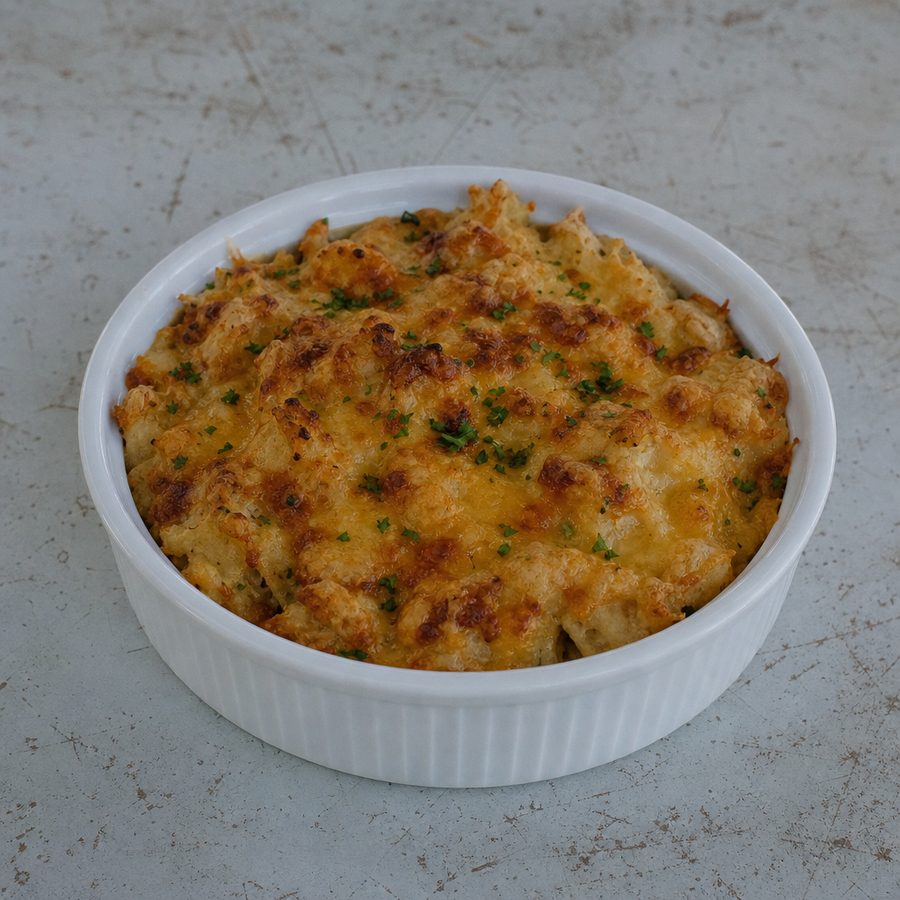
Lump crab folded with beaten egg, baked in individual ramekins under a blanket of sharp cheddar until set and the cheese is browned and bubbling.
Why You'll Love This Recipe
This is a warm, protein-rich baked crab dish meant for a single satisfying lunch, portioned into individual ramekins so everyone gets their own bubbling, golden top. It leans on just a handful of honest ingredients: sweet lump crab, sharp cheddar, egg, and salt. That makes it a good fit for anyone who wants a rich, savory meal built almost entirely from animal foods with very little fuss. Because it comes together in one bowl and bakes hands-off, it is forgiving enough for a beginner and quick enough for a busy midday break.
One beaten egg is holding all of this together. Folded through the crab, it sets gently in the oven and binds the loose lump meat into a tender, custard-like body instead of a pile of shreds, while half the cheddar melts into that base for richness. The remaining cheddar goes on top, where the dry heat of a hot oven browns and blisters it into a crisp, deeply savory crust. Sharp cheddar is the right choice here because its aged tang cuts the natural sweetness of the crab and seasons the whole dish without anything else added.
It is deeply satisfying in a way that stays with you: crab is sweet and high in protein, the cheddar and egg add richness and staying power, and the contrast between the molten interior and the browned cheese crust gives every bite real texture. There is nothing filler-heavy about it. What you taste is crab and cheese, and what you get is a nourishing, high-protein plate that feels indulgent while remaining simple and clean.
Ingredients
- 1 1/2 lb lump crab meat, picked over
- 2 1/2 cups shredded sharp cheddar
- 2 large eggs, beaten
Instructions
- Preheat the oven: Preheat the oven to 400°F (200°C) and set a rack in the middle position, since a rack too near the top browns the cheese well before the egg beneath it has set.
- Prepare the crab and cheese: Turn the lump crab out onto a plate and pick it over carefully with your fingers, feeling for any bits of shell or cartilage and discarding them; keep the lumps as whole as you can. If the crab is wet, blot it gently with paper towels so the finished melt is not watery. If you are working from a block of cheddar, shred it now.
- Butter the ramekins: Rub the inside of each ramekin with butter, coating the bottom and the sides both, so the melt lifts out cleanly and the edges take on some color. Do not be shy with it, since egg grips unbuttered ceramic hard.
- Beat the eggs: Crack the eggs into a large bowl and beat them well with a fork until the yolks and whites are fully blended and slightly frothy, because streaks of unmixed white set into rubbery ribbons through a melt this small.
- Mix the filling: Add half of the shredded cheddar to the beaten eggs, then gently fold in the crab with a rubber spatula until everything is evenly moistened, keeping the lumps intact rather than mashing them.
- Fill and top: Divide the crab mixture among the buttered ramekins, mounding it slightly, then sprinkle the remaining cheddar evenly over each one so the top is fully covered. A bare patch will dry out where the rest of the surface browns.
- Bake: Bake for 15 to 18 minutes, until the filling is set and no longer jiggly in the center and the cheese on top is browned and bubbling. Let the ramekins rest a few minutes before serving, as they will be very hot.
Variations
- Bacon-studded: Fold in cooked, crumbled bacon before baking for a smoky, salty note. This adds pork.
- Crab and lobster: Replace part of the crab with cooked, chopped lobster meat for an even richer seafood body. This adds shellfish.
- Extra-custardy: Beat in an additional egg yolk for a softer, silkier set under the cheese. This adds more egg.
- Parmesan crust: Sprinkle a little finely grated hard aged cheese such as Parmesan over the cheddar top for a sharper, crisper browned crust. This adds dairy.
- Gruyère melt: Swap some of the cheddar for shredded Gruyère for a nuttier, stretchier melt. This adds dairy.
Storage & Leftovers
Keep leftovers covered in the refrigerator, ideally still in their ramekins or transferred to an airtight container, for up to three days. Crab is delicate, so the sooner you eat it the better the sweet, fresh flavor holds.
To reheat, warm a ramekin in a 325°F (163°C) oven until heated through and the cheese loosens again, about ten minutes; this keeps the top crisp. A microwave works in a pinch on medium power in short bursts, though the cheddar crust will soften rather than stay browned.
To get ahead, assemble the ramekins fully with the crab mixture in and cheddar on top, then cover and refrigerate for up to a day before baking. Bake straight from the refrigerator and add a couple of extra minutes, since they start cold.
Notes & Tips
- Pick the crab thoroughly: Even crab labeled ready-to-use often hides thin shards of shell. Spread it on a light-colored plate and run your fingers through it slowly so a hidden piece does not end up in someone's bite.
- Choose the right crab: Lump crab gives you the sweetest, meatiest bites, but claw meat works too and is more affordable, with a slightly stronger flavor. Whichever you use, it should smell clean and briny, never sour or ammonia-like.
- Shred cheese from a block: Pre-shredded cheddar is coated with starch to keep it from clumping, which can make the top pasty. Shredding your own from a block melts smoother and browns better.
- Blot for a firm set: Excess moisture is the enemy of a clean set. Patting the crab dry before folding it in keeps the baked melt firm rather than weepy at the bottom of the ramekin.
- Reach for extra-sharp: Because the only seasoning here is salt, the cheddar is doing the heavy lifting on flavor. A well-aged extra-sharp cheddar gives you more tang and depth without adding a single extra ingredient.
- Serve it hot from the ramekin: This melt is at its best straight from the oven while the center is molten and the crust is crisp. Set the hot ramekins on small plates or a folded towel and eat right away.
Nutrition & Mindful Eating
- Crab, egg and cheddar are all this needs. The egg sets the crab into something you can eat with a spoon, the cheddar browns over the top, and underneath it the crab stays in sweet, distinct pieces.
- Lump crab is sweet and briny and comes apart in tender lumps rather than shreds, which is why it is worth buying the good stuff for a dish this bare, and it carries protein, B12 and selenium in every forkful.
- Sharp cheddar browns into a crust that goes crisp where it meets the edge of the dish, and the fat that makes it do that also carries vitamin A and calcium down into the bowl.
- Egg is the quiet part. It holds the crab together while letting its flavor stay in front, turns the middle soft and custardy, and brings choline along with the structure.
- The contrast is the whole pleasure here, a molten center against a crust you have to break with the edge of a spoon, and protein this concentrated means one small ramekin eats like a full lunch.
- As you eat, break the crust and let the steam off it, then find the pieces of crab that stayed whole underneath, and give a small dish like this the same attention a large one would get.
Frequently Asked Questions
Can I use canned or claw crab instead of lump?
Yes. Claw meat and good-quality canned crab both work, though the texture will be finer and the flavor a bit more pronounced than sweet lump meat. Drain canned crab well and pick it over the same way for shell before folding it in.
Why did my melt turn out watery?
Usually it is moisture left in the crab. Blot the crab dry before mixing, and be sure the eggs are fully set and no longer jiggly in the center before you pull the ramekins, since underbaking leaves the base loose.
Can I bake this in one dish instead of individual ramekins?
You can use a single small buttered baking dish. The bake will take a few minutes longer, so watch for the center to set and the cheese on top to brown and bubble before taking it out.
How do I know when it is done?
Look for two things: the cheddar on top should be browned and bubbling, and the filling should be set with no wet jiggle when you gently nudge the ramekin. If the center still wobbles like liquid, give it a few more minutes.