
Cheddar Chicken Casserole
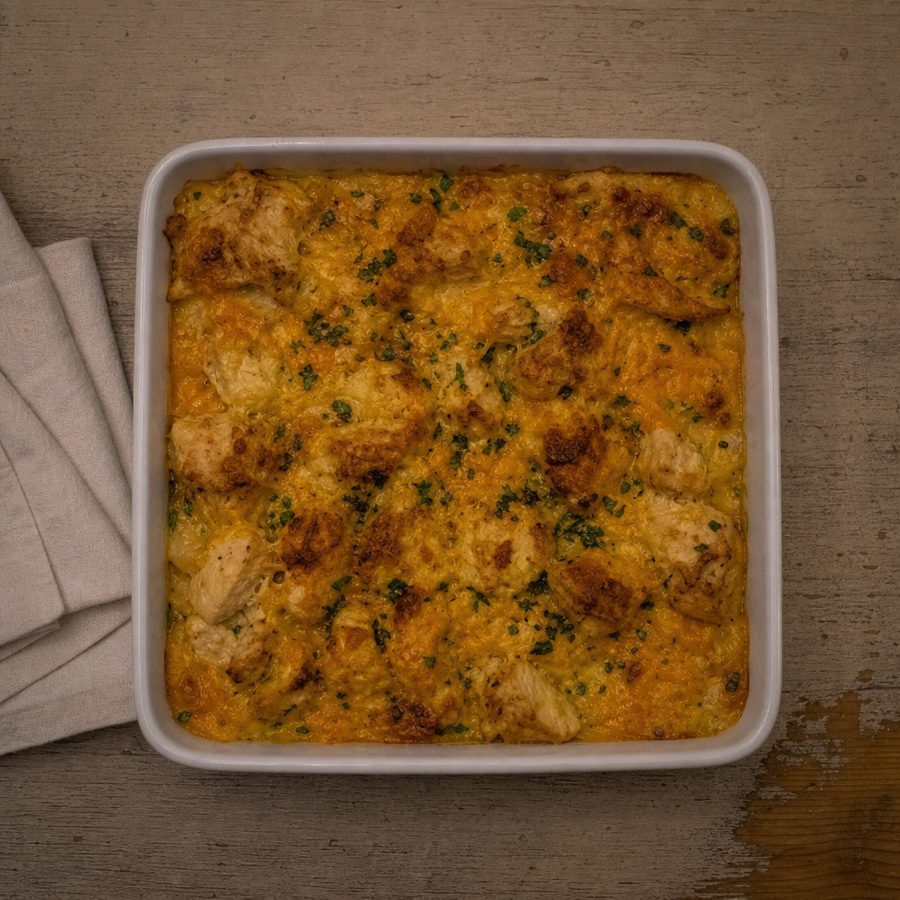
Tender shredded chicken folded with beaten eggs and sharp cheddar, then baked until the cheese melts, the top turns golden, and the whole dish bubbles at the edges.
Why You'll Love This Recipe
This is a hearty, protein-dense main built around tender shredded chicken bound with egg and sharp cheddar. It is the kind of dinner that comes together with a handful of ingredients and no chopping, and it suits anyone who wants a filling, savory plate without the fuss of a long recipe or a sink full of pans. It reheats well and travels well, so it fits busy weeknights and packed lunches alike.
The binding is the only thing to get right. Beaten egg is folded through the shredded chicken and, as it bakes, it sets into a gentle custard that holds the meat together the way breadcrumbs or a flour sauce would in other casseroles, but without either. Cheddar does double duty: melted into the mixture it adds richness and moisture, and sprinkled on top it browns into a golden, faintly crisp cap. Cooking the chicken by a gentle simmer keeps the meat moist, and pressing out the extra liquid before it goes in the dish is what keeps the finished casserole set rather than soupy.
Concentrated protein and real fat, both present. The chicken and eggs deliver a substantial, slow-to-digest kind of fullness, while the cheddar and butter round it out with a savory, mouth-coating richness that keeps it from tasting flat or dull. It is warm, bubbling, and deeply savory, the sort of plain, honest food that leaves you comfortably full. It reheats better than most casseroles, since there is no starch in it to go pasty on the second day.
Ingredients
- 4 cups cooked shredded chicken
- 1 1/2 cups shredded cheddar
- 2 eggs
- 2 tbsp butter
- 1/2 tsp salt
Instructions
- Cook and shred the chicken: Place raw chicken breasts or thighs in a saucepan, cover with water, and add a pinch of the salt. Bring to a gentle simmer over medium heat and cook until the meat is opaque all the way through and reads 165°F (74°C) on an instant-read thermometer, about 15 to 20 minutes depending on thickness. Drain well and let cool for a few minutes, then pull the meat apart into fine shreds with two forks. Press the shredded meat lightly in a colander to shed excess moisture so the finished dish is not watery.
- Preheat the oven and prepare the dish: Preheat the oven to 375°F (190°C). Rub a baking dish over the bottom and sides with the butter so the casserole releases cleanly and the edges brown.
- Grate the cheddar: If you are working from a block, grate the cheddar on the large holes of a box grater; freshly grated cheese melts more smoothly than pre-shredded. Set aside a small handful for the top.
- Beat the eggs and mix: Crack the eggs into a large bowl and whisk until the yolks and whites are fully blended and slightly frothy, so they coat everything evenly. Add the shredded chicken, most of the grated cheddar, and the remaining salt. Fold together with a spatula until the chicken is evenly coated and the cheese and egg are worked all the way through.
- Assemble: Transfer the mixture to the buttered dish and spread it into an even layer, pressing gently so it holds together. Sprinkle the reserved cheddar evenly over the top.
- Bake: Bake for 25 to 30 minutes, until the center is set and no longer jiggles, the top is golden, and the edges bubble; the casserole should read 165°F (74°C) in the middle. Let it rest for about 5 minutes so the egg firms up and the portions hold their shape when served.
Variations
- Swap the cheese: Trade the cheddar for another firm, aged cheese such as gruyère or aged gouda for a nuttier, more savory result. This keeps the dish dairy-based; choose a good melter and grate it fresh.
- Add crisp bacon: Fold cooked, crumbled bacon through the mixture before baking for a smoky, salty edge. This adds pork, so hold back on the added salt since bacon brings its own.
- Turkey instead of chicken: Use cooked, shredded turkey in place of the chicken for a slightly deeper, meatier flavor. It behaves the same way once bound with egg and cheese.
- Beef and cheddar bake: Stir browned, well-drained ground beef into the chicken mixture, or use it in place of the chicken entirely, for a richer, heartier casserole. This adds beef and more fat, so drain it well to keep the dish from turning greasy.
- Crunchy pork-rind top: Sprinkle crushed pork rinds over the cheese before baking for a crisp, golden crust. This adds pork and gives the top real crunch against the soft interior.
Storage & Leftovers
Store leftovers in an airtight container in the refrigerator for up to four days. Let the casserole cool to room temperature before covering so condensation does not collect and soften the top.
To reheat, cover with foil and warm in a 350°F (175°C) oven until heated through, which keeps the cheese top from drying out. For a single portion, a covered skillet over medium-low with a little butter revives the edges nicely. The microwave works in a pinch, though the top loses its crispness.
To get ahead, assemble the full mixture in the buttered dish, cover, and refrigerate for up to a day before baking. Add a few extra minutes in the oven since it goes in cold, and bake until the center reads 165°F (74°C).
Notes & Tips
- Grate your own cheese: Buy cheddar in a block and grate it yourself. Pre-shredded cheese is coated to keep the strands from clumping, and it melts less smoothly than freshly grated, which matters in a dish this simple.
- Reach for thigh meat: Thigh meat stays juicier through baking than breast, so it makes a more forgiving, moister casserole. If you use breast, be especially careful not to overcook it at the simmer stage.
- Drain the chicken well: The single biggest cause of a watery casserole is wet chicken. After shredding, press the meat in a colander or blot it so the egg can set cleanly around dry, fluffy shreds.
- Salt with a light hand: Cheddar is already salty, so taste the mixture before it goes in the dish and add salt gradually. It is easy to over-salt when the cheese is doing much of the work.
- Let it rest before serving: Give the baked casserole a few minutes out of the oven before scooping. The egg continues to firm as it cools slightly, so portions hold together instead of falling apart.
- Double it for the week: This dish scales and reheats beautifully, so bake a second dish alongside the first for lunches. It keeps well refrigerated and warms back up without losing its texture.
Nutrition & Mindful Eating
- Chicken, egg and cheddar are the whole structure here. The chicken gives the casserole its body, the egg sets around it, and the cheddar melts down through both, so what you are eating is protein in three different textures.
- Shredded chicken pulls into strands that catch the egg and the cheese, which is why it eats better shredded than cubed, and the protein and B vitamins it brings are what let a dish this simple hold you.
- Eggs turn a pile of chicken into a casserole you can cut, going soft and just set through the middle, and the choline in the yolks rides in with that richness.
- Cheddar does the seasoning here as much as the melting. The sharper the block, the more the whole dish tastes of something, and the calcium, B12 and zinc it carries arrive inside that flavor.
- Butter in the dish and salt through the mixture are what make it taste finished. The butter browns the underside and the edges, and the salt draws out the savoury in the chicken that would otherwise sit flat.
- As you eat, find the browned corner pieces and taste them against the softer middle, notice how much of the flavor the cheese is doing, and let the plate hold you long enough to know when you have had enough.
Frequently Asked Questions
Can I use rotisserie or leftover chicken instead of poaching it?
Yes. Already-cooked chicken works well here; simply shred it, press out any excess moisture, and pick up the recipe at the mixing step. Taste before adding salt, since seasoned store chicken can already be quite salty.
Why did my casserole turn out watery?
Usually the chicken went in too wet. Poached or leftover meat holds a lot of liquid, so drain and blot it thoroughly before mixing. Baking fully until the center is set and reads 165°F (74°C) also lets the egg firm up properly.
What holds the casserole together without breadcrumbs or flour?
The beaten eggs are the binder. As they bake they set into a soft custard around the meat, and the melted cheddar helps knit everything into a sliceable whole.
Can I freeze it?
Yes. Cool it completely, wrap portions airtight, and freeze for up to two months. Thaw overnight in the refrigerator and reheat covered in a 350°F (175°C) oven; the texture stays best when it warms gently rather than in the microwave.