
Cheddar Savory Oats With Scallion
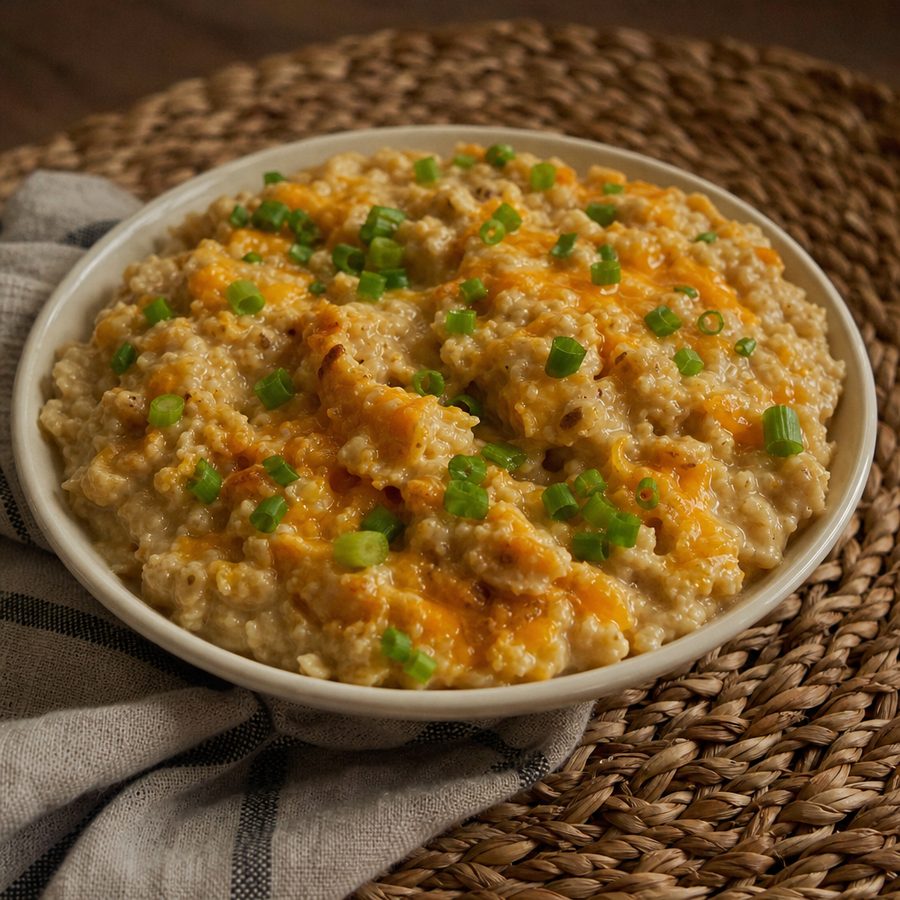
Creamy rolled oats simmered in milk until porridge-thick, stirred with sharp cheddar and nutritional yeast until glossy, then finished with a drizzle of olive oil and a shower of fresh scallions.
Why You'll Love This Recipe
Most people only know this bowl as sweet, and this version is aimed at anyone who wants a hearty, comforting breakfast that eats more like grits or risotto than dessert. It comes together in one pot on the stovetop in under fifteen minutes, which makes it realistic for a busy morning, and it leans on staples you likely already keep on hand. It is filling enough to carry you through to lunch without a mid-morning slump.
Rolled oats can be a savory porridge, and this treats them like one: simmering them in milk cut with water gives a creamy, spoon-coating base without becoming heavy, and pulling the pan off the heat before the cheddar goes in is the key move. Residual heat melts the cheese into a smooth, glossy sauce, while boiling it would turn the cheese grainy and stringy. Nutritional yeast deepens that savory, cheesy backbone, and a raw drizzle of olive oil plus fresh scallions at the end keeps the bowl from tasting flat and one-note.
Creamy oats, melted cheese, and a bright, oniony finish, so every spoonful has richness and a little lift. It is naturally high in fiber from the oats and a good source of protein from the milk and cheddar, a combination that helps a breakfast feel sustaining. The scallions add freshness and color, and the whole bowl delivers real comfort while still leaving you steady rather than sluggish.
Ingredients
- 4 cups rolled oats
- 2 cups milk
- 2 cups shredded cheddar
- 4 tbsp nutritional yeast
- 6 scallions, sliced
- 1 tbsp olive oil
- 1/4 tsp black pepper
Instructions
- Prep the scallions and cheese: Trim the roots and any wilted tops from the scallions, then thinly slice them on a slight angle; keep the pale white-and-light-green parts separate from the dark green tops. If your cheddar came in a block, coarsely grate it on the large holes of a box grater so it melts evenly.
- Simmer the oats: Pour the milk into a medium saucepan, add a roughly equal amount of water, and bring it to a gentle simmer over medium heat, stirring so the milk does not scorch on the bottom. Stir in the rolled oats and the sliced scallion whites, lower the heat to keep a lazy bubble, and cook, stirring often, until the oats are tender and the porridge is thick and creamy, about 6 to 8 minutes.
- Melt in the cheese: Take the pan off the heat before adding the cheese so it stays smooth rather than turning stringy. Add the grated cheddar and the nutritional yeast and stir steadily until the cheese has fully melted and the porridge looks glossy and cohesive.
- Season and adjust: Season with a few grinds of pepper; the cheddar and the nutritional yeast have already salted the porridge. If the porridge has tightened up, loosen it with a splash of milk and stir until it is spoonable and creamy again.
- Finish and serve: Spoon the oats into warm bowls, drizzle each with olive oil, and garnish generously with the reserved dark green scallion tops. Serve right away while hot and creamy.
Variations
- Greens folded in: Stir a big handful of baby spinach or finely chopped kale into the pot in the last minute of simmering; it wilts into the oats and adds color and extra vegetables.
- Runny egg on top: Crown each bowl with a fried or soft-poached egg and let the yolk run into the oats for extra richness; this adds egg.
- Smoky cheese swap: Trade the cheddar for smoked gouda or gruyère for a deeper, more complex flavor; this keeps the dish rich in dairy.
- Bring the heat: Swirl in a spoonful of chili crisp or a few dashes of hot sauce at the table for a savory bowl with a warm kick.
- Heartier grain: Use steel-cut oats in place of rolled for a chewier, nuttier texture; they need more liquid and a longer simmer, closer to 25 to 30 minutes, until tender.
Storage & Leftovers
Leftovers keep well in an airtight container in the refrigerator for up to four days. The porridge will firm up considerably as it chills, which is normal, since the oats and cheese set as they cool.
To reheat, add a splash of milk or water and warm gently on the stovetop or in the microwave, stirring every so often, until the oats loosen and turn creamy again. Reheat only until hot, and stir in the extra liquid a little at a time so you can bring it back to a spoonable texture without making it soupy.
To get ahead, cook the oats through the simmering stage and refrigerate them plain, then reheat with a little liquid and stir in the cheddar and nutritional yeast off the heat just before serving. Slice the scallions the night before and keep them in a small covered container so the finished bowl comes together in minutes.
Notes & Tips
- Grate your own cheese: Freshly grated cheddar from a block melts into a silkier sauce than pre-shredded, which is coated with anti-caking starch that can leave the oats slightly grainy.
- Salt last, salt lightly: Both the cheddar and the nutritional yeast bring their own salt, so taste before you season and add salt in small pinches to avoid overshooting.
- Use the whole scallion: Cook the sharper white parts into the oats where they mellow, and save the tender green tops raw for the finish so you get both depth and fresh bite.
- Nutritional yeast is adjustable: It drives the savory, cheesy flavor; start with less if you are new to it and stir in more to taste, since some people find it very assertive.
- Know when the oats are done: Look for a thick, creamy texture that mounds softly on the spoon and holds a slow bubble; if it looks soupy, keep simmering a minute more, stirring.
- Round out the bowl: A few cherry tomatoes, sliced avocado, or a piece of toast alongside turns this into a more substantial plate without much extra work.
Nutrition & Mindful Eating
- Oats, milk and cheddar cook down into one creamy bowl, and it works because the cheese seasons the grain the way butter seasons rice. The milk carries protein and calcium into the oats, and what comes out eats like a savoury dish.
- Rolled oats release their starch as they cook, which is what makes the bowl creamy all on its own, and the soluble fiber doing that thickening, beta-glucan, is the same one that keeps a bowl of oats with you all morning.
- Sharp cheddar stirred in off the heat melts smoothly rather than turning stringy, and it takes the oats somewhere savoury in a single step while bringing its own protein and calcium into the bowl.
- Nutritional yeast is the ingredient that makes people ask what is in this. It adds a toasted, cheesy depth that goes past what the cheddar alone gives, and it brings B vitamins along with that flavor.
- Scallions sliced thin and black pepper cracked over the top are what finish it. The scallions stay raw and sharp, the pepper warms the back of the throat, and a thread of olive oil ties both to the creamy oats underneath.
- As you eat, notice the pepper arriving after the cheese and the scallion cutting through both of them, and let a warm bowl slow you down for the few minutes it takes to finish.
Frequently Asked Questions
Can I use quick oats or steel-cut oats instead of rolled?
Quick oats work but cook faster and turn softer, so start checking after a few minutes and expect a looser, less textured porridge. Steel-cut oats also work and give a chewier bowl, but they need more liquid and a much longer simmer, roughly 25 to 30 minutes, so plan accordingly.
Why did my cheese turn grainy or stringy?
That usually happens when cheese is added while the pot is still boiling. Pull the pan off the heat first, then stir in the grated cheddar so the residual warmth melts it smoothly into a glossy sauce.
Do I have to use nutritional yeast?
No. It deepens the savory, cheesy flavor, but the dish still works without it. If you skip it, you may want a touch more cheddar or an extra pinch of salt to keep the bowl from tasting flat.
Can I make this without dairy?
Yes. Use your favorite unsweetened plant milk in place of the cow's milk and a melting-style plant-based cheese in place of the cheddar. The texture stays creamy, and the nutritional yeast helps carry the savory flavor; note this removes the dairy from the dish.