
Cheese-Stuffed Mini Peppers
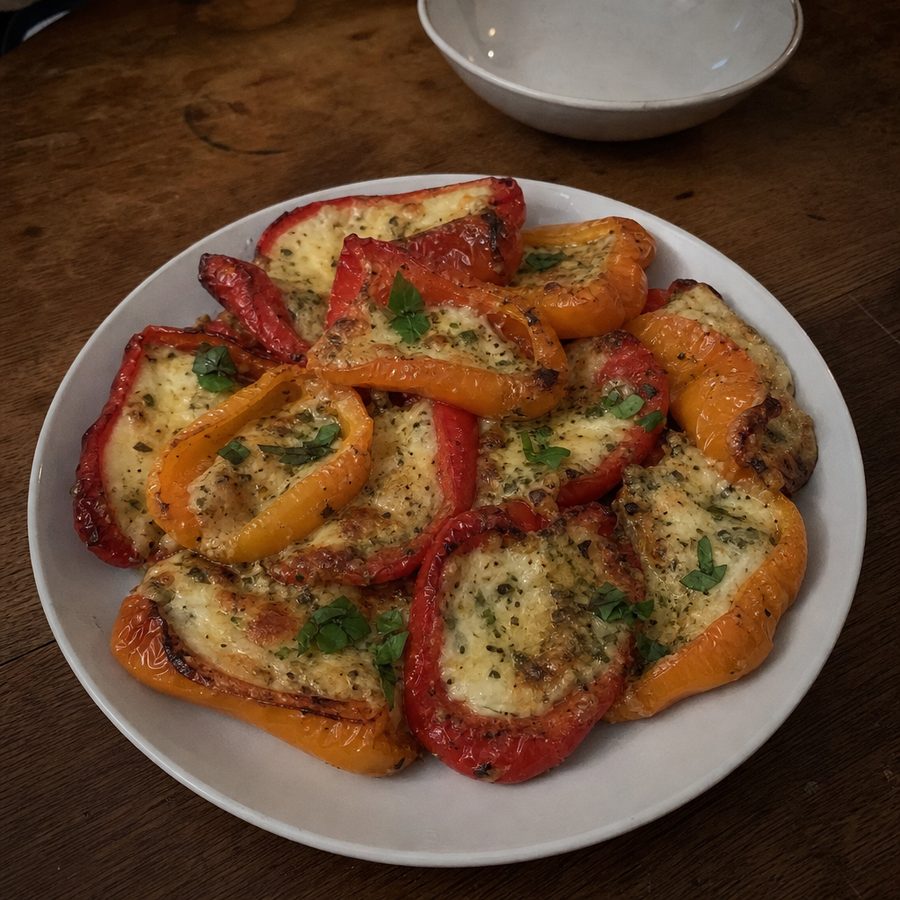
Sweet mini bell peppers baked until tender and cradling a creamy filling of goat cheese, ricotta, fresh chives, and garlic for a colorful, poppable savory bite.
Why You'll Love This Recipe
Mini peppers are sweet in a way the big ones are not, and roasting concentrates that until each half tastes almost like fruit against the salt of the cheese. Halved and seeded they hold a spoonful without collapsing, which is the practical reason to use them rather than a bell pepper cut into pieces. Twenty minutes in a hot oven, and they are best eaten warm rather than hot, which conveniently is about the time it takes to carry them to wherever people are sitting on a Friday evening.
The technique is simple but deliberate. Baking the halved peppers at a moderate heat softens their walls and concentrates their natural sweetness while keeping enough structure to hold the filling. The filling itself works because of the pairing of two cheeses: tangy goat cheese brings brightness and a slight funk, while ricotta softens and lightens the mixture so it stays creamy rather than dense. Raw minced garlic and fresh chives are folded in cold and mellow gently in the oven, so their flavor perfumes the cheese without turning harsh.
A tender, sweet pepper sits against the rich, savory cheese, warm from the oven with a whisper of garlic through it. The peppers bring vitamin C and fiber, and the goat cheese and ricotta contribute protein and calcium, so a couple of these bites carry more staying power than their small size suggests. They feel indulgent while still being built mostly from vegetables and fresh dairy.
Ingredients
- 8 mini bell peppers, halved
- 5 oz goat cheese
- 1/2 cup ricotta
- 2 tbsp chives
- 1 clove garlic
Instructions
- Preheat and prep the peppers: Preheat the oven to 375°F (190°C). Rinse the mini bell peppers, slice each one in half lengthwise through the stem, and use a small spoon or your finger to scrape out the seeds and white membrane inside. Arrange the halves cut-side up on a rimmed baking sheet so they sit level and hold their filling.
- Mince the aromatics: Peel the garlic and mince it very finely so no large pieces remain. Finely chop the chives into thin slices.
- Make the filling: In a bowl, combine the goat cheese, ricotta, chives, and minced garlic. Stir and mash with a fork until the mixture is smooth, creamy, and evenly streaked with green, with no large lumps of cheese remaining.
- Fill the peppers: Spoon the cheese mixture into each pepper half, mounding it slightly and pressing gently so it settles into the hollow. A small spoon or a piped corner of a zip-top bag both work well for a neat fill.
- Bake: Bake in the center of the oven for 13 to 15 minutes, until the peppers have softened and wrinkled slightly at the edges and the filling is warmed through with light golden spots on top.
- Cool and serve: Let the peppers rest on the baking sheet for a few minutes so the filling firms up and is safe to handle, then transfer to a platter and serve warm.
Variations
- Sun-dried tomato and basil: Fold finely chopped oil-packed sun-dried tomatoes and torn basil into the cheese for a sweet-tart, herbaceous lift.
- Lemon and dill: Stir in grated lemon zest and chopped fresh dill for a brighter, cleaner-tasting filling that plays up the tang of the goat cheese.
- Spiced and smoky: Add a pinch of smoked paprika and a little crushed red pepper to the filling for gentle heat and a warm, smoky edge.
- Nutty crunch on top: Sprinkle finely chopped toasted walnuts or pine nuts over the filling before baking for a toasty crunch. This adds nuts.
- Honey-drizzled finish: Finish the warm baked peppers with a thin drizzle of honey to play the sweetness against the tangy cheese. This adds honey.
Storage & Leftovers
Store leftover baked peppers in an airtight container in the refrigerator for up to three days. Let them cool completely before covering so condensation does not collect and make the peppers soggy.
To reheat, arrange the peppers on a baking sheet and warm in a 350°F (175°C) oven for about eight to ten minutes, until the filling is heated through. The oven keeps the pepper walls from going limp; a microwave works in a pinch but softens them more and can make the cheese watery.
To get ahead, mix the cheese filling up to two days in advance and keep it covered in the refrigerator. You can also halve and seed the peppers ahead of time. Fill them just before baking so the peppers stay firm and the filling does not weep.
Notes & Tips
- Pick peppers that sit flat: Choose mini bell peppers that are plump and fairly straight rather than curled, and look for a flatter side. Halved lengthwise, they cradle the filling better and are far less likely to tip and spill on the pan.
- Let the cheeses soften first: Take the goat cheese and ricotta out of the refrigerator fifteen to twenty minutes before mixing. Softened cheese blends into a smooth, spoonable filling with much less effort and no stubborn lumps.
- Pipe the filling for a neat look: For clean edges and a nicer presentation, spoon the filling into a zip-top bag, snip off a small corner, and pipe it into the peppers. Handy when you are making a big platter for company.
- Tame the garlic if you like it mild: Raw garlic softens in the oven but still carries a bite. For a gentler flavor, use less, or grate it to a paste so it disperses evenly instead of landing in one sharp pocket.
- Watch for the doneness cues: They are ready when the pepper edges wrinkle and soften and the cheese tops pick up a few golden spots. Pull them before the peppers collapse. You want tender walls that still hold their shape.
- Serve them the right temperature: These taste best warm or at room temperature, when the filling is creamy and the pepper is sweet. Straight from the fridge the cheese firms up and mutes the flavor, so let them sit out a bit before serving.
Nutrition & Mindful Eating
- Goat cheese and ricotta are a deliberate pair. The goat cheese brings the tang and the ricotta softens it into something mild and spoonable, and the sweet pepper around them carries the whole bite.
- Goat cheese has a sharpness that stands up to a sweet pepper, which is why it works better here than a mild cheese would, and the protein it carries is what gives a few of these some real weight.
- Ricotta is what makes the filling pipeable and light. It whips smooth in a bowl in under a minute, softens the goat cheese without dulling it, and adds its own mild dairy protein and calcium.
- Mini peppers baked briefly keep some of their crunch, so there is still snap under the creamy filling, and their vitamin C and carotenoid pigments are the reason a plate of these looks as good as it tastes.
- Raw garlic stirred through the filling gives it a low heat that builds as you eat, and chives cut over the top add a green onion sharpness that keeps the cheese bright rather than heavy.
- As you eat, pause on the first one long enough to catch the tang of the goat cheese against the sweet pepper and the garlic arriving behind it, then take them one at a time rather than by the handful.
Frequently Asked Questions
Can I make these without goat cheese?
Yes. If the tang of goat cheese is not for you, replace it with cream cheese for a milder, richer filling, or use all ricotta with a little extra salt. The texture stays creamy; the flavor just becomes gentler.
Why did my peppers turn out watery or floppy?
That usually means they baked a little too long or were reheated in the microwave, which draws out moisture and collapses the walls. Pull them once the edges wrinkle and the cheese is warm, and reheat leftovers in the oven rather than the microwave.
Can I serve these cold or at room temperature?
They are best warm or at room temperature, when the filling is soft and creamy. You can bake them ahead and let them come to room temperature before serving; straight from the fridge the cheese firms up and the flavor is muted.
How do I keep the filling from spilling out while baking?
Set the halves cut-side up on a level baking sheet, choosing peppers with a flatter side so they do not roll. Do not overfill. A slight mound that sits inside the pepper wall stays put, while an overstuffed half tends to overflow as the cheese warms.