
Cheeseburger Bowl
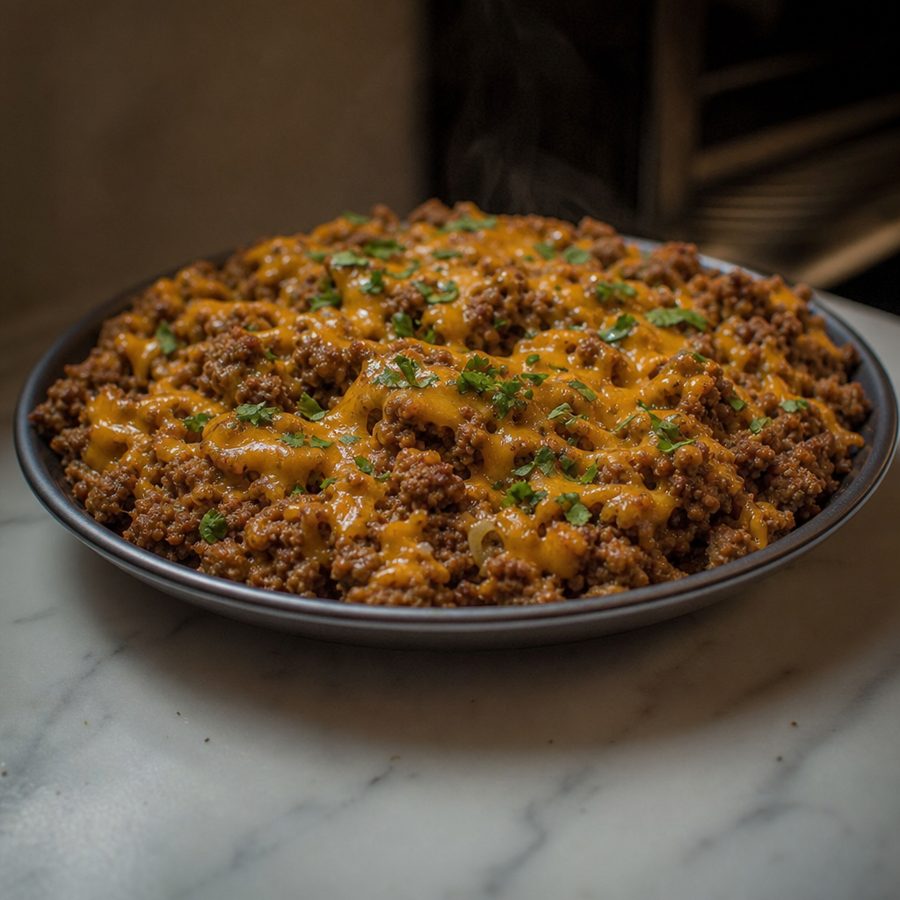
Seasoned browned ground beef blanketed with melted cheddar and spooned hot into a bowl.
Why You'll Love This Recipe
This is a stripped-down cheeseburger that keeps everything you actually crave and drops the rest: rich, well-browned ground beef under a lid of melted cheddar, eaten warm from a bowl with a fork. It is fast enough for a weekday lunch, needs one skillet, and suits anyone who wants a hot, filling meal built almost entirely from meat and cheese with a straightforward, familiar flavor.
The whole thing rides on browning the beef properly. Cooking the crumbles over medium-high heat until they are deeply colored builds the toasted, savory flavor that reads as "cheeseburger," so it is worth letting the meat sit long enough to brown rather than rushing it. Adding the salt after browning lets you taste and adjust, and melting the cheddar under a lid off the heat uses the residual warmth of the pan to melt it smoothly without scorching or turning it rubbery.
It is deeply satisfying because it leans on protein and fat, the two things that make a meal feel substantial and keep you full for hours. The beef delivers a generous amount of complete protein along with iron and B12, and the cheddar adds calcium and a salty, savory pull that ties it all together. It is warm, rich, and simple, the kind of lunch that quiets hunger without leaving you looking for a snack an hour later.
Ingredients
- 1 1/2 lb ground beef
- 1 1/3 cup shredded cheddar
- 3/4 tsp salt
Instructions
- Shred the cheddar yourself: If you are working from a block, shred the cheddar on the large holes of a box grater and set it aside; it takes about 2 minutes and it is the single biggest difference in how this melts. Block cheese melts better than the bagged kind, because pre-shredded cheese is dusted with starch to stop it clumping in the bag and that starch is exactly what makes it go grainy instead of glossy in the pan.
- Brown the beef to 160°F, 8 to 10 minutes: Set a wide skillet over medium-high heat and add the ground beef, breaking it into small crumbles with a wooden spoon. Cook for 8 to 10 minutes, stirring now and then, until the meat is deeply browned with no pink left and reads 160°F (71°C) on an instant-read thermometer. Give it room to actually brown rather than crowding it, since a packed pan steams the meat gray in its own liquid.
- Salt it at the end, then level it: Sprinkle the salt evenly over the beef and stir it through, then spread the meat into an even layer in the skillet. Salting after browning rather than before is deliberate, because salt pulls water out of raw ground beef and that water is what stops it browning in the first place.
- Melt the cheese under a lid, off the heat: Blanket the beef with the shredded cheddar, cover the skillet, and let it stand off the heat for 2 to 3 minutes, until the cheese is fully melted and glossy. Off the heat is the whole trick: the residual warmth of the pan is enough to melt cheddar, while a live burner under it splits the cheese into oil and rubbery strands within a minute.
- Bowl it up with the browned bits: Spoon the beef and its melted cheddar into bowls, scraping up the browned bits stuck to the pan as you go, and serve hot. Those bits are the most concentrated flavor in a three-ingredient recipe, so leaving them in the skillet is throwing away the part you cooked for.
Variations
- Swap the ground meat: Use ground lamb or ground pork in place of the beef for a richer, slightly different flavor. This keeps it meat-and-cheese but changes the character of the dish.
- Top with a fried egg: Slide a fried egg over each finished bowl and let the runny yolk fold into the beef and cheese. This adds egg.
- Add crisp bacon: Cook chopped bacon until crisp and stir it through the browned beef for smoky, salty crunch. This adds pork.
- Change the cheese: Trade the cheddar for a sharp aged cheese such as gouda or Swiss for a deeper, nuttier melt. This stays a dairy topping but shifts the flavor.
- Finish with parmesan: Sprinkle finely grated hard parmesan over the melted cheddar for an extra salty, savory hit. This adds more aged cheese.
Storage & Leftovers
Cooled leftovers keep in an airtight container in the refrigerator for up to four days. Store the beef and any pooled fat together, since that fat carries flavor and helps the meat stay moist.
Reheat gently in a skillet over medium-low or in the microwave in short bursts, stirring between them, just until hot throughout. Low and slow keeps the cheese creamy; high heat can make the melted cheddar tighten and turn oily.
To get ahead, brown and season the beef up to a couple of days in advance and refrigerate it. When you are ready to eat, warm the meat back up, then blanket it with the cheddar and cover so the cheese melts fresh over hot beef.
Notes & Tips
- Pick the right fat level: An 80/20 ground beef gives you the juiciest, most flavorful result. A 93/7 grind works but can taste dry, so if you use it, avoid overcooking and keep the pooled juices with the meat.
- Shred your own cheese: A block of cheddar you shred yourself melts more smoothly than pre-shredded bags, which are coated in anti-caking starch that can make the melt grainy.
- Decide about the grease: The rendered beef fat is where a lot of the flavor lives, so leaving it in makes a richer bowl. If you prefer it lighter, spoon off some of the excess fat before adding the cheese.
- Season by taste: Salt is the only seasoning here, so it is doing all the work. Add it a little at a time and taste, since the cheddar also brings its own saltiness and it is easy to overshoot.
- Melt off the heat: Cover the pan and let the residual warmth melt the cheddar rather than blasting it over a flame, which keeps the cheese creamy instead of oily and stringy.
- Double the batch: The browned, seasoned beef reheats well, so cook extra and keep it in the refrigerator for quick lunches through the week, adding fresh cheese each time you reheat.
Nutrition & Mindful Eating
- Beef and cheddar are the whole thing here, and they work because they are savory in two different registers. The beef gives you the browned, mineral flavor and the protein, and the cheddar gives you salt, tang and pull.
- Ground beef browns best when you leave it alone long enough for the bottom to crust, and that crust is where most of the flavor in this bowl lives. The meat also carries iron in the form your body takes up most readily.
- Cheddar melts into the hot beef rather than sitting on top of it, and an aged block will taste sharper and go further than a mild one. It brings calcium, a little more protein, and the salty pull that makes the bowl read as a cheeseburger.
- Salt is doing more work here than its size suggests. Added while the beef is still browning, it draws moisture to the surface and pulls the meaty flavor forward, which is what keeps a bowl this simple from tasting flat.
- Beef and cheese this rich hold you for a long stretch. The protein and the fat are doing most of that work, along with the zinc and B12 that red meat carries, and it is why a small bowl eats like a full lunch.
- As you eat, notice how the cheese has gone stringy against the browned beef and how much flavor a plain bowl can hold, and take it sitting down, slowly enough to feel when you have had enough.
Frequently Asked Questions
What kind of ground beef works best?
An 80/20 blend hits the sweet spot: enough fat to stay juicy and flavorful, without so much grease that the bowl feels heavy. A 93/7 grind works if you cook it carefully and keep the juices, and fattier grinds are rich but you may want to pour off some of the rendered fat.
Do I need to drain the fat?
It is up to you. Leaving the rendered fat in makes a richer, more flavorful bowl, and it helps the cheese melt into a silky sauce. If you would rather keep it lighter, spoon off some of the excess before you add the cheddar.
How do I know the beef is fully cooked?
Ground beef is done when there is no pink left and it reaches 160°F (71°C) on an instant-read thermometer. Because the meat is broken into small crumbles, it also cooks quickly and evenly, so deep, even browning is a good visual cue.
My melted cheese turned greasy and split. What happened?
That usually comes from too much heat. Cheddar melts best gently, so cover the pan and use the residual warmth off the flame rather than melting it over high heat. Freshly shredded cheese from a block also melts more smoothly than pre-shredded.