
Chicken and Bacon Skillet
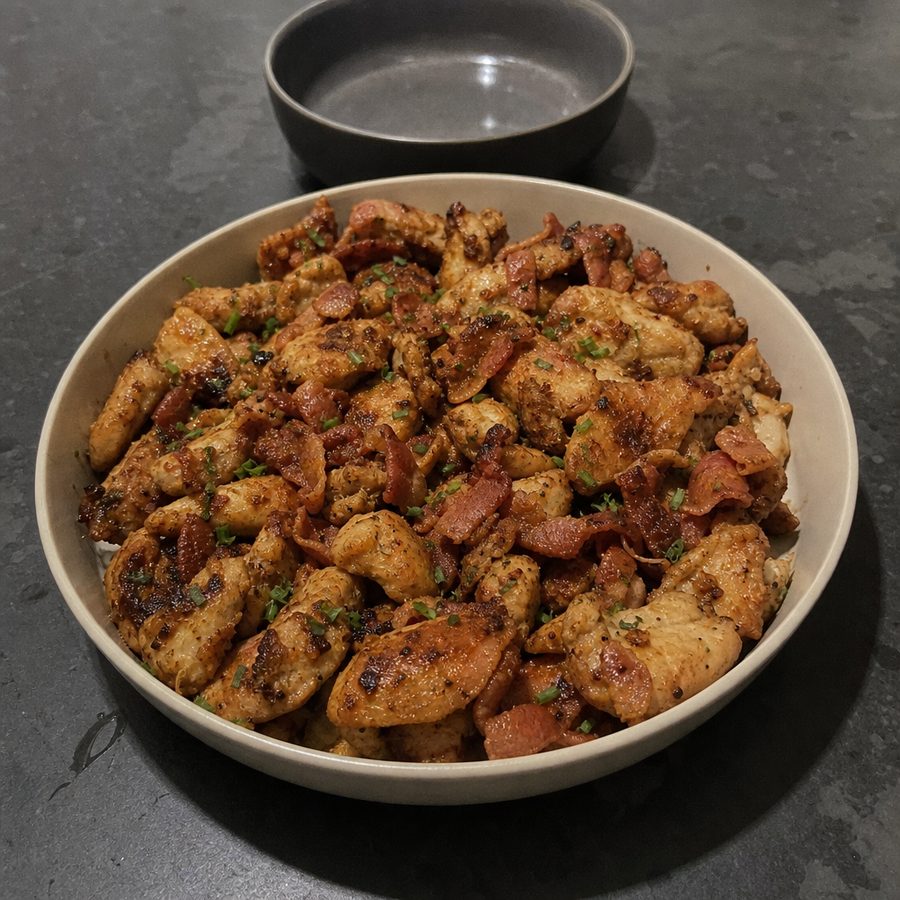
Golden-seared chicken thigh chunks tossed with crisp chopped bacon and butter, all glossed in the rendered pan fat.
Why You'll Love This Recipe
Juicy chicken thighs and smoky bacon were made for each other, and one fast skillet is all the two of them need. It is a hearty, savory plate for anyone who wants a filling, protein-forward meal with almost no shopping list and no fussy technique. If you like meals that lean into rich, meaty flavor rather than lots of components, this one delivers with just four ingredients.
The whole dish works because of one move: rendering the bacon first and cooking the chicken in that fat. Bacon fat carries smoke and savory depth that a neutral oil cannot, so every chunk of chicken picks up that flavor as it sears. Thighs are the right cut here because their extra fat and connective tissue keep them tender and forgiving over high heat, staying moist even when fully cooked through. A hard sear builds a browned, flavorful crust, and finishing with butter pulls it all together into something glossy and rich.
Protein and real fat together keep you full and steady long after the plate is clear, which is the whole point of a breakfast like this. Chicken thighs are an excellent source of complete protein for muscle and repair, while the bacon and butter add flavor and richness that make a simple plate feel indulgent. It is quick enough for a weekday meal yet substantial enough that it never feels like you skimped.
Ingredients
- 1 1/4 lb boneless chicken thighs, cut in chunks
- 6 slices bacon, chopped
- 2 tbsp butter
Instructions
- Prep the meat: Cut the boneless chicken thighs into bite-sized chunks, roughly one to one-and-a-half inches across, and pat them dry with paper towels so they will brown rather than steam. Chop the bacon slices crosswise into short pieces.
- Render the bacon: Add the chopped bacon to a cold, heavy skillet and set it over medium heat. Starting cold lets the fat render slowly instead of scorching the chicken. Cook, stirring now and then, until the pieces are crisp and deep brown and a shallow pool of fat has collected, about 8 to 10 minutes. Lift the bacon out with a slotted spoon and set it aside, leaving all the rendered fat in the pan.
- Sear the chicken: Pat the chicken chunks dry all over so they brown rather than steam. Raise the heat to medium-high and add the chicken to the hot bacon fat in a single layer, working in two batches if the pan is crowded so the pieces sear instead of steam. Let them cook undisturbed until well browned on the underside, about 4 minutes, then turn and continue cooking until golden on all sides and cooked through, about 8 to 10 minutes total. They are done when the meat is opaque all the way through and reads 165°F (74°C) on an instant-read thermometer.
- Toss with butter and bacon: Reduce the heat to medium. Add the butter and the reserved crisp bacon to the skillet and toss everything together for about a minute, until the butter has melted and coated the chicken in a glossy sheen.
- Serve: Divide the chicken and bacon among plates and spoon some of the glossy skillet fat over each portion before serving.
Variations
- Pork instead of chicken: Swap the chicken thighs for cubed pork shoulder, cutting it into similar bite-sized chunks and searing it the same way until browned and cooked through. It brings a richer, meatier bite that pairs naturally with the bacon.
- Beef skillet: Use cubed chuck steak or ground beef in place of the chicken, browning it in the bacon fat until deeply seared. This gives a heartier, beefier plate.
- Add fried eggs: Fry a couple of eggs directly in the leftover skillet fat and slide them over the finished chicken and bacon. This adds eggs and turns it into a heartier plate.
- Melt hard cheese on top: Grate a hard aged cheese over the hot chicken just before serving so it melts into the fat. This adds dairy and gives a sharp, salty finish.
- Duck fat finish: Replace the butter with a spoonful of duck fat when you toss everything at the end. This removes the dairy and lends a deeper, savory richness.
Storage & Leftovers
Refrigerate leftovers in an airtight container once fully cooled, and they will keep well for up to four days. The rendered fat may firm up and turn cloudy in the fridge, which is normal and melts back to glossy as you reheat.
Reheat gently in a skillet over medium-low heat until the chicken is warmed through, which keeps the meat tender and re-crisps the bacon a little. A microwave works in a pinch, but heat in short bursts and stop as soon as it is hot so the chicken does not turn rubbery.
To get ahead, cook the bacon and cut the chicken into chunks a day in advance and keep them refrigerated separately. When it is time to eat, the meal comes together in the time it takes to sear the chicken and toss everything with butter.
Notes & Tips
- Choose thick-cut bacon: Thick-cut slices render more fat and stay meaty and crisp rather than turning brittle, which gives you both a better sear medium for the chicken and a better texture in the final toss.
- Dry chicken browns better: Take a minute to pat the chicken chunks dry before salting. Surface moisture is the enemy of a good sear, and dry meat is what gives you that golden crust instead of a pale, steamed exterior.
- Do not crowd the pan: If the chicken pieces are touching, they release steam and stew instead of browning. Sear in two batches if your skillet is on the smaller side; the extra few minutes are worth it.
- Trust a thermometer: The surest sign the chicken is done is an instant-read thermometer showing 165°F (74°C) at the center of the largest chunk. Thighs are forgiving, so a minute or two past that keeps them juicy rather than drying them out.
- Save the extra fat: There is often more rendered bacon and butter fat than you need to coat the meat. Spoon it into a small jar and refrigerate it to cook with later; it is pure flavor and keeps for a couple of weeks.
- Salt at the end to taste: Bacon and butter both carry salt, so taste a piece before adding any extra. It is easier to sprinkle on a little more at the table than to pull it back once the whole skillet is seasoned.
Nutrition & Mindful Eating
- Everything in this pan cooks in something the last ingredient left behind. The bacon renders, the chicken browns in that fat and takes on the smoke, and the butter goes in last to pull the browned bits off the bottom into a sauce.
- Chicken thighs are the right cut for a hot pan because they forgive you. The dark meat stays juicy well past the point where breast meat would tighten up, and it carries more iron and zinc than the paler cut does.
- Bacon is the seasoning as much as it is an ingredient. Rendered slowly it gives up enough fat to cook everything else and turns brittle at the edges, and its salt and smoke are what make three ingredients taste like a much longer recipe.
- Butter goes in off the heat so it emulsifies rather than splits, and it rounds off the sharpness of the bacon fat. It carries vitamins A, D, E and K, which are only available to you in the company of fat like this.
- A skillet this rich holds you a long time. The protein in the thighs and the fat from the bacon and butter do that together, and it is why a modest plate of this eats like a proper lunch.
- As you eat, take in the crackle of the bacon against the soft thigh meat and the way the butter has gone glossy in the pan, and give the plate a few unhurried minutes before you decide about seconds.
Frequently Asked Questions
Can I use chicken breast instead of thighs?
You can, but breast dries out faster over high heat. If you go that route, cut the pieces a little larger, watch them closely, and pull them off as soon as they hit 165°F (74°C) so they stay juicy.
Why start the bacon in a cold pan?
Placing bacon in a cold skillet and heating it gradually gives the fat time to render slowly, so you end up with a good pool of flavorful fat and evenly crisp bacon instead of pieces that char on the outside before the fat releases.
My bacon fat browned too fast and got bitter. What happened?
That usually means the heat was too high. Keep the bacon over medium heat and stir it now and then; if the rendered fat ever looks like it is darkening too quickly before the chicken goes in, lower the heat a notch.
Do I need to drain off any of the fat?
It is up to you. The dish is meant to be rich, but if there is more fat in the pan than you want, spoon some out before adding the butter and save it for another use. Leave enough to keep the chicken glossy.