
Chicken Cacciatore with Mushrooms and Olives
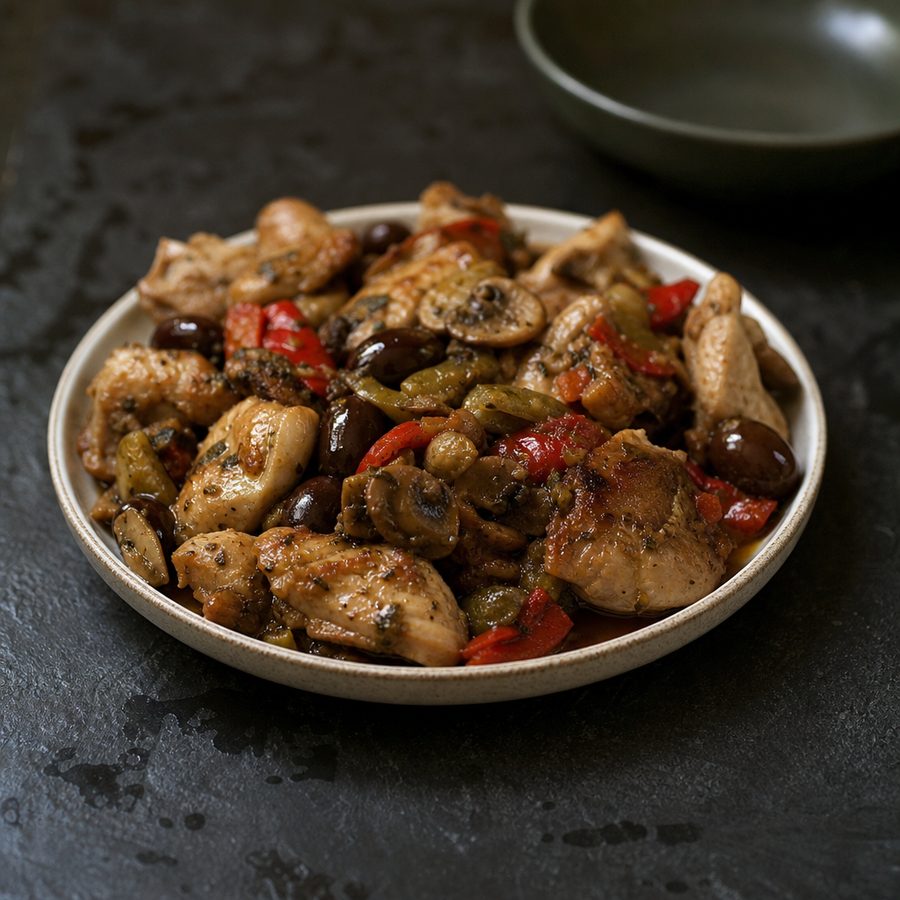
Tender braised chicken simmered with mushrooms, red bell pepper, onion, and garlic in a crushed-tomato sauce, finished with briny kalamata olives, fresh basil, and grated parmesan.
Why You'll Love This Recipe
This is a rustic, one-pan braise for anyone who wants a hearty, savory dinner without a long list of steps. It leans on humble ingredients like chicken, mushrooms, peppers, tomatoes, and olives, and turns them into something that tastes slow-cooked even though it comes together in one skillet. It suits a weeknight when you want real food on the table, and it reheats well enough to carry through lunch the next day.
Savory depth gets built up in layers. Browning the chicken first builds color and flavor on the meat, and cooking the mushrooms until they give up their moisture concentrates their earthiness rather than leaving them watery. The crushed tomatoes and oregano form a quick sauce, and the kalamata olives add a salty, briny punch that keeps the whole dish from tasting flat. Finishing with fresh basil and parmesan lifts and rounds everything at the end.
Protein and fat that keep you full, with the vegetables woven through every single bite. The chicken gives it real staying power, the olive oil and olives make it rich, and the mushrooms and pepper add texture and volume so a serving feels generous. It is the kind of warm, savory bowl that feels like comfort food while still being made almost entirely of whole ingredients.
Ingredients
- 1 1/4 lb cooked chicken, cut in pieces
- 5 tbsp olive oil
- 2 tbsp butter
- 3/4 cup crushed tomatoes
- 2 1/2 cups sliced mushrooms
- 1 red bell pepper, sliced
- 1/3 cup diced onion
- 4 cloves garlic, minced
- 1/2 cup kalamata olives
- 1/3 cup grated parmesan
- 1 tbsp dried oregano
- 3 tbsp fresh basil
- 1/4 tsp black pepper
Instructions
- Prep the ingredients: Slice the mushrooms, slice the red bell pepper into thin strips, dice the onion, and mince the garlic. Cut the chicken into bite-size pieces. If the kalamata olives still have pits, press each one flat under the side of a knife and pull the pit out. Tear or chop the fresh basil just before serving so it stays bright.
- Cook the chicken: Season the chicken pieces with a few grinds of pepper; the kalamata olives and the parmesan salt this dish as it cooks. Warm some of the olive oil in a large skillet over medium-high heat and add the chicken in a single layer. Cook, turning once, until golden on the outside and cooked through with no pink at the center, about 6 to 8 minutes, or until the internal temperature reaches 165°F (74°C). Transfer to a plate and set aside.
- Saute the vegetables: Lower the heat to medium and add the remaining olive oil and the butter to the same skillet. Add the onion, garlic, bell pepper, and mushrooms. Cook, stirring often, until the mushrooms have released their liquid and softened and the pepper is tender, about 8 to 10 minutes. The mushrooms will shrink noticeably and turn glossy.
- Build the sauce: Stir in the crushed tomatoes and the dried oregano, scraping up any browned bits from the bottom of the pan. Simmer, stirring now and then, until the sauce thickens slightly and smells rich, about 5 minutes.
- Braise together: Return the chicken to the skillet along with the kalamata olives and any juices from the plate. Stir to coat, cover, and simmer gently over low heat for about 12 minutes so the flavors meld and the chicken warms through. If the sauce tightens too much, loosen it with a splash of water.
- Finish and serve: Stir in the fresh basil off the heat. Spoon into bowls or onto plates and top with the grated parmesan just before serving.
Variations
- Add some heat: Stir a pinch of crushed red pepper flakes in with the oregano for a gentle warmth that plays well against the briny olives.
- Deeper savory notes: Melt a couple of chopped anchovy fillets into the vegetables as they cook; they dissolve completely and add a rich, savory backbone. This adds fish.
- More greens: Fold a few handfuls of fresh spinach or some sliced zucchini into the sauce during the braise so they wilt and soften into the dish.
- Wine-braised: Pour a splash of dry white wine into the pan after the vegetables soften and let it bubble down before adding the tomatoes, for a rounder, more layered sauce. This adds wine.
- Sharper cheese: Swap the parmesan for grated pecorino romano for a sharper, saltier finish. This keeps the dairy but changes the character.
Storage & Leftovers
Cooled leftovers keep in an airtight container in the refrigerator for up to four days. The flavors actually settle and deepen overnight, so the second day often tastes even better than the first.
Reheat gently in a covered skillet or saucepan over medium-low heat, stirring now and then until warmed through. Add a splash of water if the sauce has thickened in the fridge. The microwave will do. Stir each time you stop, so the sauce heats through before the chicken has a chance to dry.
To get ahead, make the whole dish through the braise and refrigerate it, then rewarm and add the fresh basil and parmesan just before serving so they stay bright. You can also prep all the vegetables and cut the chicken a day ahead and keep them chilled separately to shorten cooking time.
Notes & Tips
- Pick the right olives: Buy kalamata olives that still have their pits when you can. They hold their firm, meaty texture better than pre-pitted ones. Pit them yourself by pressing each flat under a knife.
- Cook the mushrooms fully: Give the mushrooms time to release and cook off their liquid before you add the tomatoes; crowding or rushing them leaves the sauce watery instead of concentrated and earthy.
- Mind the salt: The olives and parmesan both bring saltiness, so season the sauce lightly and taste at the end before adding more. It is easier to add salt than to pull it back.
- Thigh meat for richness: Boneless chicken thighs stay juicier through the braise than breast meat and are more forgiving if the simmer runs long. Either works well here.
- Keep the basil fresh: Add the fresh basil only at the very end, off the heat. Stirred in early it darkens and loses its aroma; added last it stays fragrant and green.
- Serve it well: A green salad or a pile of sauteed greens on the side rounds this out into a full plate and soaks up the extra sauce.
Nutrition & Mindful Eating
- Chicken, mushrooms and tomato are the three that carry this. The chicken gives up its juices into the sauce, the mushrooms give it an earthy backbone, and the tomato holds both in something bright enough to keep eating.
- Chicken browned first and then let down into the tomato picks up two kinds of flavor, the seared crust and the long simmer. It is the protein here that makes one pan enough for dinner.
- Mushrooms are what people mistake for meat in this dish. Browned properly, with the pan hot and not crowded, they turn deeply savory and chewy, and they bring B vitamins and selenium along with all that flavor.
- Kalamata olives go in near the end so they stay whole and briny rather than melting away. They bring the same soft, buttery fat as the olive oil, and their brine is what makes the tomato taste more like itself.
- Oregano goes in early where the long heat opens it up, and basil goes on raw at the end where it stays perfumed. Parmesan and a hard grind of black pepper over the top are the last two things that make it smell finished.
- As you eat, pull the meat apart with the side of your fork and see how much the sauce has taken on from it, and let this be a slow dinner rather than one you get through.
Frequently Asked Questions
Can I use chicken thighs instead of breast?
Yes. Boneless thighs stay juicier and are more forgiving during the braise, while breast meat firms up and cooks a little faster. Cut either into bite-size pieces and cook to an internal temperature of 165°F (74°C).
My sauce came out too thin. How do I fix it?
Uncover the skillet and let it simmer a few extra minutes so some of the liquid evaporates and the sauce concentrates. Cooking the mushrooms until their moisture is fully released before adding the tomatoes also helps prevent a watery sauce.
The olives make it very salty. What can I do?
Give the kalamata olives a quick rinse under cold water before adding them, and hold back on any extra salt until you taste the finished sauce. The parmesan adds saltiness too, so season last.
Can I leave out the parmesan?
Yes. The dish still tastes rich and savory from the olives, mushrooms, and browned chicken. Leaving out the parmesan removes the dairy; a light squeeze of lemon at the end can add brightness in its place.