
Chicken And Vegetable Barley Soup
A soul-warming one-pot soup of shredded chicken breast and chewy barley simmered with carrots, celery, kale, onion, garlic, and thyme, then brightened with a squeeze of fresh lemon.
Why You'll Love This Recipe
This is a homey, filling dinner for anyone who wants something warm and restorative that still eats light. It leans on shredded chicken, tender barley and a generous load of vegetables, so a single bowl feels like a full meal rather than a starter. It is a forgiving pot to make on a weeknight and a comforting one to come home to on a cold evening.
The onion, carrot, and celery go first, and everything else follows them. Softening the onion, carrot and celery in olive oil first builds a sweet, savory foundation, and blooming the garlic and thyme in that fat for a minute pulls out their aroma before any liquid goes in. Barley is the quiet hero: as it simmers it releases a little starch that gives the broth body without any cream, and its chew holds up instead of turning to mush. The finishing squeeze of lemon lifts everything and keeps the soup tasting fresh rather than flat.
Several notes land at the same time. The chicken is a filling source of protein, the barley and vegetables bring plenty of fiber, and the kale adds an earthy bite and color. That combination of protein and fiber is what makes a bowl feel full and steady, and because the salt is kept modest, the herbs, garlic and lemon are doing the flavor work instead of a heavy hand of sodium.
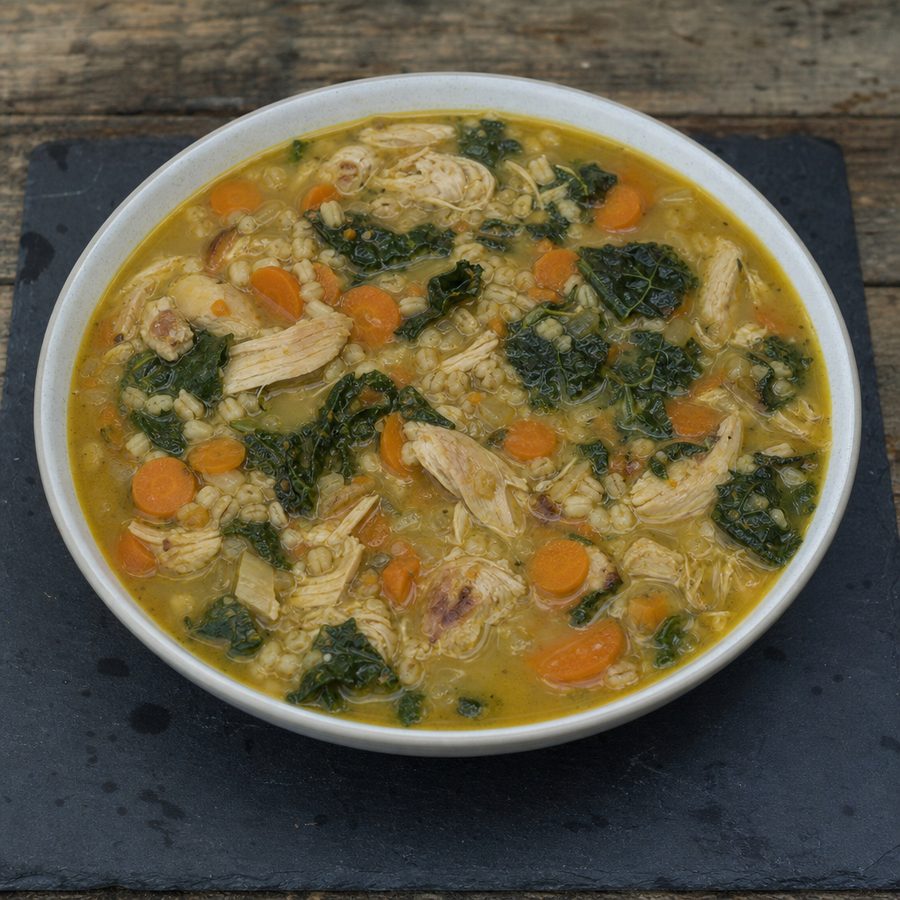
Ingredients
- 4 cups shredded cooked chicken breast
- 2 1/2 cups cooked barley
- 3 medium carrots, sliced
- 3 celery stalks, sliced
- 3 cups chopped kale
- 1 medium onion, diced
- 4 garlic cloves, minced
- 2 tsp fresh thyme
- 3 tbsp olive oil
- 2 tbsp fresh lemon juice
- 1/2 tsp sea salt
- 1/4 tsp black pepper
Instructions
- Have the barley ready: This builds on barley that is already cooked, so have it ready to go into the pot. Starting from dry instead, rinse the pearl barley under cold running water and simmer it until the grains are tender but still slightly chewy, about 35 to 40 minutes, then drain off any water left behind.
- Have the chicken shredded: This also builds on chicken that is already cooked and shredded. From raw instead, place the breasts in a wide pan, cover them with water, and bring it to a gentle simmer. Cook until the meat is opaque all the way through and reads 165°F (74°C) at the thickest point, about 15 minutes. Lift out, let cool a few minutes, then pull into shreds with two forks.
- Prep the vegetables: Peel and slice the carrots, slice the celery, dice the onion, and mince the garlic. Strip the kale leaves from their tough stems and roughly chop the leaves, since the stems stay woody however long the pot simmers. Strip the thyme leaves from their stems.
- Build the base: Warm the olive oil in a large soup pot over medium heat. Add the onion, carrot and celery and cook, stirring now and then, until softened and the onion is translucent, about 6 to 8 minutes. Stir in the garlic and thyme and cook until fragrant, about 1 minute.
- Simmer: Pour in water to cover generously and add the cooked barley. Bring it to a simmer and cook for 15 minutes, so the flavors come together and the vegetables turn tender.
- Add chicken and kale: Stir in the shredded chicken and the chopped kale. Simmer until the kale wilts and turns tender and the chicken is heated through, about 5 minutes, and no longer, because already-cooked chicken tightens the second time around.
- Finish: Stir in the fresh lemon juice and sea salt, and season with freshly ground black pepper. Taste and adjust, then ladle into bowls.
Variations
- Swap the grain: Trade the barley for farro or brown rice for a similar chew; note that farro adds gluten, while brown rice keeps it gluten-free.
- Different greens: Use chopped spinach, chard or escarole in place of the kale, stirring it in at the very end since tender greens wilt in a minute or two.
- Brighter and herbier: Finish with chopped fresh parsley or dill along with the lemon for a fresher, more garden-forward flavor.
- A little heat: Add a pinch of red pepper flakes with the garlic, or stir in a little smoked paprika for a gentle warmth and color.
- Rotisserie shortcut: Use pulled meat from a plain roasted chicken instead of poaching your own, and stir it in at the same stage to warm through.
Storage & Leftovers
Cooled to room temperature and stored in an airtight container, the soup keeps in the refrigerator for up to four days. The barley will drink up broth as it sits, so it thickens overnight, which is normal.
Reheat gently on the stovetop over medium-low heat, adding a splash of water to loosen it back to a soupy consistency. Warm just until steaming and heated through; a quick microwave reheat in a covered bowl works too, stirring halfway.
To get ahead, cook the barley and poach and shred the chicken up to two days in advance and refrigerate them separately. The soup also freezes well for up to three months, though the kale softens further on thawing; add a fresh squeeze of lemon after reheating to wake the flavor back up.
Notes & Tips
- Pick the right barley: Pearl barley cooks faster and turns tender in the times given here; hulled barley is nuttier and more intact but needs a longer simmer, so start it earlier if you use it.
- Slice for even cooking: Cut the carrots and celery into pieces of roughly the same thickness so they finish together and none stay crunchy while others go soft.
- Don't skip the stems: Kale stems are tough and stringy even after simmering, so tear or cut the leaves away from them before chopping for a more pleasant bite.
- Salt at the end: Because the broth reduces slightly and the barley keeps absorbing it, wait until the soup is finished to add the salt and taste, so you don't over-season early.
- Lemon is the finish, not the simmer: Add the lemon juice off the heat right before serving; simmering it dulls the bright, fresh lift that balances the earthy vegetables.
- Serve it fuller or brothier: For a stew-like bowl, let it sit a few minutes so the barley thickens it; for a lighter soup, loosen with a little extra water just before ladling.
Nutrition & Mindful Eating
- Chicken, barley and the vegetable base build this bowl in layers. The onion, carrot and celery give the broth its sweetness, the barley thickens it as the grains swell, and the chicken makes it something you can call dinner.
- Barley is what separates this from a thin soup. The grains keep a real chew even after a long simmer, and the beta-glucan they release is the same soluble fiber that gives the broth its soft, faintly creamy body.
- Kale goes in near the end so it keeps some structure, and its slight bitterness plays against the sweet carrot, along with the vitamin K and antioxidant compounds that dark leaves carry.
- Chicken breast is mild and fine-textured, so it takes on the thyme and the broth around it rather than competing with them, and the protein is what keeps a bowl of soup from eating like a starter.
- Fresh thyme goes in early and the lemon goes in at the very end, and that split is the whole trick. The thyme has an hour to settle into the broth while the lemon stays sharp and lifts everything on the way to the table.
- As you eat, notice how the barley has thickened the broth and how the lemon keeps arriving at the end of each spoonful, and let the bowl warm you for a while rather than disappearing in four minutes.
Frequently Asked Questions
My barley soaked up all the broth overnight. Is that a problem?
Not at all. Barley keeps absorbing liquid as it sits, so leftovers naturally thicken. Just stir in a splash of water or broth when you reheat to bring it back to the consistency you like.
Can I make this in a slow cooker?
Yes. Soften the onion, carrot and celery with the garlic and thyme first for flavor, then add them to the cooker with water and the cooked barley and cook on low until the vegetables are tender. Stir in the shredded chicken and kale in the last half hour so the greens stay bright.
How do I know the chicken is fully cooked?
Poach it until it is opaque all the way through with no pink at the center and reads 165°F (74°C) on an instant-read thermometer at the thickest part. Let it rest a few minutes before shredding so it pulls apart easily.
Can I use dried thyme instead of fresh?
Yes. Dried thyme is more concentrated, so use a smaller amount and add it with the garlic so it has time to soften and release its flavor in the oil.