
Chickpea Cauliflower Curry
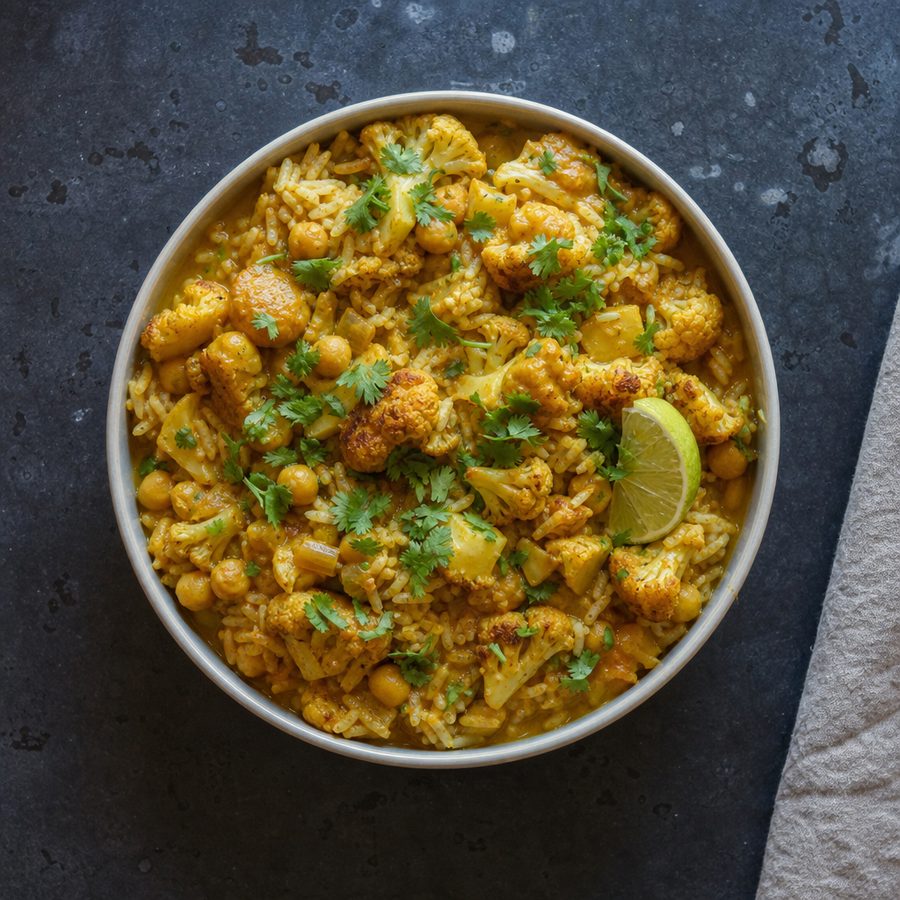
Tender cauliflower florets and chickpeas simmered in a fragrant tomato-coconut sauce warmed with garlic, ginger, turmeric, cumin, and coriander, spooned over brown rice and finished with fresh cilantro.
Why You'll Love This Recipe
Warming and filling without any meat in it is the brief here, and a few humble pantry staples turn out to cover it. It leans on humble pantry staples, chickpeas, cauliflower, canned tomatoes, and coconut milk, and turns them into a fragrant, saucy curry that comes together in one pot. It suits a weeknight when you want real cooking but not much fuss, and it feeds a crowd or a household happily.
The flavor comes from a technique worth respecting: blooming the ground spices in hot oil with the onion, garlic, and ginger before any liquid goes in. Warming turmeric, cumin, and coriander in fat for a full minute releases their aromatic oils so the whole dish tastes deep and layered rather than dusty. Letting the crushed tomatoes simmer down concentrates their sweetness, and stirring the coconut milk in at the end keeps it silky and rounds the acidity without letting it break.
The chickpeas bring a soft, creamy bite and real staying power, the cauliflower stays tender with a little structure, and the brown rice soaks up the sauce. It is nourishing, rich in fiber and plant protein, built on ingredients that keep you full for hours. The cilantro and the gentle heat of the spices make each bowl taste bright and comforting at the same time.
Ingredients
- 3 cups chickpeas, drained
- 1 head cauliflower, florets
- 1 large onion, diced
- 1 1/4 cups crushed tomatoes
- 3/4 cup plus coconut milk
- 5 cloves garlic, minced
- 1 tbsp grated ginger
- 1 tsp turmeric
- 2 tsp cumin
- 1 1/2 tsp coriander
- 3 tbsp olive oil
- 3 1/2 cups cooked brown rice
- 1/2 cup cilantro
- 1/2 tsp salt
Instructions
- Have the rice ready: This builds on brown rice that is already cooked, so warm it through while the curry simmers, since a cold bed under a hot curry cools the whole bowl. Starting from dry instead, rinse the rice under cool running water until it runs mostly clear and simmer it covered until the grains are tender and the liquid is absorbed, about 40 minutes, then let it sit off the heat and fluff it with a fork.
- Prep the vegetables and aromatics: Cut the cauliflower into bite-size florets. Dice the onion, mince the garlic, and grate the ginger. Drain and rinse the chickpeas in a colander, and roughly chop the cilantro for finishing.
- Saute the aromatics: Warm the olive oil in a large, wide pot or deep skillet over medium heat. Add the onion and cook, stirring now and then, until soft and golden at the edges, about 7 to 8 minutes. Add the garlic, ginger, turmeric, cumin, and coriander and stir constantly for about 1 minute, until the spices smell toasty and fragrant, since ground spice gives up far more of itself to hot oil than it ever will to liquid.
- Build the sauce: Stir in the crushed tomatoes, scraping up anything stuck to the bottom of the pot. Let the sauce simmer gently for about 4 minutes, until it darkens slightly and thickens.
- Simmer the vegetables: Add the cauliflower florets, the chickpeas, and a splash of water, enough to keep the sauce loose, because a sauce that tightens too early scorches on the bottom before the cauliflower is done. Bring to a gentle simmer, cover, and cook for about 15 minutes, stirring once or twice, until the cauliflower is fork-tender but not mushy.
- Finish and serve: Stir in the coconut milk and the salt and warm it through over low heat for a minute or two without letting it boil, since coconut milk held at a hard heat can separate. Taste and adjust the salt. Spoon the curry over the brown rice and garnish with the chopped cilantro.
Variations
- Green add-in: Stir a few handfuls of fresh spinach into the pot in the last couple of minutes of simmering, letting it wilt into the sauce for extra color and greens.
- Warmer and sweeter: Add a pinch of ground cinnamon and a little garam masala along with the other spices for a rounder, more aromatic curry with gentle warmth.
- Brighter finish: Squeeze fresh lime over each bowl just before serving to lift the coconut and tomato with a clean, citrusy edge.
- Heartier greens and potato: Swap some of the cauliflower for diced sweet potato, adding it with the florets so it simmers until fork-tender for a more substantial, slightly sweet result.
- More heat: Add a minced fresh chili or a pinch of cayenne with the aromatics for a curry with real warmth; start small and taste as you go.
Storage & Leftovers
Store leftover curry in an airtight container in the refrigerator for up to 4 days. Keep the rice in its own container so it does not turn gummy; it will hold for about the same time. The flavors actually deepen overnight as the spices settle into the sauce.
Reheat the curry gently in a saucepan over medium-low heat, adding a splash of water to loosen it, since it thickens as it sits. Stir often and warm just until steaming; avoid a hard boil, which can cause the coconut milk to separate. Rice reheats best with a sprinkle of water, covered, over low heat or in the microwave.
To get ahead, make the curry a day or two before you plan to serve it and refrigerate; it reheats beautifully. You can also cook the rice in advance and keep it chilled. The curry freezes well for up to 3 months, so consider doubling the batch and freezing half in a flat container for a quick future meal.
Notes & Tips
- Buy full-fat coconut milk: Full-fat canned coconut milk gives the sauce its silky body; the light version thins it out. Shake the can well before opening so the cream and liquid are blended.
- Cut the florets evenly: Keep the cauliflower pieces roughly the same bite-size so they cook at the same rate. Overly large florets stay crunchy in the center while small ones turn soft.
- Toast the spices with care: Ground spices scorch quickly. Keep the heat at medium and stir constantly during that one minute; if they smell sharp or look dark, pull the pot off the heat and add the tomatoes right away.
- Adjust the salt at the end: Canned tomatoes and chickpeas vary in how salty they are, so taste after the coconut milk goes in and add salt gradually until the flavors come forward.
- Fresh ginger is worth it: Grated fresh ginger gives a brightness that jarred paste or dried ginger cannot match here. Peel it with the edge of a spoon and grate it on the fine side of a box grater.
- Serve it with something to scoop: The curry is generous with sauce, so warm flatbread alongside the rice makes it easy to catch every last bit.
Nutrition & Mindful Eating
- Chickpeas, cauliflower and coconut milk share the pot without any one of them taking over. The chickpeas hold their shape and give the curry weight, the cauliflower goes tender and drinks up the sauce, and the coconut milk pulls it all together.
- Cauliflower is the sponge here. Cut small, it softens into the sauce and tastes far more of the spice than of itself, and it brings vitamin C and a mild sweetness that comes forward the longer it cooks.
- Chickpeas stay whole and creamy in the middle, which gives the curry something to bite against, and the protein and fiber they hold are most of the reason a bowl of this eats like dinner and not a side.
- Coconut milk rounds off the edges of the ginger and the chili warmth and turns a tomato base silky, and its fat is what carries the turmeric and the other fat-soluble spice compounds through the whole pot.
- You can smell the moment the spices are ready in the oil, and those few seconds are what give the finished curry its depth. Cilantro torn over the brown rice at the end keeps the plate from tasting only warm.
- As you eat, notice how much of the spice the cauliflower has taken on and how the coconut milk softens the edges of it, then set the fork down once or twice on the way through.
Frequently Asked Questions
Can I use dried chickpeas instead of canned?
Yes. Soak them overnight, then simmer in fresh water until tender, roughly an hour, and drain before adding them at the same point as canned. They should be soft enough to squash easily between two fingers.
My sauce looks too thick. What happened?
The curry thickens as the cauliflower cooks and again as it sits. Just stir in a splash of water until it loosens to the consistency you like; the flavor will not suffer.
Can I use frozen cauliflower?
You can. Add it straight from frozen with the chickpeas and expect it to cook a little faster and give off more liquid, so simmer uncovered toward the end if the sauce gets thin.
Why did my coconut milk look curdled?
It was likely boiled too hard after the coconut milk went in. Add it at the end and keep the heat low, warming just until steaming, and it will stay smooth.