
Chickpea and Eggplant Stew Over Couscous
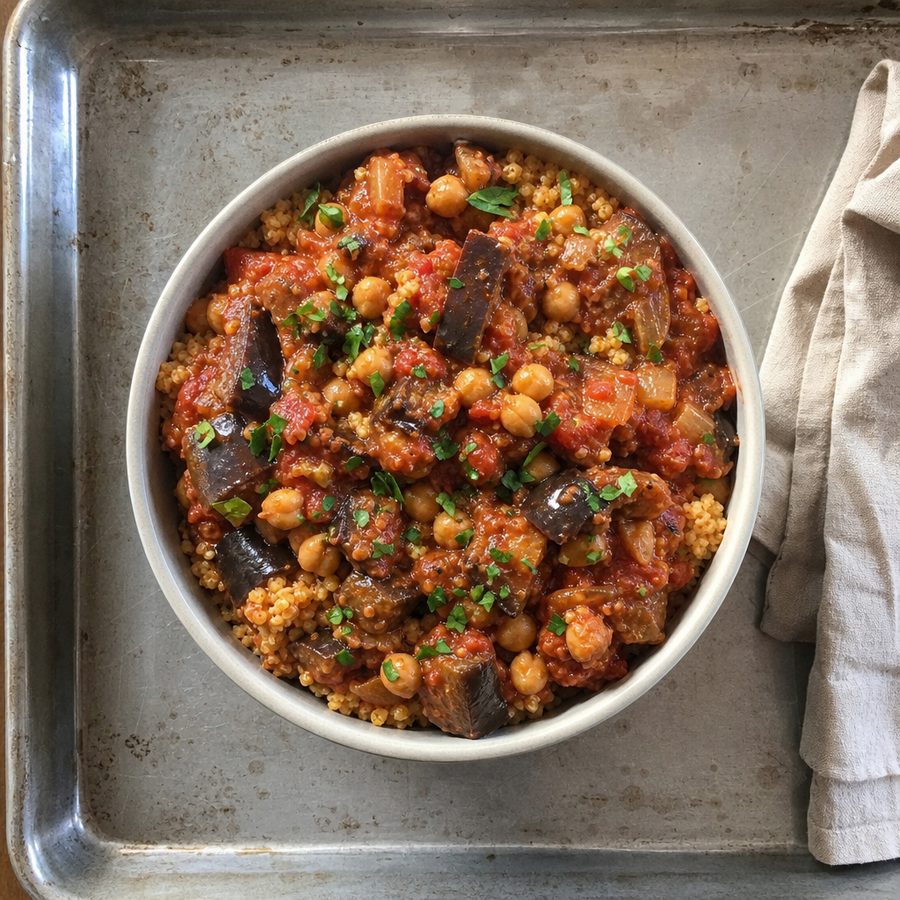
Golden-browned eggplant and tender chickpeas simmered in a garlicky crushed-tomato sauce warmed with cumin, spooned over fluffy couscous and finished with fresh parsley.
Why You'll Love This Recipe
This is a warming, one-pot dinner for anyone who wants a meatless meal that still feels hearty and complete. It leans on pantry staples, chickpeas, canned tomatoes, an onion, and one eggplant, so it comes together on a weeknight without a special trip to the store, and it makes enough to feed a table or leave a container behind for the next day. Stews like this are also better on the second day, once the cumin has spread all the way through the sauce.
One move decides it: browning the eggplant well before it goes into the sauce. Cooking the cubes over medium-high heat until they are truly golden drives off moisture and turns them silky and almost custardy inside, which is what keeps them from tasting spongy or bland. Blooming the cumin in the oil with the onion and garlic before the tomatoes go in pulls its warm, earthy aroma into the whole pot rather than leaving it dusty on top.
It satisfies on two levels. The chickpeas and eggplant give the stew real body and a mix of creamy and tender textures, while the couscous soaks up the tomato sauce so nothing goes to waste on the plate. It is high in fiber and plant protein and built on olive oil and vegetables, so it fills you up and settles well, comforting without feeling heavy.
Ingredients
- 2 cans chickpeas, drained
- 1 large eggplant, cubed
- 1 can crushed tomatoes
- 1 onion, diced
- 3 cups cooked couscous
- 4 tbsp olive oil
- 3 garlic cloves, minced
- 2 tsp ground cumin
- 1/4 cup chopped parsley
- 1/2 tsp salt
Instructions
- Steam the couscous off the heat: Bring water to a boil in a small pot with a pinch of salt, stir in the couscous, cover it, and take it straight off the burner. Let it stand for about 5 minutes, until the water is fully absorbed, then fluff with a fork. Couscous is pre-steamed before it is sold, so it needs soaking rather than cooking, and a pot left on the heat gives you paste.
- Brown the eggplant properly, about 8 minutes: Trim and cut the eggplant into bite-size cubes. Heat most of the olive oil in a large pot over medium-high, add the eggplant, and cook for about 8 minutes, stirring occasionally, until deeply golden and softened, then move it to a plate. Eggplant browned first and added back later keeps some structure, because anything that goes into the tomatoes raw simply dissolves into the sauce.
- Soften the onion, then bloom the cumin: Add the remaining olive oil to the same pot with the diced onion and minced garlic and cook over medium heat for about 5 minutes, stirring often, until soft and translucent. Stir in the cumin and cook 30 seconds more, until fragrant, since ground cumin gives up its aroma to hot oil in a way it never does to a wet simmering sauce.
- Simmer 15 minutes, until the eggplant melts: Drain and rinse the chickpeas, return the eggplant to the pot with the crushed tomatoes, the chickpeas, and a splash of water, and bring it to a gentle simmer. Cook for about 15 minutes, stirring occasionally, until the sauce has thickened and the eggplant is meltingly tender. Add a little more water if it tightens too far, because a stew that has gone stiff will scorch on the bottom before the flavors have had time to come together.
- Season at the end and serve over the couscous: Chop the parsley, stir the salt into the stew, and taste before serving, adjusting if it needs more. Salt goes in at the end here rather than at the start, since canned chickpeas and canned tomatoes both bring their own and a stew salted early can be past saving by the time it has reduced. Spoon it over the warm couscous and finish with the parsley.
Variations
- Make it smoky: Add smoked paprika along with the cumin for a deeper, campfire warmth that plays well with the browned eggplant.
- Stir in greens: Fold a few handfuls of spinach or chopped kale into the stew in the last few minutes of simmering, letting them wilt into the sauce for extra color and vegetables.
- Add some heat: Stir in a spoonful of harissa or a pinch of red pepper flakes with the onion for a gentle chili kick against the sweet tomato.
- Brighten it up: Finish the stew with fresh lemon zest and a squeeze of juice just before serving to lift the rich tomato and cumin.
- Add crunch: Scatter toasted pine nuts or slivered almonds over the top for a buttery, crisp contrast to the soft stew; this adds nuts.
Storage & Leftovers
Store leftover stew and couscous in separate airtight containers in the refrigerator for up to four days. Keeping them apart stops the couscous from soaking up all the sauce and turning mushy, and the flavor of the stew actually deepens overnight as the spices settle.
To reheat, warm the stew gently in a saucepan over medium-low heat, stirring in a splash of water to loosen it back to a spoonable consistency, since it thickens as it chills. Reheat the couscous separately with a sprinkle of water, covered, until steaming, then fluff with a fork and spoon the stew over the top.
For a make-ahead meal, the stew can be cooked a day or two in advance and refrigerated, since it only improves with time. Cook the couscous fresh just before serving, as it takes only a few minutes, and add the parsley at the last moment so it stays bright and green.
Notes & Tips
- Choosing a good eggplant: Pick one that feels firm and heavy for its size with tight, glossy skin. A lighter, spongier eggplant is often older and can taste bitter, while a fresh one cooks down sweet and silky.
- Salt it first if you like: For an even silkier result, toss the cubed eggplant with a little salt, let it sit in a colander for twenty minutes, then pat it dry before browning. This draws out excess moisture and helps it soak up less oil, though it is an optional step.
- Give the eggplant room: Brown the eggplant in a wide pot without crowding it, working in two batches if needed. Piled-up cubes steam instead of browning, and browning is where the flavor comes from.
- Adjust the thickness to taste: The stew should be thick enough to mound on a spoon but still saucy. Loosen it with a splash of water for a stewier bowl, or simmer a few minutes longer for a thicker one.
- Season at the very end: Wait to add the salt until the stew has finished simmering, since canned tomatoes and chickpeas vary in saltiness. Taste first, then add just enough to make the flavors pop.
- Double the batch: This stew freezes and reheats beautifully, so it is worth making a large pot. Freeze the stew alone in portions and cook fresh couscous when you are ready to eat.
Nutrition & Mindful Eating
- Eggplant, chickpeas and tomato each bring a different texture and together they make something you can eat with a spoon. The eggplant goes silky, the chickpeas stay firm, and the tomato reduces around both until it is thick enough to sit on couscous.
- Eggplant wants oil and it wants patience. Browned hard until the cubes start to collapse, it turns creamy right through, and leaving the deep purple skin on keeps both the structure and the antioxidant compounds that color carries.
- Chickpeas hold their shape through the simmer and give the stew something to push against, and the fiber and plant protein inside them are why a pot of vegetables eats like a full dinner.
- Whole wheat couscous takes minutes and does nothing more than sit underneath and catch the sauce, which is exactly its job, and the intact bran gives the grains a nuttier taste and more fiber than the pale kind.
- Cumin toasted with the garlic at the start sets the warmth of the whole pot, and the parsley scattered over at the end stays raw and sharp, which is what keeps a long-simmered stew feeling alive on the tongue.
- As you eat, press a piece of eggplant against the couscous and notice how completely it has given way, then slow down between bites and let dinner take the time it deserves.
Frequently Asked Questions
Do I need to peel the eggplant?
No. The skin holds much of the eggplant's fiber and antioxidants, and it softens completely during simmering, so leaving it on saves work and adds nutrition. Just trim off the stem end before cubing.
My eggplant soaked up all the oil while browning. What happened?
Eggplant is porous and drinks up oil quickly at first, but it releases much of it back as it cooks and collapses. Keep the heat at medium-high and be patient rather than adding more oil, and salting the cubes beforehand helps them absorb less.
Can I use dried chickpeas instead of canned?
Yes. Soak them overnight and simmer until tender before adding them to the stew, since they need far longer to soften than the fifteen-minute simmer allows. Canned chickpeas are used here because they are already fully cooked and just need draining and rinsing.
What can I serve this over besides couscous?
The stew is happy over rice, quinoa, or warm flatbread, or in a bowl on its own with extra bread for scooping. Any of these will soak up the tomato sauce just as well.