
Chilled Butter-Poached Shrimp
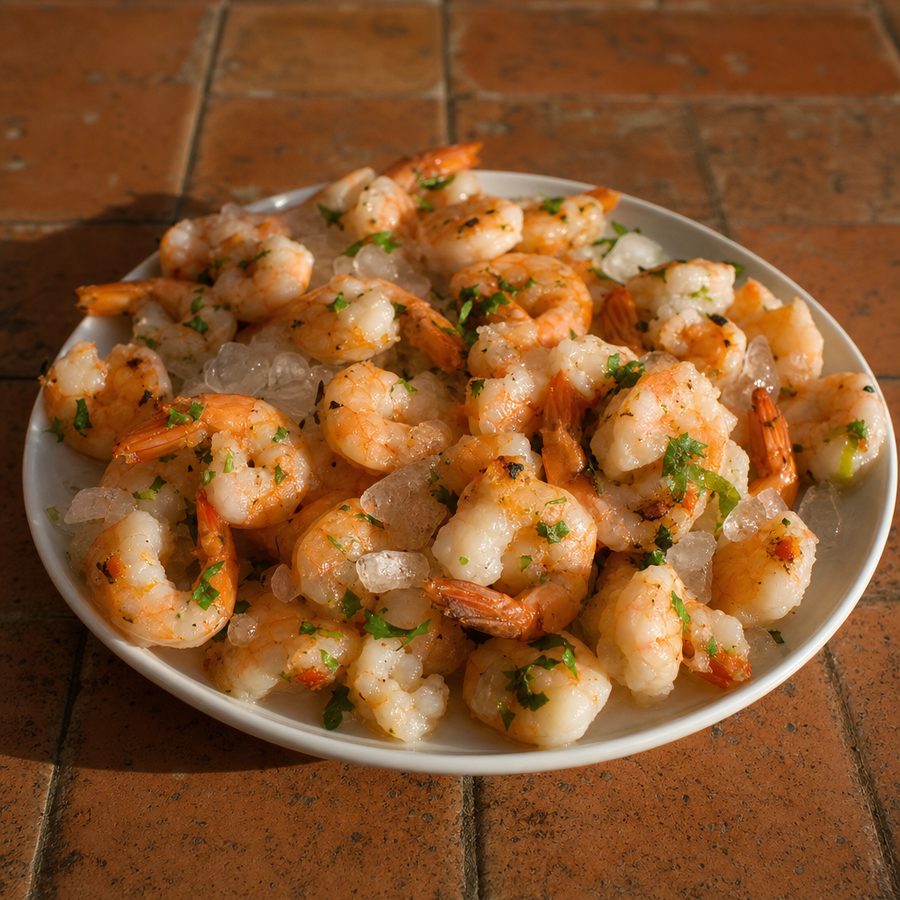
Large shrimp poached slowly in salted butter until just opaque, then chilled and served cold over ice for a clean, cocktail-style bite.
Why You'll Love This Recipe
This is a cold, hand-held bite built around one ingredient: sweet, firm shrimp, cooked slowly in butter and then chilled. It suits anyone who wants a lot of protein in a form that eats like a treat, with nothing to dip it in and nothing to fuss over. Because it is meant to be eaten cold, it can be made in the afternoon and set out in the evening, which is the rare dish that is actually better for having waited.
The technique is what sets it apart from boiled shrimp. Poaching low and slow in butter rather than water means the shrimp cook in fat instead of leaching their flavor into a pot of liquid. The gentle heat keeps the flesh tender and prevents the rubbery snap that comes from a hard boil, and the salted butter seasons the shrimp from the outside as they cook. Chilling afterward firms the texture and lets that buttery flavor settle in, so each piece tastes rich and clean at once.
Sweet shrimp and a little butter, and not much more. Shrimp deliver a large amount of complete protein for very little else, which keeps you full, while the butter carries flavor and makes the shrimp feel indulgent rather than spare. Served cold over ice, it is refreshing and easy to eat slowly, and it leaves you satisfied without feeling heavy. It is also one of the few things worth making a day ahead on purpose, since the butter sets around the shrimp overnight.
Ingredients
- 20 large shrimp, peeled
- 1 1/2 tbsp butter
- 1/2 tsp salt
Instructions
- Dry the shrimp properly: Pat the peeled shrimp completely dry with paper towels, both sides. Surface water is what stops the butter clinging, and shrimp that go into the pan wet steam in their own moisture instead of poaching in fat, which is a different and worse texture. Two minutes with a towel is the whole of it.
- Melt the butter and keep it gentle: Melt the butter with the salt in a wide pan over low heat, until it is liquid and barely quivering rather than sizzling. Butter pushed any hotter starts browning as its milk solids catch, and while browned butter is a fine thing elsewhere, here it would take over a delicate shrimp completely. You want the fat clear and hardly moving.
- Poach 4 to 6 minutes, watching the shape: Lay the shrimp in a single layer in the warm butter and poach them gently for 4 to 6 minutes, turning each one once halfway through. They are done when they turn opaque and pink and curl into a loose C shape; a tight, closed O means they have gone too far and will be rubbery. Do not let the butter come to a boil at any point.
- Chill them uncovered for an hour: Lift the shrimp onto a plate, letting the butter drain off, and refrigerate them uncovered for at least 1 hour, until they are cold all the way through. The cold firms the flesh into a proper snap, and the thin film of butter left on them sets rather than staying greasy. Leaving them uncovered matters, since a lid traps steam that would wash that film straight off.
- Serve them cold, over ice: Arrange the chilled shrimp over a bed of ice and serve them cold. Shrimp lose their snap as they come up to room temperature, and this dish has nothing else in it to hide behind, so the ice is doing real work rather than decorating the plate.
Variations
- Brown butter: Cook the butter a little longer over low heat until it smells nutty and turns golden before adding the shrimp, for a deeper, toasted flavor. Watch it closely so it does not scorch.
- Ghee or tallow: Swap the butter for ghee or rendered beef tallow. Ghee gives a cleaner, more concentrated buttery note, while tallow lends a richer, savory backbone.
- Scallops instead of shrimp: Poach sea scallops in the salted butter the same way, cooking just until opaque and barely firm. This swaps in a different shellfish with a softer, sweeter texture.
- Hard cheese finish: Grate a fine dusting of aged hard cheese over the cold shrimp just before serving for a salty, savory edge. This adds more dairy to the dish.
- Crab or lobster: Use lump crab meat or chunks of lobster tail in place of the shrimp, poaching gently in the salted butter until just heated through and opaque, for a richer shellfish version.
Storage & Leftovers
Keep the chilled shrimp in an airtight container in the refrigerator, where they hold their quality for up to two days. Because they are already cooked and meant to be eaten cold, they are ready to eat straight from the container.
There is no reheating step for this dish; it is served cold by design, and warming poached shrimp tends to turn them tough and rubbery. If they have been sitting out, simply return them to the refrigerator or set them back over fresh ice to bring them cold again before serving.
This is an ideal make-ahead snack. Poach and chill the shrimp a day in advance, store them covered in the refrigerator, and they are ready whenever you want them. Arrange them over ice only when you are about to serve so the ice stays fresh and the shrimp stay crisp and cold.
Notes & Tips
- Buy the right size: Large shrimp hold up best to poaching and stay meaty after chilling; very small shrimp overcook quickly and can turn out mushy once cold.
- Thaw frozen shrimp fully: If you start with frozen shrimp, thaw them completely in the refrigerator or under cold running water and pat them very dry, or the extra water will cool the butter and steam them instead of poaching.
- Watch the shape, not the clock: The surest doneness cue is the curl: a loose C shape and opaque flesh means perfectly cooked, while a tight coil means they have gone too far.
- Keep the butter calm: If the butter starts to bubble or brown, pull the pan off the heat for a moment; a hard sizzle means the heat is too high and the shrimp will toughen.
- Chill uncovered first: Let the shrimp cool uncovered on the plate before covering them, so trapped steam does not soften their surface as they chill.
- Save the poaching butter: The leftover salted butter in the pan is flavored with shrimp; cool and refrigerate it to use as a finishing fat for other cooked foods rather than pouring it away.
Nutrition & Mindful Eating
- Shrimp and butter are the entire recipe, which makes temperature the third ingredient. Butter held just below a simmer cooks the shrimp slowly and evenly, and the chill afterwards is what firms everything up.
- Shrimp poached this gently stay snappy rather than turning rubbery, and they taste faintly sweet and of the sea. They are almost all protein, which is why a small plate of them satisfies more than its size suggests.
- Butter is doing two jobs, cooking the shrimp and then coating them. As the plate chills it sets into a thin sheen over the coral-pink surface, carrying vitamin A and the kind of richness that makes three ingredients taste finished.
- The color tells you when they are done. Gray and translucent going in, coral and opaque coming out, curled into a loose C rather than a tight coil, which is the moment to pull them before the butter takes them further.
- Salt is the only seasoning and its job is to draw out the sweetness already sitting in the shrimp so it reads clearly against the butter. Eaten cold with your fingers, these stretch across a plate the way a hot dish never does.
- As you eat, take one at a time and notice the cold snap of the first bite and the butter warming as it goes, and let the plate last longer than the two minutes it would take to clear it.
Frequently Asked Questions
Can I use frozen shrimp?
Yes. Thaw them completely first, either overnight in the refrigerator or under cold running water, then pat them thoroughly dry. Any leftover water will cool the butter and steam the shrimp rather than poaching them gently.
Why poach in butter instead of just boiling the shrimp?
Poaching in butter keeps the flavor in the shrimp instead of leaching it into a pot of water, and the gentle fat cooks them more tenderly. The salted butter also seasons the shrimp from the outside as they cook, which is why no dip is needed.
Do I really serve these with no sauce?
Yes. The whole point of this prep is that the salted butter poaching already flavors the shrimp, so they taste rich and seasoned on their own and are served cold and plain over ice.
How do I know when the shrimp are done?
Watch the shape and color. Perfectly cooked shrimp turn opaque and pink and curl into a loose C; if they coil into a tight, closed O, they have overcooked and will be firmer. Pull them from the butter as soon as they reach the C stage.