
Chopped Greek Salad With Salmon
A crisp chopped Greek salad of romaine, cucumber, tomato, and pepper crowned with warm oregano salmon, olives, and feta in a simple lemon-olive oil dressing.
Why You'll Love This Recipe
This is the salad for when you want lunch to feel like a real meal without turning on the oven for an hour. It builds a crisp chopped Greek base while a single salmon fillet sears in a skillet, so the whole thing lands on the table in about half an hour. It suits a solid lunch that carries you through the afternoon, a light dinner, or a dish to share when you want something that looks generous with little fuss.
Searing the salmon skin-side down gives you a crisp exterior and a moist center, and pulling it at 125 to 130°F (54°C) keeps it tender rather than dry. The oregano rub ties it straight to Greek flavors, and laying the warm fish over cool, crunchy vegetables makes each bite a mix of temperatures. A simple lemon and olive oil dressing keeps everything bright, while olives and feta bring the salt that a chopped salad needs.
With real protein and honest fat from the salmon, olive oil, and feta, this eats like a full plate and keeps you satisfied for hours. The crunch of romaine, cucumber, and pepper gives it volume and freshness, so it feels substantial without sitting heavy. Warm salmon over a cold, crisp salad is a combination that never gets old, and it leaves you full in the steady way a good lunch should.
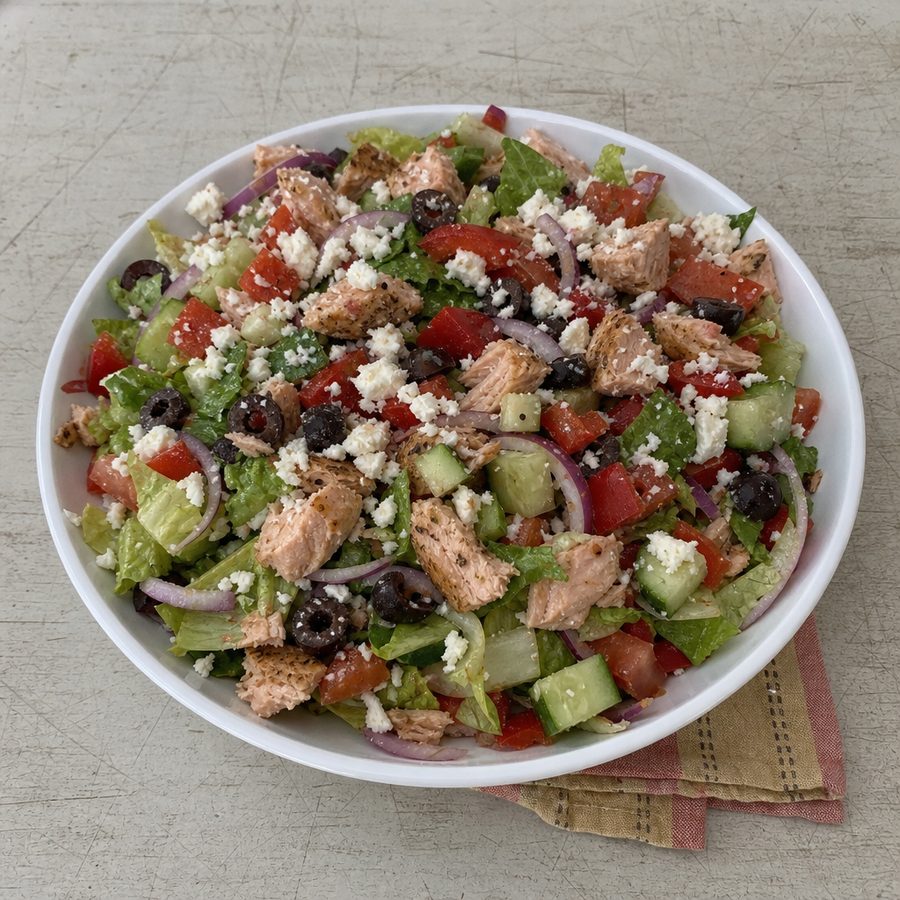
Ingredients
- 1 lb salmon fillet
- 1 head romaine, chopped
- 1 1/2 cucumbers, diced
- 2 cups cherry tomatoes
- 1 red bell pepper, diced
- 1/4 red onion, thin
- 1/4 cup olives
- 1/3 cup feta
- 3 tbsp olive oil
- 2 tbsp lemon juice
- 2 tsp oregano
- 1/3 tsp salt
Instructions
- Season the salmon and let it sit: Pat the salmon dry and rub it with a tablespoon of the olive oil, the oregano, and a little of the salt, then leave it on the board for about 10 minutes while the pan heats. Salt needs a few minutes to do anything: rubbed on and cooked straight away it just sits on the surface, while ten minutes is long enough for it to draw out a little moisture and be carried back in seasoned.
- Sear it skin side down and leave it alone: Heat a skillet over medium-high until a drop of water skitters across it, then lay the salmon in skin side down and do not move it for about 5 minutes. Fish sticks while the proteins on its surface are gripping the metal and lets go by itself once a crust has formed, which is why pushing at it early leaves the skin on the spatula. Turn it and give it 3 to 4 minutes more, until it flakes easily and the center reads 125 to 130°F (52 to 54°C), which is medium-rare. The FDA figure for seafood is 145°F (63°C), and salmon taken there is firm rather than silky, so cook to whichever you prefer. Set it aside to rest.
- Chop the vegetables while it cooks: Chop the romaine, dice the cucumbers and the red bell pepper, halve the cherry tomatoes, and slice the red onion thin, adding everything to a large bowl with the olives. Keep the pieces roughly the same size, because the point of a chopped salad is that one forkful carries all of it rather than a spear of lettuce with a tomato balanced on top of it.
- Dress it at the last minute: Add the remaining two tablespoons of olive oil, the lemon juice, and the rest of the salt, and toss until the vegetables are lightly coated and glossy. Do this just before it is eaten, since salt and acid start pulling water out of cucumber and tomato within minutes, and a bowl dressed early ends up sitting in a pale pink puddle.
- Flake the warm salmon over the top: Break the salmon into large pieces with a fork, discarding the skin if you like, lay them over the salad, and crumble the feta on top. Serve while the salmon is still warm, because the contrast between warm fish and cold crunchy vegetables is most of what makes this worth eating, and it disappears once everything has settled to the same temperature.
Variations
- Swap the salmon: Use seared chicken breast or a can of drained tuna in place of the salmon for an easier or budget-friendly version.
- Add chickpeas: Toss in a small handful of chickpeas for extra fiber and heartiness, keeping in mind that chickpeas are a legume and enough of them will take the salad off keto.
- Make it a wrap: Skip the romaine base and fold the salmon and chopped vegetables into lettuce leaves for a handheld lunch.
- Change the cheese: Trade feta for crumbled goat cheese if you want a milder, creamier tang.
- Add fresh herbs: Scatter chopped dill or mint over the top for a brighter, more herbal finish alongside the oregano.
Storage & Leftovers
Keep the salmon and the dressed salad in separate airtight containers in the fridge. The cooked salmon holds for up to three days, while the chopped vegetables are best within two days before the cucumber and romaine start to soften and weep liquid.
Salmon is good cold straight from the fridge over the salad, which is how I like it for leftovers. If you prefer it warm, reheat it gently in a low oven or a covered skillet just until heated through, since high heat will dry it out. Add the feta fresh rather than reheating it with the fish.
For meal prep, cook the salmon and chop the sturdy vegetables ahead, but store the dressing on the side and keep the romaine dry until serving. Toss the salad and flake the salmon over it only when you are ready to eat so the greens stay crisp and the fish stays moist.
Notes & Tips
- Pat the salmon dry: A dry surface is what lets the fish sear and brown instead of steaming in the pan.
- Start skin-side down: Cooking the skin side first renders the fat and gives you a crisp, sturdy base to flip.
- Use a thermometer: Pull the salmon at 125 to 130°F (54°C) for a moist center; carryover heat finishes it as it rests.
- Let it rest: Give the fish a few minutes off the heat before flaking so the juices settle back into the flesh.
- Chop while it cooks: Prep all the vegetables during the salmon's time in the pan so everything finishes together.
- Dress just before serving: Wait to toss the salad with lemon and oil until the last minute so the romaine stays crisp.
Nutrition & Mindful Eating
- Warm salmon over cold chopped vegetables is what makes this work. The fish flakes into the bowl and its fat mixes into the dressing, the romaine and cucumber stay cold and crisp underneath, and the olives and feta season whatever they touch.
- Salmon cooked just to the point where it flakes is rich and buttery enough to act as dressing as much as protein, and the omega-3 fats it carries are a large part of why it tastes the way it does.
- Romaine chopped across the rib holds its structure under a dressing far longer than softer leaves, and cucumber cut thick brings cold water and a clean snap, along with the potassium and vitamin K that come with them.
- Feta and olives are the salt of this bowl and they are meant to be. Crumbled and torn through the vegetables, they put a briny hit into random forkfuls, and the feta brings calcium behind that milky tang.
- The dressing is olive oil, lemon and dried oregano crushed between your fingers, nothing more, and the oil is what carries the lycopene out of the tomatoes and the vitamins out of the red pepper into a form your body can use.
- As you eat, go hunting for the forkful with salmon, olive and cucumber all at once, and keep a cold lunch slow enough that you taste the oregano arriving late.
Frequently Asked Questions
Can I use chicken instead of salmon?
Yes. Season and sear a chicken breast with the same oregano rub, cook it through, then slice it over the salad. You lose the omega-3 fats of the salmon but keep the Greek flavor and the protein.
How do I keep the salmon from drying out?
Cook it over medium-high heat and pull it at 125 to 130°F (54°C) at the center, then let it rest. The fish keeps cooking a little off the heat, so stopping early is what keeps it moist and flaky.
Can I pack this for lunch ahead of time?
Absolutely. Cook the salmon and chop the vegetables in advance, then store the dressing separately and keep the romaine dry. Toss everything together at lunch, and enjoy the salmon cold or gently warmed.
What makes this a Greek salad rather than a garden salad?
Salmon, olive oil, olives, feta, and fresh vegetables, which are the cornerstones of the Mediterranean table. The protein and the fat are what make it filling.