
Cinnamon Roasted Butternut Bites
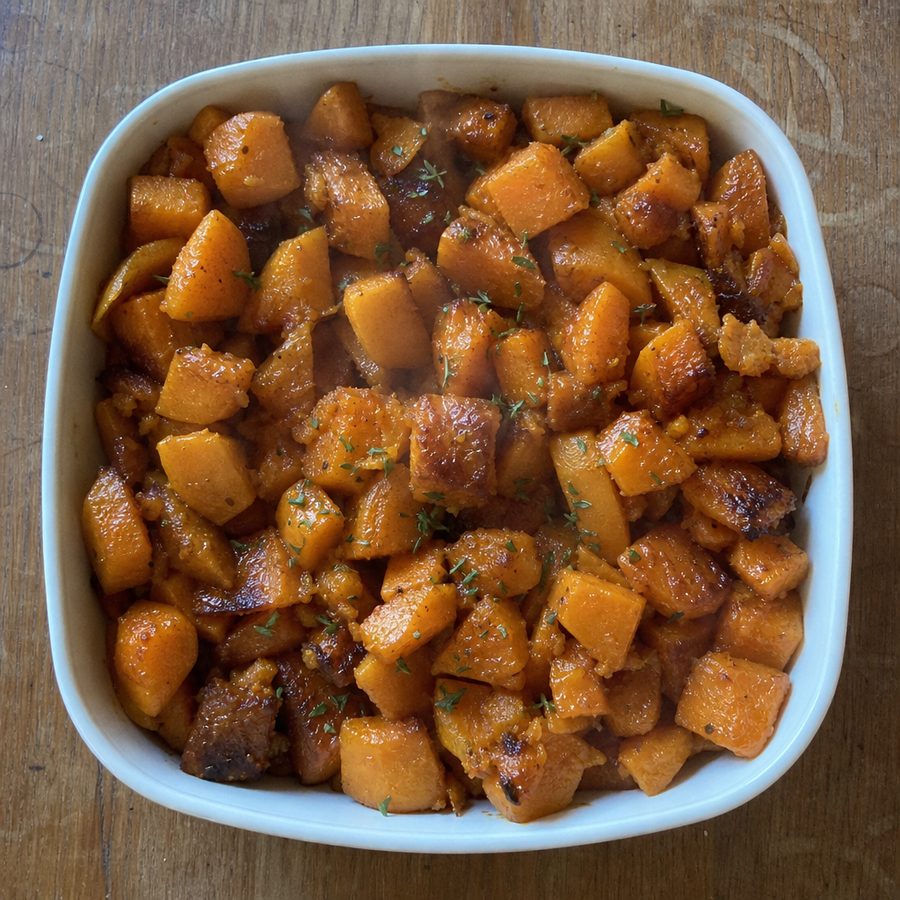
Tender cubes of butternut squash roasted with coconut oil, ground cinnamon, and a pinch of sea salt until their edges turn deep gold and lightly caramelized.
Why You'll Love This Recipe
Butternut has enough sugar in it to caramelize properly, which is what separates these from a tray of roasted vegetables. Cut small and given a hot oven, the cubes go dark and sticky at the corners and stay soft in the middle, and the cinnamon reads as sweet even though nothing sweet has been added to the pan. They are best in autumn when squash is cheap and heavy for its size, and a tray made in the afternoon rarely survives to dinner.
The magic here is dry-heat roasting. At 400°F (200°C) the natural sugars in butternut squash concentrate and brown at the cut edges, turning what is a fairly plain vegetable into something with real depth and a candied quality. Coconut oil holds up well to that heat and carries the cinnamon evenly across every surface, while a small amount of salt sharpens the sweetness rather than making the dish taste salty. Cutting even cubes and giving them room on the pan are what let that browning happen instead of steaming.
A soft, custardy center against chewy, caramelized edges, with the warm aroma of cinnamon tying it together. Butternut squash brings fiber and a good dose of the pigment that gives it its orange color, so the bites feel more filling and nourishing than their simple ingredient list suggests. It is the kind of snack that scratches a craving for something sweet while still leaving you steady rather than spiked.
Ingredients
- 4 cups butternut squash (about 500 g), cubed
- 2 tbsp coconut oil, melted
- 1 1/2 tsp ground cinnamon
- 1/4 tsp sea salt
Instructions
- Preheat the oven: Preheat the oven to 400°F (200°C) and set a rack in the middle position. Line a rimmed sheet pan with parchment for easy cleanup, or leave it bare for slightly deeper browning.
- Melt the coconut oil: Warm the coconut oil gently until it turns liquid. A few seconds in a small saucepan over low heat or a short burst in the microwave is enough; it should be pourable but not hot.
- Peel and cube the squash: Peel the butternut squash, halve it lengthwise, and scoop out the seeds with a spoon. Cut the flesh into even 3/4-inch cubes so every piece cooks at the same rate. Keeping them the same size is what gives you uniform caramelization instead of some pieces burning while others stay firm.
- Toss with oil and seasoning: Put the cubes in a large bowl, pour over the melted coconut oil, and sprinkle with the ground cinnamon and sea salt. Toss with your hands or a spoon until every cube is evenly coated and lightly glossy.
- Roast: Spread the cubes in a single layer on the sheet pan with a little space between them, cut sides down where you can. Roast for 25 to 30 minutes, stirring once at the halfway mark, until the squash is fork-tender in the center and the edges are deeply golden and caramelized.
- Serve: Let the bites cool on the pan for a couple of minutes so the caramelized edges firm up slightly, then transfer to a bowl and serve warm.
Variations
- Warm ginger: Add a little freshly grated ginger to the toss along with the cinnamon for a brighter, slightly peppery warmth against the squash's sweetness.
- Savory herb: Skip the cinnamon and toss the cubes with chopped fresh rosemary and thyme instead for a savory, dinner-side version of the bites.
- Cinnamon and apple: Roast the squash together with cubes of firm apple, adding the apple in the last fifteen minutes so it softens without falling apart. This adds fruit and a little more natural sweetness.
- Maple glaze: Drizzle the cubes with a little maple syrup before roasting for a glossier, candied finish. This adds a source of added sugar.
- Coconut cream finish: Spoon a little thick coconut cream over the warm bites just before serving for a richer, dessert-leaning snack. This adds coconut cream.
Storage & Leftovers
Store leftover bites in an airtight container in the refrigerator for up to four days. They will lose their crisp edges as they sit and soften a bit, but the flavor stays good.
To bring back some of the caramelized texture, reheat them in a 375°F (190°C) oven or toaster oven for about eight to ten minutes, spread in a single layer, until warmed through and re-crisped at the edges. A microwave works in a pinch but leaves them soft rather than caramelized.
For make-ahead ease, peel and cube the squash up to two days in advance and keep the raw cubes in a covered container in the refrigerator, then toss and roast when you want them fresh. You can also roast a full batch and reheat portions through the week.
Notes & Tips
- Give the cubes room: Crowding the pan traps steam and keeps the squash from browning. Use a pan large enough that the cubes sit in a single layer with space between them, and use two pans rather than piling them if needed.
- Pick the right squash: Choose a butternut that feels heavy for its size with matte, unblemished skin and a long solid neck. The neck has no seed cavity, so it yields more usable flesh and cubes more cleanly than the round bulb end.
- Shortcut the prep: Pre-cubed butternut squash from the produce section works perfectly here. Just cut any oversized pieces down to an even 3/4 inch so they roast at the same rate.
- Judge doneness by the edges: They are ready when a fork slides easily into the center and the cut edges have turned deep golden brown. If they are tender but still pale, give them a few extra minutes to develop that caramelized color.
- Adjust the cinnamon to taste: Start with the amount given, then taste a bite once roasted; you can dust a little more cinnamon and a few grains of salt over the warm cubes to sharpen the flavor without re-roasting.
- Serve them beyond snacking: These do double duty as a side. Spoon them next to roasted poultry or a bowl of greens, or mash a few into a soft purée for a smaller eater.
Nutrition & Mindful Eating
- Squash, fat, cinnamon, and heat, and the heat matters most. A hot oven and enough room on the tray are what let the cubes brown at their edges rather than steaming against each other, and that browning is where all the flavor comes from.
- Butternut squash roasts sweeter than almost any other vegetable because its own sugars concentrate as the water cooks off, and the orange that deepens along the way is the beta-carotene your body turns into vitamin A.
- Coconut oil coats every face of every cube and takes high heat without turning bitter, which is what gives the corners their glassy caramelized edge, and that fat is also what carries the squash's vitamin A into a form your body can use.
- Cinnamon tossed on before roasting toasts along with the squash and turns warm and slightly woody, and it makes the bites read sweeter than the squash alone would, which is why a pinch of salt beside it lands so hard.
- The best bites come from the corners of the tray, where the squash has gone jammy and almost chewy. Eaten warm with your fingers, a tray of these disappears more like a snack than a side dish.
- As you eat, go for a browned corner first and notice how much deeper it tastes than a pale middle piece, and let something this simple be worth a few minutes of real attention.
Frequently Asked Questions
My squash came out soft but not caramelized. What went wrong?
Almost always the pan was too crowded or the cubes were too big. When pieces touch or are piled up, they steam in their own moisture instead of browning. Spread them in a single layer with space around each cube, keep them to about 3/4 inch, and give them the full roasting time until the edges are deep gold.
Can I use a different winter squash?
Yes. Peeled and cubed kabocha, honeynut, or buttercup squash all roast well with cinnamon and coconut oil. They vary in moisture and sweetness, so check for tenderness a few minutes early or late depending on the variety.
Why coconut oil instead of another fat?
Coconut oil stays stable at roasting temperature and its mild flavor pairs naturally with cinnamon and squash. If you prefer, you can use another oil that tolerates high heat, though it will shift the flavor slightly.
Can I make these ahead for the week?
Yes. They keep in the refrigerator for up to four days. Reheat them in a hot oven or toaster oven to bring back the caramelized edges, since the microwave leaves them soft. You can also cube the raw squash ahead and roast fresh when you want them.