
Cioppino-Style Seafood Stew
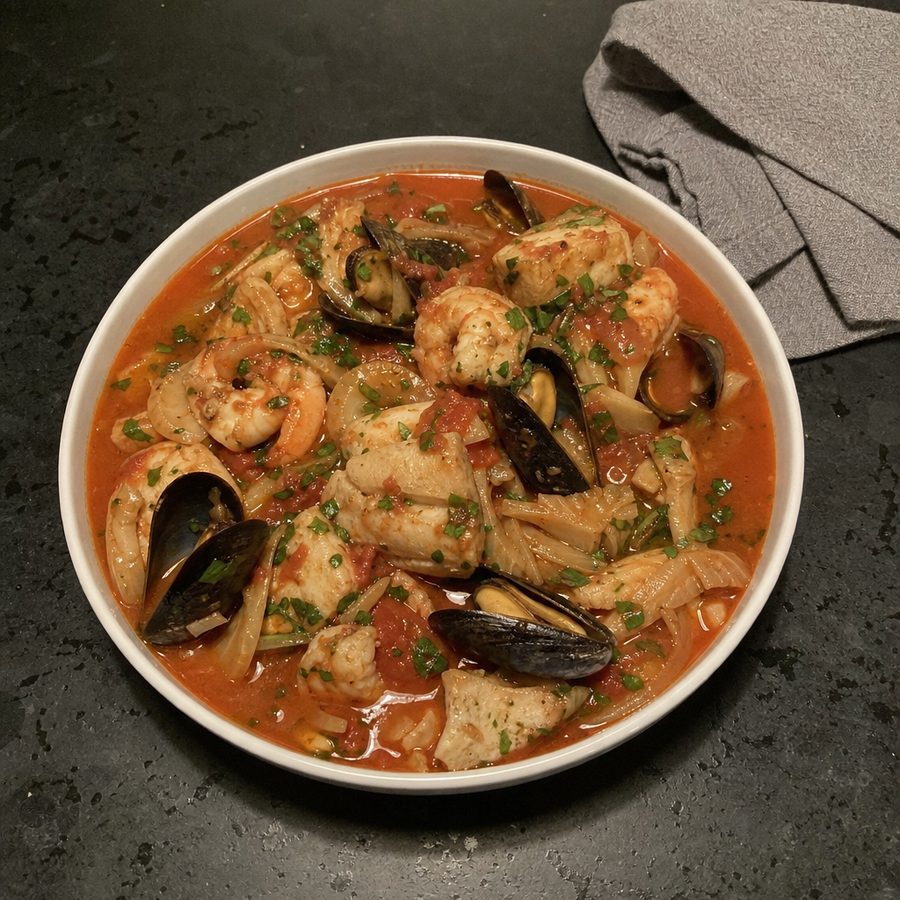
A rustic tomato-and-fennel broth brimming with mussels, shrimp, and flaky cod, rounded out with tender cannellini beans, garlic, oregano, and a bright finish of lemon and parsley.
Why You'll Love This Recipe
This is a one-pot seafood stew for anyone who wants a meal that feels like a night out but comes together on a weeknight. Mussels, shrimp, and cod share a garlicky tomato-fennel broth, and cannellini beans give the bowl real body so it eats like a full dinner rather than a light soup. It suits a cook who loves the flavors of a coastal restaurant but wants something honest and unfussy at home.
The backbone of the dish is the broth. Cooking the fennel and onion slowly until soft, then blooming the garlic and tomato paste in the oil for a full minute, builds a savory, slightly sweet base before any liquid goes in. The uncovered simmer concentrates the crushed tomatoes and lets the anise note of the fennel mellow into the background. Add the seafood in stages: cod first so it firms up, then the mussels under a lid until their shells swing open, and the shrimp last, since they need only a couple of minutes. That keeps every piece tender instead of rubbery. The lemon and parsley stirred in off the heat lift the whole pot so it tastes fresh, not stewed down.
The result is deeply satisfying without being heavy. Fish and shellfish make it rich in protein, the beans add fiber and a creamy contrast to the broth, and olive oil carries the flavor while contributing heart-friendly fats. Because so much of the pleasure comes from the aromatic broth rather than cream or butter, you feel full and warmed but not weighed down. Put bread on the table, since leaving that broth in the bottom of the bowl is the only real way to go wrong with it.
Ingredients
- 4 lb live mussels in the shell
- 8 oz large raw shrimp, peeled and deveined
- 2 cod fillets, cut in chunks
- 1 3/4 cups crushed tomatoes
- 1 cup cannellini beans, drained
- 1 fennel bulb, sliced
- 1 medium onion, diced
- 5 garlic cloves, minced
- 2 tbsp tomato paste
- 3 tbsp olive oil
- 1 tsp dried oregano
- 1/4 cup chopped parsley
- 2 tbsp lemon juice
Instructions
- Purge the mussels: Put the mussels in a large bowl and cover them with plenty of cold water. Leave them for a minute so they settle and begin to open, then swish them around with your hand so the sand works loose and sinks to the bottom of the bowl. Lift the mussels out with your hands rather than pouring them off, so the grit stays behind, then tip out the cloudy water and refill the bowl with fresh cold water. Repeat until the water stays clear and you no longer see sand settling out, which usually takes three or four changes. Fresh mussels hold more sand than you would expect, and this is the step that keeps it out of the finished dish.
- Scrub and debeard the mussels: Scrub each shell under cold running water with a stiff brush to take off anything still clinging to the outside. Then pull off the beard, the tuft of stringy fibers poking out between the two shells, by gripping it and tugging firmly toward the hinge end. Do this right before you cook, because debearding shortens the life of a live mussel. Throw away any mussel with a cracked shell, and tap any that are gaping open against the counter; keep the ones that pull themselves shut and discard the ones that stay open.
- Prep the rest of the ingredients: Trim the fennel bulb, cut it in half through the core, and slice it thin. Peel and dice the onion. Peel and mince the garlic. Drain the cannellini beans in a colander and rinse them under cold water. Pat the cod dry and cut it into large chunks. Peel the shrimp, then run the tip of a knife down the back of each one and lift out the dark vein.
- Build the base: Heat the olive oil in a large pot, at least eight quarts so the mussels have room later, over medium heat. Add the sliced fennel and diced onion and cook, stirring now and then, until softened and translucent, about 6 minutes. Stir in the minced garlic and the tomato paste and cook for 1 minute, until fragrant and the paste darkens slightly.
- Simmer the broth: Stir in the crushed tomatoes and dried oregano, then pour in enough water to make a loose, brothy stew. Bring it to a gentle simmer and let it cook, uncovered, for about 12 minutes so the flavors deepen and the raw tomato edge cooks off.
- Add the cod and beans: Slide the cod chunks and drained cannellini beans into the simmering broth. Cook gently for about 5 minutes, keeping the heat low so the fish holds together rather than breaking apart.
- Steam the seafood: Scatter the shrimp over the surface, then tip in the mussels. Cover the pot with a tight lid and cook over medium heat until the mussel shells have swung open and the shrimp are pink and opaque, about 5 to 6 minutes. Take the lid off the moment the shells open, because extra steaming shrinks the meat and turns it chewy. Throw away any mussels that stayed shut.
- Brighten and serve: Turn off the heat. Squeeze in the lemon juice and stir in the chopped parsley. Mussels release their own salty liquor as they open, which seasons the broth for you, so taste it and let it be. Ladle the stew into bowls, making sure each one gets a share of mussels, shrimp, cod, and beans, and put an empty bowl on the table for the shells.
Variations
- Turn up the heat: Add a pinch of crushed red pepper flakes with the garlic for a warm, lingering heat that plays well against the sweet fennel and tomato.
- Swap the white fish: Trade the cod for another firm, flaky white fish such as halibut or haddock; cut it into similar chunks and simmer the same way until it flakes.
- Add clams: Fold in a handful of scrubbed littleneck clams along with the mussels and cook until they open, discarding any that stay shut, for a briny, layered shellfish stew.
- Deeper savory broth: Stir a spoonful of anchovy paste into the tomato paste as it cooks; it melts in completely and adds a rounder, saltier depth. This adds fish.
- Herb and citrus finish: Swap the parsley for fresh basil and add a little grated lemon zest with the juice at the end for a brighter, more fragrant bowl.
Storage & Leftovers
Cooled leftovers keep in an airtight container in the refrigerator for up to two days. Seafood is best eaten soon after cooking, so plan to finish it within that window for the best texture and flavor.
Reheat gently in a covered pot over low heat, adding a splash of water if the broth has thickened, and stop as soon as it is steaming. High heat or a long reboil will toughen the shrimp and cod, so warm it slowly and pull it off the stove the moment it is hot through. Mussels left in their shells reheat best right in the broth.
To get ahead, make the tomato-fennel broth through the simmering stage, then cool and refrigerate it on its own for up to three days. When you are ready to eat, bring the broth back to a gentle simmer and add the cod, beans, mussels, and shrimp fresh so the seafood is never overcooked.
Notes & Tips
- Buy the mussels smart: Look for live mussels in the shell that smell clean and briny like the sea, not fishy. Tap any that are sitting open and give them a moment; a live mussel pulls itself shut, and any that stay gaping should be thrown out before they go near the pot. The same rule runs in reverse once the pot comes off the heat: a mussel that never opened should be discarded rather than pried open.
- Save the fennel fronds: The feathery green fronds on top of the fennel bulb are edible; chop a few and stir them in with the parsley for an extra hit of gentle anise flavor and color.
- Season at the end: Mussels and shrimp carry their own salt, so taste the broth after the seafood goes in and add more salt only then. It is easy to over-salt if you season heavily up front.
- Cut the cod evenly: Cut the cod into chunks of similar size so they cook at the same rate. The fish is done when it turns opaque and flakes with light pressure from a fork.
- Serve with something to soak it up: The broth is the best part, so serve each bowl with a thick slice of crusty grilled bread or a spoon and encourage sopping. A drizzle of olive oil over the top just before serving adds richness.
- Double it for a crowd: The broth scales up easily and holds well, so make a big pot for guests. Keep the broth simmering and add the seafood in the last few minutes right before serving so it stays tender.
Nutrition & Mindful Eating
- The shellfish, the cod and the tomato broth build on each other. Mussels release their liquor straight into the pot, the shrimp go in last so they stay snappy, and the cod breaks into soft flakes that carry the broth wherever the spoon goes.
- Mussels are the ingredient that makes this taste like the coast. They open into the broth and season it as they go, and they bring iron and B12 along with that briny sweetness.
- Cannellini beans turn a bowl of seafood into dinner. They go creamy at the edges and thicken the broth slightly, and their fiber and plant protein are what let the bowl sit as a full meal.
- Fennel is the quiet reason cioppino tastes like cioppino. Softened in oil at the start, its anise edge mellows into a sweetness that runs underneath the tomato, and it carries fiber and potassium with it.
- Lemon and parsley go over the top at the very end, off the heat, so the acid and the green stay sharp against a broth that has been cooking for a while.
- As you eat, work through the shells slowly and let the broth be half the point, spooning it up between bites and noticing how the lemon lifts the tomato, and stop when the bowl has done its job.
Frequently Asked Questions
Can I use frozen seafood instead of fresh?
Yes, with a little planning. Thaw frozen shrimp and cod overnight in the refrigerator and pat them dry so they do not water down the broth, then add them exactly as written. Frozen mussel meat is sold already cooked and shelled, so stir it in at the very end only to heat through rather than steaming it. You lose the open shells in the bowl, but the stew still tastes of the sea.
My cod fell apart in the broth. What went wrong?
The broth was likely simmering too hard. Cod is delicate, so keep the heat at a gentle simmer, add the fish in large chunks, and stir as little as possible. It will finish cooking in the hot broth even off a rolling boil.
Do I have to use fennel?
Fennel gives the broth its signature sweet, faintly licorice character, but if you dislike it you can leave it out and use extra onion, or swap in a rib of celery for a milder base. The stew will still taste good, just less distinctive.
What should I serve alongside it?
A piece of crusty grilled or toasted bread is the classic partner for soaking up the broth. A simple green salad with lemon dressing rounds out the meal and echoes the citrus in the stew.