
Classic Cheddar Cheese Omelet
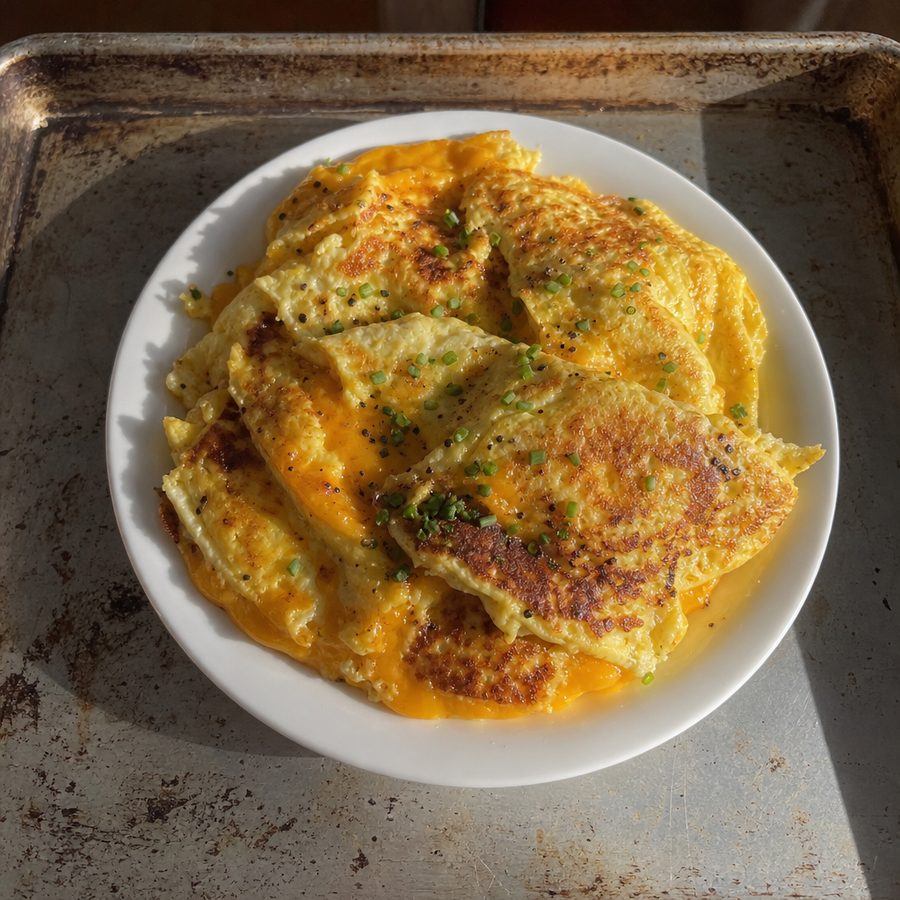
A fluffy folded egg omelet, cooked gently in butter and salt until just set, then filled with sharp cheddar that melts into soft ribbons as it folds.
Why You'll Love This Recipe
This is a plain, honest breakfast built on eggs, butter, cheddar, and salt, and nothing else. It suits anyone who wants a warm, protein-rich start to the day without reaching for bread, fruit, or a long list of seasonings. Because it leans on just four ingredients, the quality of each one shows, and the whole thing comes together in the time it takes coffee to brew.
Low, patient heat, and then the fold. Cooking the beaten eggs over medium-low keeps them pale and custardy instead of browned and rubbery, and pushing the set edges toward the center lets the raw egg keep flowing underneath so the whole surface cooks evenly without stirring it into scramble. Adding the cheddar while the top is still faintly moist, then folding and letting the plate's residual warmth finish the melt, gives you soft, molten cheese rather than a greasy, over-cooked pocket.
Rich, and filling in equal measure. Whole eggs and sharp cheddar deliver complete protein along with the fat that makes a meal feel like a meal, so you stay comfortable for hours instead of hungry again in thirty minutes. The butter carries flavor and keeps the texture silky, and the salt is all the seasoning this dish needs to taste complete. It is also the fastest real breakfast there is, which is worth knowing on a morning that has already gotten away from you.
Ingredients
- 10 large eggs
- 1 1/2 cups shredded cheddar
- 3 tbsp butter, divided
- 3/4 tsp salt
Instructions
- Shred the cheddar: Using the large holes of a box grater, shred the cheddar from a block into loose, fluffy strands and set it near the stove so it is ready to add the moment the eggs are set. Freshly shredded cheddar melts more evenly than pre-bagged shreds, which are coated to keep them from clumping.
- Beat the eggs: Crack the eggs into a bowl, add the salt, and whisk hard with a fork or whisk until the whites and yolks are completely blended and the surface is slightly frothy, with no clear streaks of white remaining. Thorough beating is what gives the finished omelet an even, tender texture.
- Melt the butter: Set a nonstick skillet over medium-low heat and add a portion of the butter, swirling the pan so the melted butter coats the bottom and slightly up the sides. Let it melt until it foams gently but does not brown; keeping the heat modest is what keeps the eggs pale and soft rather than tough.
- Pour and set the eggs: Pour in enough beaten egg to coat the pan in a thin, even layer. As the edges begin to set, tilt the pan and use a spatula to push the cooked egg toward the center, letting the still-raw egg run into the bare spots underneath. Continue until the top is just barely wet and no longer runny.
- Add the cheddar and fold: While the surface is still slightly moist, sprinkle the shredded cheddar over one half of the omelet. Slide the spatula under the bare half and fold it over the cheese to make a half-moon.
- Finish and repeat: Slide the omelet onto a plate and let the residual heat finish melting the cheese for a minute before eating. Wipe the pan if needed, add more butter, and repeat with the remaining beaten egg and cheddar for each omelet.
Variations
- Bacon and cheddar: Cook strips of bacon until crisp, drain, crumble, and scatter over the cheese before folding. This adds meat.
- Ham and cheese: Fold in diced cooked ham along with the cheddar for a heartier, savory omelet. This adds meat.
- Smoked salmon: Lay thin pieces of smoked salmon over the eggs with the cheddar before folding. This adds fish.
- Three-cheese: Combine the cheddar with shredded gruyere and a little grated parmesan for a deeper, nuttier melt. This adds dairy.
- Cooked in animal fat: Swap the butter for rendered bacon fat or beef tallow to cook the eggs, giving a richer, more savory flavor. This swaps in an animal fat, so it steps outside vegetarian even though the filling does not change.
Storage & Leftovers
Store leftover omelets in an airtight container in the refrigerator for up to three days. Let them cool to room temperature first so trapped steam does not make them soggy, and lay them flat rather than stacking so the fold holds its shape.
Reheat gently to protect the tender egg. A covered nonstick skillet over low heat for a couple of minutes brings it back best, warming the cheese through without toughening the egg. A microwave works in a pinch, but use short bursts at reduced power and stop as soon as it is hot, since eggs turn rubbery quickly with too much heat.
To get ahead, shred the cheddar and beat the eggs with the salt the night before and keep both covered in the refrigerator, then whisk the eggs again briefly before cooking. Fully cooked omelets can also be made ahead and rewarmed, though they are always at their fluffy best straight from the pan.
Notes & Tips
- Choose sharp cheddar: Sharp or extra-sharp cheddar gives the most flavor for the fewest strands of cheese, so the omelet tastes fully cheesy without turning greasy. A block you shred yourself melts smoother than pre-shredded, which is dusted with starch to prevent clumping.
- Let eggs lose their chill: Cold eggs straight from the refrigerator cook unevenly. Letting them sit out while the pan heats, or warming the bowl briefly in your hands, helps them set into a more uniform, tender layer.
- Watch for the just-wet stage: The cheese goes on when the top of the eggs is still glossy and barely moist, not fully dry. At that point the omelet folds without cracking and the trapped heat finishes cooking it to soft, not stiff.
- Match the pan to the portion: A smaller nonstick skillet, roughly eight inches, keeps each omelet thick enough to fold cleanly. A too-large pan spreads the eggs thin and they overcook before the cheese melts.
- Keep them warm for a crowd: When cooking several, hold the finished omelets on a plate in a warm oven with the door cracked while you cook the rest, so everyone can sit down to eat at the same time.
- Adjust the salt to taste: Sharp cheddar is already salty, so taste as you go. If you like a saltier egg, add a little more salt to the beaten eggs rather than to the finished omelet, where it sits on the surface instead of blending in.
Nutrition & Mindful Eating
- Eggs, butter and cheddar are a small cast that works because each one is rich in a different way. The eggs set into something tender, the butter keeps them from tightening, and the cheddar melts through the fold and holds it together.
- Eggs are what make this a real breakfast. Cooked gently they set into curds soft enough to eat with a fork alone, and they bring complete protein along with the choline that sits in the yolk beside all that yellow color.
- Sharp cheddar is worth reaching for over mild here, because the tang cuts the butter and keeps a rich omelet from going flat. It also brings calcium and protein of its own into the fold.
- Butter is the cooking fat and the seasoning at once. It browns just enough to smell nutty before the eggs go in, and it carries vitamins A and D, which dissolve in fat rather than water.
- A pinch of salt beaten into the eggs rather than shaken over the finished plate is the difference. It seasons every curd from the inside and draws out the sweetness eggs have when they are cooked slowly.
- As you eat, notice how the outside stays pale and tender while the cheese pulls at the center, and give the plate a few minutes at the table so a breakfast this quick to make does not also become one you rush.
Frequently Asked Questions
Why does my omelet turn out brown and rubbery?
That comes from heat that is too high. Keep the pan at medium-low so the butter foams but never browns, and pull the omelet the moment the top is just set. Eggs cooked hot and long tighten up and take on color, while gentle heat keeps them pale and tender.
Can I use pre-shredded cheddar?
You can, but it will not melt as smoothly. Bagged shredded cheese is coated with starch to keep the strands from sticking, which can leave the melt slightly grainy. Shredding a block yourself gives you the silkiest result.
My cheese never fully melts before the eggs overcook. What am I doing wrong?
Add the cheddar while the surface is still slightly moist rather than waiting until the eggs are dry, then fold and let the omelet finish on the plate. The residual heat melts the cheese without cooking the eggs any further.
What can I serve with it?
It pairs well with crisp bacon, sausage, or a few slices of ham on the side for a fuller plate. On its own it is already rich and filling thanks to the eggs, cheddar, and butter.