
Classic Piped Deviled Eggs
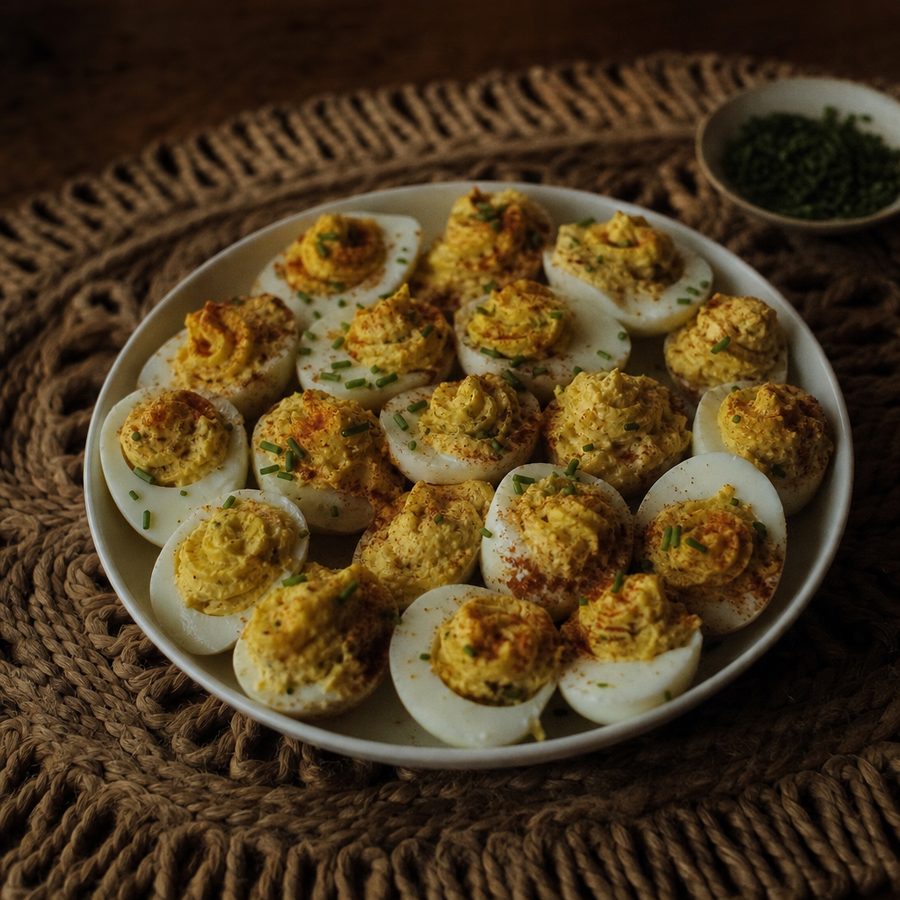
Tender hard-boiled egg whites cradling their own yolks whipped with softened butter and a pinch of salt into a silky, pipeable filling swirled back into each half.
Why You'll Love This Recipe
Deviled eggs stripped back to the egg itself: yolk, butter, salt, and nothing sharp or sweet borrowed from a jar. With a list this short the whole thing rests on the eggs being cooked properly, which means pulled at the point the yolk is set but still bright rather than chalky and ringed with gray-green. Use eggs that have been in the refrigerator a week rather than a day, because a truly fresh egg will fight you for its shell. Worth making the evening before people come over, since they are better cold and firm.
The trick that sets this version apart is whipping the warm-tender yolks with softened butter instead of the usual tangy dressing. Butter melts into the yolks and carries their flavor, giving the filling a smooth, almost mousse-like body that holds a crisp piped swirl. A properly timed boil and an ice bath matter here too: a full set yolk mashes into a lump-free paste, and shocked eggs peel without tearing the delicate whites you are about to fill.
What makes them so satisfying is the contrast between the firm, cool white and the soft, buttery filling, plus the staying power of a food built almost entirely from protein and fat. There is no rush of sugar and no crash after; just a rich, savory bite that keeps you full. Salt is the only seasoning, and used with a light hand it sharpens the flavor of the egg itself rather than covering it.
Ingredients
- 4 large eggs
- 2 tbsp butter, softened
- a pinch of salt
Instructions
- Boil the eggs: Place the eggs in a single layer in a saucepan and cover them with cold water by about an inch. Bring the water to a rolling boil over high heat, then let the eggs cook a steady 12 minutes for firm, fully set yolks.
- Cool in ice water: While the eggs cook, fill a bowl with ice and water. As soon as the 12 minutes are up, lift the eggs out with a slotted spoon and lower them straight into the ice water. Let them chill for at least 10 minutes, which stops the cooking and makes them far easier to peel.
- Peel and halve: Tap each cooled egg all over to craze the shell, then peel under a thin stream of running water so the bits rinse away cleanly. Halve each egg lengthwise with a sharp knife, wiping the blade between cuts for clean edges. Gently pop the yolks out into a bowl and set the empty whites aside on a plate, cut side up.
- Whip the filling: Add the softened butter and a pinch of salt to the yolks. Mash with a fork until the yolks break down, then keep working the mixture, pressing it against the side of the bowl, until it is completely smooth and creamy with no lumps. Taste and adjust the salt.
- Pipe and serve: Spoon the filling into a piping bag fitted with a star tip, or a zip-top bag with one corner snipped off. Pipe a generous swirl of filling into the hollow of each egg white, mounding it slightly above the rim. Serve right away, or chill until ready.
Variations
- Crisp bacon top: Cook bacon until crisp, drain it, and crumble it finely over the piped swirls just before serving for a salty, smoky crunch. This adds meat.
- Hard cheese fold-in: Grate a hard aged cheese very finely and beat it into the yolks along with the butter for a deeper, savory filling. This adds more dairy.
- Smoked salmon: Flake cold-smoked salmon and fold small pieces into the whipped filling, or drape a sliver over each swirl. This adds fish.
- Bacon fat filling: Render the fat from cooked bacon, let it cool until soft but not solid, and use it in place of the butter to whip the yolks for a richer, smokier body. This adds pork fat.
- Extra-rich yolk: Boil an extra egg or two just for their yolks and mash them into the filling, using only the added whites elsewhere, for a denser, more golden swirl.
Storage & Leftovers
Store the finished eggs in an airtight container in the refrigerator, arranged in a single layer so the piped swirls stay intact. They keep well for up to two days; after that the whites begin to weep and the filling loses its fresh texture.
These are meant to be eaten cold and do not reheat, since warming melts the butter and collapses the filling. If they have been out at room temperature during serving, simply return them to the refrigerator to firm the filling back up before the next round.
To get ahead, boil, peel, and halve the eggs and whip the filling up to a day in advance, keeping the empty whites and the filling in separate covered containers. Spoon the filling into a piping bag and pipe into the whites shortly before serving so the swirls look freshly done.
Notes & Tips
- Buy eggs a little older: Eggs that have sat in the refrigerator for a week or so peel much more cleanly than very fresh ones, so save the freshest carton for other uses and use slightly older eggs here.
- Soften the butter fully: Let the butter sit out until it gives easily to a fingertip. Cold butter will not blend into the yolks and leaves pale flecks in the filling.
- A star tip makes it look bought: A piping bag fitted with a star tip gives the ridged swirl people expect, but a zip-top bag with a corner snipped off works fine for a simple rounded mound.
- Steady the whites for serving: If the whites wobble on the plate, trim a thin sliver off the rounded bottom of each so it sits flat and the filling does not tip out.
- Salt in stages: Add a little salt, taste, then add more if needed. The butter mutes salt slightly, so what tastes right warm may taste flat once the eggs are chilled.
- Double the batch easily: These disappear fast at a gathering, so boil extra eggs at the same time; the whipping and piping scale up with no change in method.
Nutrition & Mindful Eating
- Three ingredients and a piping bag. The yolks bring the flavor, the butter brings the silk, and the salt makes both of them taste like something, which is a great deal to ask of a very short list.
- Eggs are the whole dish here, so how you cook them decides everything. Pull them at the point where the yolk is set but still bright yellow and you get all the complete protein of an egg in a filling that has not gone chalky.
- The yolk is the richest part of an egg and the reason these taste like more than white and seasoning. It carries choline and the fat-soluble vitamins A and D, all of it arriving folded into that soft, buttery texture.
- Softened butter beaten into the yolks does something a liquid binder cannot. It firms up again as the eggs chill, so the piped rosettes hold their ridges rather than slumping into each other on the plate.
- These eat cold and dense, the white cool and springy against a filling that is rich all the way through, and that contrast is why a couple of halves feel like more of a snack than their size suggests.
- As you eat, look at the ridges the tip left before you bite, notice how the cool white gives way to the buttery yolk, and let a small plate of these be a proper pause rather than something eaten standing up.
Frequently Asked Questions
Why is my filling lumpy instead of smooth?
Lumps usually mean the yolks were undercooked or the butter was too cold. Boil a full 12 minutes so the yolks set firm enough to mash into a paste, and let the butter soften completely at room temperature before you whip them together.
How do I keep the whites from tearing when I peel them?
Shock the boiled eggs in ice water for at least 10 minutes, then peel under running water. The cold sets the whites and the water floats the shell fragments away, so you are far less likely to gouge the delicate whites you need to fill.
Can I make these without a piping bag?
Yes. Spoon the filling into the whites, or use a zip-top bag with one corner snipped off to pipe a simple mound. The flavor is identical; only the decorative swirl changes.
Why butter instead of the usual creamy dressing?
Butter gives the filling a smooth, rich body and lets the flavor of the egg itself come through, rather than covering it. It also firms up when chilled, so the piped swirls hold their shape.