
Classic Vegetable Lasagna
Tender whole wheat lasagna sheets layered with herbed ricotta, sauteed zucchini and spinach, oregano-scented crushed tomatoes, and a melting blanket of mozzarella and parmesan.
Why You'll Love This Recipe
This is a comforting, meat-free lasagna built for anyone who wants a warm, familiar dinner that still leans on vegetables and whole grains. It is hearty enough to satisfy a hungry table yet lighter than the sausage-heavy versions many people grew up on, making it a reliable centerpiece for a family meal, a potluck, or a make-ahead dinner you slice through over a few nights.
Season every layer separately instead of dumping it all together. The zucchini and spinach are sauteed first so they shed excess moisture and concentrate their flavor, which keeps the finished lasagna from turning watery. Whisking an egg into the ricotta gives the cheese layer structure, so it sets into tidy, sliceable layers instead of running loose, while the oregano steeped into the crushed tomatoes carries a savory backbone through every bite. The foil-on, foil-off bake steams the pasta tender first, then lets the top brown and bubble.
Several good things arrive at once: creamy ricotta and stretchy mozzarella for richness, tender-crisp vegetables for freshness, and whole wheat pasta that brings a nutty chew and staying power. The ricotta, mozzarella, parmesan, and egg together make it high in protein, while the spinach, zucchini, and whole grain sheets add fiber and color, so a single square feels indulgent and nourishing at the same time.
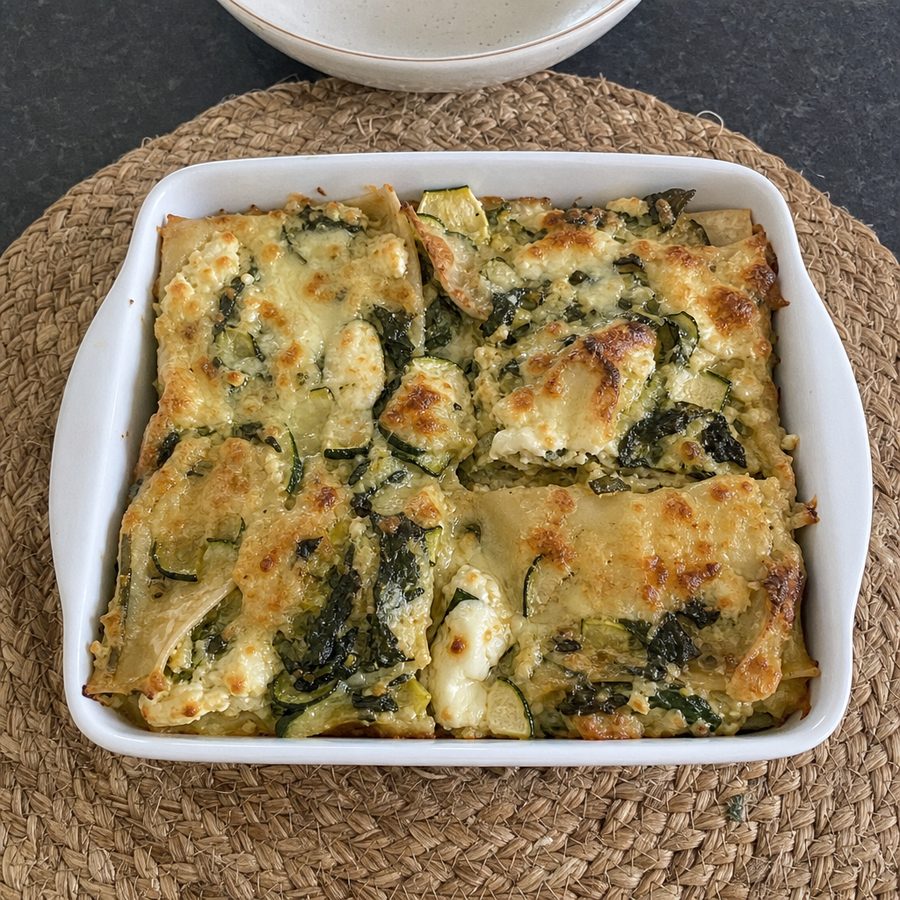
Ingredients
- 9 whole wheat lasagna sheets, cooked
- 1 cup ricotta
- 1 cup shredded mozzarella
- 1/4 cup grated parmesan
- 2 medium zucchini, diced
- 5 cups fresh spinach
- 2 cups crushed tomatoes
- 1 large egg
- 3 cloves garlic, minced
- 3 1/2 tbsp olive oil
- 1 tsp dried oregano
Instructions
- Cook the pasta: Preheat the oven to 375°F (190°C). Bring a large pot of water to a rolling boil, slide in the whole wheat lasagna sheets one at a time so they do not stick together, and cook until pliable but still slightly firm, about 8 to 10 minutes. Drain, then lay the sheets flat in a single layer on a lightly oiled tray or clean towel so they do not clump.
- Sauce the tomatoes: Mince the garlic. Stir the dried oregano into the crushed tomatoes and set the sauce aside so the herb can soften and infuse.
- Saute the vegetables: Dice the zucchini into small, even pieces. Warm the olive oil in a large skillet over medium heat, add the garlic and cook until fragrant, about 30 seconds, then add the zucchini and cook until it begins to soften, about 3 minutes. Add the fresh spinach by the handful and cook, stirring, until it wilts down and the zucchini is tender, about 3 minutes more. The whole vegetable mixture should take roughly 6 minutes. Leave the vegetables unseasoned and take the pan off the heat, since the ricotta, mozzarella, and parmesan salt the finished lasagna.
- Mix the ricotta: In a bowl, whisk the egg into the ricotta along with the grated parmesan until the mixture is smooth and creamy.
- Assemble the layers: Spread a thin layer of the tomato sauce across the bottom of a baking dish. Lay down a layer of pasta sheets, spread over some of the ricotta mixture, spoon on some of the sauteed vegetables, and sprinkle with shredded mozzarella. Repeat the layers, then finish the top with a final layer of sauce and a generous blanket of mozzarella.
- Bake and rest: Cover the dish tightly with foil and bake for 25 minutes. Uncover and bake for about 15 minutes more, until the top is golden and the edges are bubbling. Let the lasagna rest for 10 minutes before slicing so the layers set and hold their shape when cut.
Variations
- Mushroom: Add sliced cremini or button mushrooms to the skillet with the zucchini and cook until they release their liquid and it evaporates. They bring a deep, savory bite that makes the dish feel even more substantial.
- White bean: Fold rinsed and drained cannellini beans into the sauteed vegetables for extra protein and a creamy texture that holds up between the layers.
- Roasted red pepper: Stir chopped jarred roasted red peppers into the tomato sauce for a mellow sweetness and a pop of color against the greens.
- Fresh basil and lemon: Tear fresh basil leaves over the vegetable layers and whisk a little lemon zest into the ricotta to brighten the whole dish with a fresh, herbal lift.
- Spicy arrabbiata: Stir a pinch of crushed red pepper flakes into the tomato sauce for a gentle, warming heat that cuts through the richness of the cheese.
Storage & Leftovers
Once cooled, cover the lasagna tightly or transfer squares to an airtight container and refrigerate for up to 4 days. The flavor actually deepens overnight as the sauce and herbs settle into the pasta.
To reheat, warm individual squares in a 350°F (175°C) oven, loosely covered with foil, until heated through, about 15 to 20 minutes; a splash of water or extra sauce over the top keeps it from drying out. A microwave works for a single portion in a pinch, covered and heated in short bursts.
To make ahead, assemble the entire lasagna, cover it unbaked, and refrigerate for up to a day before baking; add a few extra minutes to the covered bake time since it starts cold. It also freezes well, either whole or in portions, wrapped airtight for up to three months, then thawed overnight in the refrigerator before reheating.
Notes & Tips
- Dry the vegetables well: Spinach and zucchini both hold a lot of water. Cook them until the skillet looks dry rather than glossy with liquid, and press out any pooled moisture, so the finished layers slice cleanly instead of sliding apart.
- Grate your own mozzarella: A block of mozzarella grated at home melts smoother than pre-shredded bags, which are dusted with anti-caking starch that can leave the top slightly grainy.
- The egg is what sets the ricotta: Do not skip whisking the egg into the ricotta. It is what firms the cheese layer as it bakes so your squares hold together rather than oozing when you cut them.
- Rest before you slice: The 10-minute rest is not optional if you want neat squares. Cutting straight from the oven lets the layers slump; a short rest lets everything firm up so a spatula lifts clean portions.
- Taste and adjust the salt: Parmesan and mozzarella are both salty, so taste the ricotta mixture and the sauce before assembling and adjust with only a pinch more salt if needed, rather than over-salting up front.
- Serve with something green: A simple lemony arugula or mixed green salad on the side cuts the richness and rounds out the plate, adding freshness against the warm, cheesy layers.
Nutrition & Mindful Eating
- Pasta, cheese, vegetables and tomato are stacked so each layer does a different job. The sheets give it structure, the ricotta gives it softness, the zucchini and spinach give it green, and the tomato keeps the square from tasting only of cheese.
- Ricotta is what makes the middle layers creamy rather than stringy, and beating an egg into it sets the filling so a slice holds its shape on the plate. It brings protein and calcium into the softest part of the dish.
- Whole wheat lasagna sheets have a nutty chew that stands up to a heavy filling, and because they keep the bran, they bring fiber into a dish most people think of as pure comfort.
- Zucchini and spinach carry the vegetable half of this. The zucchini stays tender and faintly sweet between the layers, the spinach folds into the ricotta with its folate and vitamin K, and together they keep every forkful from being all cheese.
- Mozzarella browning on top and parmesan salting the layers underneath are two separate jobs. One gives you the pull and the blistered corners, the other gives the savory depth, and the oregano warming in the tomato ties them together.
- As you eat, wait the ten minutes the pan needs to settle, then notice the oregano in the steam and the pull of the top layer, and take a square slowly enough to know whether you actually want another.
Frequently Asked Questions
Can I use no-boil lasagna sheets instead?
You can, but this recipe is written for standard whole wheat sheets that you boil first. If you use no-boil sheets, make sure your sauce layers are generous and a bit loose, since those sheets rely on extra moisture in the dish to soften as they bake.
Why did my lasagna turn out watery?
The usual culprit is undercooked vegetables. Spinach and zucchini release a lot of liquid, so saute them until the skillet looks dry and press out any pooled moisture before layering. Resting the baked lasagna before slicing also helps it set.
Can I make this without the egg?
Yes, though the egg is what helps the ricotta layer firm up for clean slices. Without it the lasagna will still taste good but will be softer and a little looser when you cut into it.
What can I serve alongside it?
A crisp green salad with a lemony or vinaigrette dressing balances the richness nicely, and some crusty bread is welcome for catching the sauce. Keep sides light since the lasagna itself is filling.