
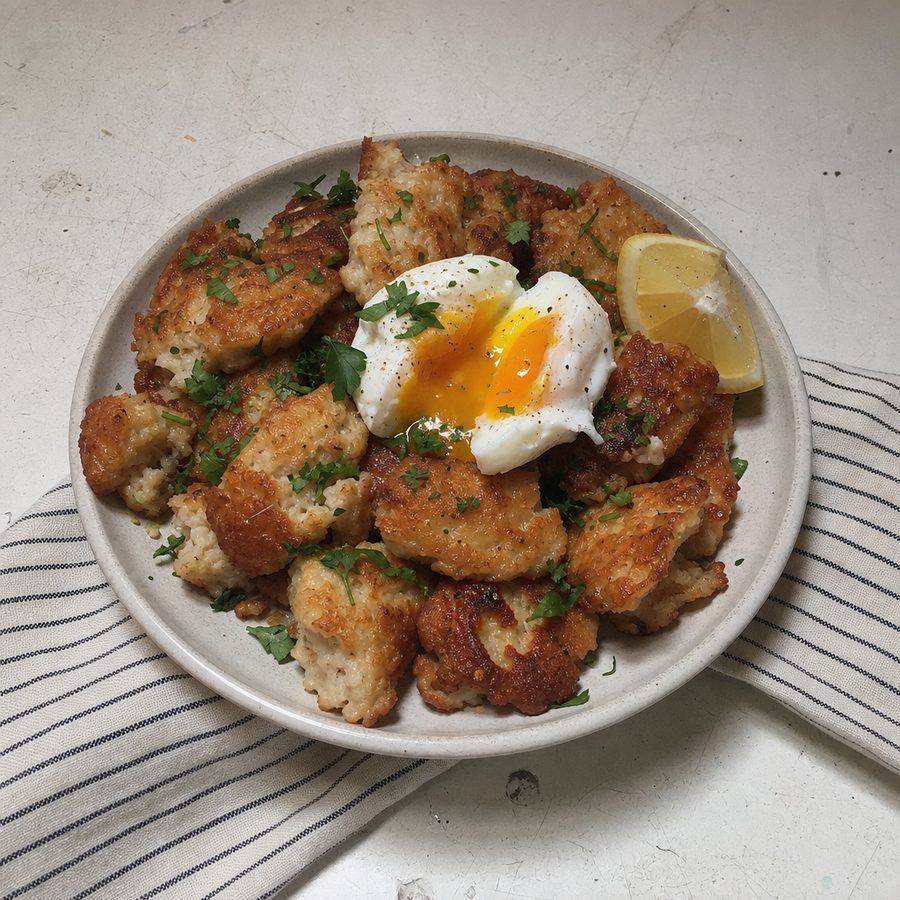
Cod Fish Cakes with Poached Egg
Flaky cod folded into soft mashed potato with scallions, Dijon, parsley, and lemon, pan-seared into golden cakes and crowned with a soft poached egg whose runny yolk becomes the sauce.
Why You'll Love This Recipe
This is a savory, protein-forward breakfast for anyone who is tired of sweet mornings and wants something that actually holds them until lunch. Built around mild flaky cod and comforting mashed potato, it reads as hearty pub food but eats clean and light, and it turns a small amount of fish into a full plate. It suits cooks who like a project on a slow weekend morning and anyone feeding people who claim they do not like fish, because the flavor here is gentle and rounded rather than briny.
Mix it less than you want to, and sear it slower than you want to. Cooling the potato and folding rather than mashing keeps the cakes tender instead of gluey, and chilling the shaped patties lets them set so they brown into a real golden crust without crumbling in the pan. The Dijon and lemon cut through the richness of the potato and egg, the scallions add a fresh bite, and the poached egg is the whole point: its runny yolk breaks into a warm, silky sauce that ties the cakes together with no gravy or roux required.
The plate is balanced without trying to be. Cod and eggs bring a generous amount of complete protein, the potato adds gentle comfort and staying power, and the olive oil, herbs, and lemon keep everything bright rather than heavy. It is filling without feeling greasy, and because the crisp exterior gives way to a soft interior and a flowing yolk, every forkful has contrast, which is a big part of why a simple plate like this feels nourishing.
Ingredients
- 480 g cooked cod, flaked
- 400 g cooked potato, mashed
- 6 large eggs (2 for binding, 4 to poach)
- 4 scallions, minced
- 1 tbsp Dijon mustard
- 3 tbsp parsley, chopped
- 2 tbsp olive oil
- 1 tbsp lemon juice
- 1/4 tsp salt
- 1/4 tsp black pepper
Instructions
- Cook and flake the cod: Place the cod in a wide pan, cover with water, and bring to a bare simmer over medium heat. Poach gently until the fish turns opaque and flakes easily when pressed with a fork, about 8 to 10 minutes depending on thickness. Lift it out, let it cool slightly, then flake into rough shreds with two forks, feeling for and discarding any stray bones or skin.
- Boil and mash the potato: Peel the potato and cut into even chunks. Boil in salted water until fork-tender, about 15 minutes. Drain very well and let the steam die off for a minute, then mash smooth with a potato masher. Spread it out to cool; warm potato makes a sticky mix that is hard to shape.
- Make the mixture: Trim and finely mince the scallions and chop the parsley. In a large bowl combine the flaked cod, mashed potato, the eggs for binding, minced scallions, Dijon mustard, chopped parsley, and lemon juice. Fold together gently with a fork until it just holds, keeping some texture in the fish rather than mashing it to paste. Season with the salt and a few grinds of pepper.
- Shape the cakes: Divide the mixture and form patties about an inch thick, pressing firmly so they hold their shape and smoothing the edges to prevent cracking. Set them on a plate and chill in the refrigerator for at least 20 minutes; this firms them up so they sear without falling apart.
- Sear the cakes: Heat the olive oil in a skillet over medium heat until it shimmers. Lay in the cakes without crowding and sear undisturbed for 3 to 4 minutes, until a deep golden crust forms, then flip once and sear the second side 3 to 4 minutes more until golden and heated through. Move them to a warm plate.
- Poach the eggs: Bring a wide pan of water to a bare simmer with small bubbles just breaking the surface. Crack each egg into a small cup, then slip it into the water and cook for 3 minutes for a set white and runny yolk. Lift out with a slotted spoon and rest briefly on a paper towel to drain.
- Plate and finish: Set two cakes on each plate and top with a poached egg. Sprinkle with parsley and add a squeeze of lemon. Break the yolk at the table so it runs down over the cakes.
Variations
- Smoked fish: Swap some of the cod for flaked smoked haddock or smoked salmon for a deeper, savory note; this adds a stronger cured-fish flavor and more salt, so ease back on any added salt.
- Herb and horseradish: Fold in chopped dill and a little prepared horseradish alongside the parsley for a sharper, brighter cake that plays well with the runny yolk.
- Fried egg finish: Instead of poaching, fry the eggs in a little olive oil with crisp lacy edges and a soft yolk; the technique changes but the runny-yolk sauce stays the same.
- Sweet potato base: Use mashed sweet potato in place of the white potato for a naturally sweeter, earthier cake with a softer texture; shape gently, as the mix will be a touch wetter.
- Caper and lemon zest: Stir chopped capers and grated lemon zest into the mixture for a tangy, briny lift that cuts the richness even more than lemon juice alone.
Storage & Leftovers
Store the seared cakes on their own, without the poached egg, in an airtight container in the refrigerator for up to three days. Poached eggs are best made fresh, so poach them the morning you plan to eat rather than storing them.
To reheat, warm the cakes in a dry or lightly oiled skillet over medium heat for a few minutes per side until hot through and the crust crisps again; this beats the microwave, which softens the crust and can make them steamy. Poach fresh eggs while the cakes reheat and assemble just before serving.
To get ahead, mix, shape, and chill the raw cakes up to a day in advance and keep them covered in the refrigerator, then sear when you are ready. The cod can also be poached and flaked and the potato boiled and mashed the day before to make morning assembly quick.
Notes & Tips
- Dry the fish and potato: Excess moisture is the enemy of a cake that holds. Drain the poached cod well and let the mashed potato steam off before mixing, so the patties firm up and sear instead of steaming apart.
- Do not skip the chill: Twenty minutes in the refrigerator is what lets the cakes brown without crumbling. If you have time, chill them longer; colder cakes are more forgiving in the pan.
- Choose the right potato: A starchy potato like a russet mashes fluffy and binds well. Waxy potatoes stay dense and can make the cakes gummy, so reach for the baking type.
- Test one cake first: Sear a single test cake before committing the batch. If it breaks apart, work another egg or a little more mashed potato into the mix to tighten it up, then shape the rest.
- Fresh eggs poach best: The freshest eggs hold a tight white and give you a neat poach; older eggs spread into wispy strands. A splash of vinegar in the poaching water also helps the whites gather.
- Serve with something green: A handful of dressed watercress, arugula, or wilted spinach on the side cuts the richness and turns the plate into a fuller meal without much effort.
Nutrition & Mindful Eating
- The cakes and the egg are one dish, not two. The cod and potato make something mild and soft that fries up crisp, and the yolk breaking over the top is the richness that ties it together, so a plate this simple carries protein from two directions.
- Cod is a mild, fine-flaked fish that folds into mashed potato without fighting it, which is what makes a fish cake taste of the sea rather than of fish, and it carries most of the protein that keeps this a breakfast worth sitting down to.
- Potato is the body of the cake and the reason the inside stays soft while the outside browns, and it brings a slow, real carbohydrate along with potassium to a plate that would otherwise be all protein.
- The poached egg is not a garnish. The white sets around the cake and the yolk runs into the crust, and the choline and fat-soluble vitamins the yolk carries arrive inside what is genuinely the best bite on the plate.
- Dijon, scallions and parsley are what keep the mixture awake, the mustard sharp underneath, the scallions green through the middle, and a squeeze of lemon over the finished cakes is what makes the whole plate taste bright.
- As you eat, break the yolk first and watch it go into the crust, then take the first bite slowly enough to catch the crunch giving way to something soft, and let breakfast be a proper pause.
Frequently Asked Questions
My cakes keep falling apart in the pan. What am I doing wrong?
Usually it is moisture or heat. Drain the cod and dry the mashed potato well, chill the shaped cakes before searing, and resist flipping them until a golden crust has formed, which is what holds them together. If the mix still feels loose, work in a little more mashed potato or another beaten egg.
Can I use a different white fish instead of cod?
Yes. Any mild, flaky white fish such as haddock, pollock, or hake works the same way. Poach it just until it flakes, check for bones, and treat it exactly as you would the cod.
How do I know when the poached egg is done?
At a bare simmer, three minutes gives a fully set white with a runny yolk. The white should look opaque and hold together when you lift the egg with a slotted spoon, while the yolk still feels soft to a gentle touch.
Can I make these ahead for a weekday breakfast?
Yes. Sear the cakes ahead and refrigerate them for up to three days, then crisp them in a skillet over medium heat and poach fresh eggs while they warm. Poached eggs do not store well, so make those to order.