
Cod and Parmesan Fish Cakes
Tender flakes of cod folded with egg and grated parmesan, pressed into small patties and pan-seared in butter until deeply golden.
Why You'll Love This Recipe
There is no breadcrumb in these, which means egg and parmesan are doing all the binding and the cod has nowhere to hide. That is the appeal: what you taste is fish and browned butter rather than filler. It also means the mixture is looser than a classic fish cake, so it wants twenty minutes in the refrigerator before it meets a pan. Make them on an evening when there is a fillet in the freezer and no plan, and eat two straight from the skillet while the rest cool.
Keep the cod dry and the mixing gentle. Poaching cooks the fish through without adding fat, and blotting the flakes removes the water that would otherwise steam the cakes and loosen them. The egg sets as it cooks and the parmesan melts and crisps at the edges, so the two together act as the only glue you need. Firm pressing when you shape them, plus a golden sear in foaming butter, builds a crust that holds everything in place.
Dense protein, and very little else in the way. Cod and eggs are both complete proteins, parmesan adds a deep salty savor and a little richness, and butter carries the browning flavor. They are naturally free of grains and sugar, so they sit light but keep you full, and the crisp exterior against the soft, flaky interior is what makes them feel like a treat rather than a diet food.
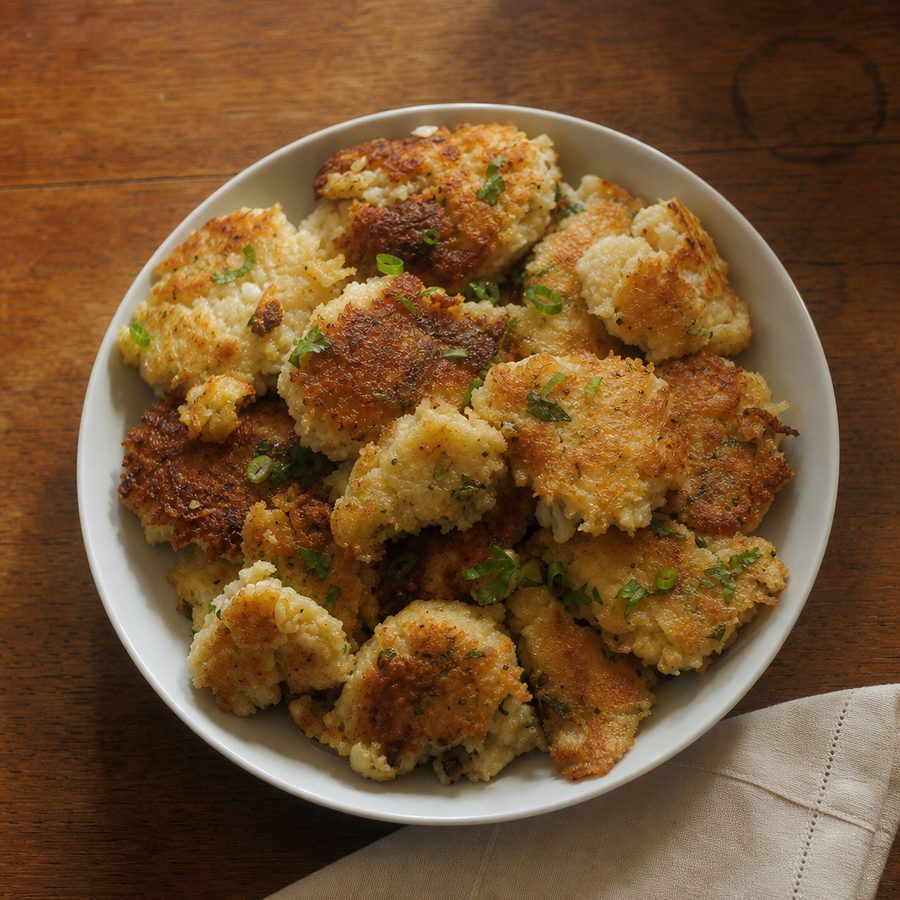
Ingredients
- 14 oz cooked cod, flaked
- 2 large eggs
- 1/2 cup grated parmesan
- 1 tbsp butter
- 1/4 tsp salt
Instructions
- Poach and flake the cod: Place the cod in a wide skillet or saucepan and add just enough water to cover it. Bring to a bare simmer over medium heat and cook until the fish turns opaque all the way through and flakes easily when nudged with a fork, about 8 to 10 minutes depending on thickness. Lift the cod out, drain it well, and let it cool for a few minutes. Flake it into small pieces with a fork, then press gently with a paper towel to blot away excess moisture, since wet cod makes cakes that fall apart.
- Make the mixture: Crack the eggs into a bowl and beat them lightly with a fork. Add the flaked cod, grated parmesan, and salt. Fold everything together gently with a fork or spatula until the mixture just holds together in a loose, cohesive mass. Do not overmix or mash it into a paste; you want visible flakes of fish so the cakes stay light.
- Shape the patties: Scoop up a portion of the mixture and press it firmly between your palms into a small, compact patty about three-quarters of an inch thick. Pressing firmly is what keeps them from crumbling in the pan. Set each shaped patty on a plate and repeat with the rest of the mixture.
- Sear in butter: Melt the butter in a skillet over medium heat until it foams and the foam begins to subside. Lay the patties in the pan without crowding them and cook undisturbed for about 3 minutes, until the underside is golden brown. Slide a thin spatula fully under each cake, flip it once, and cook the second side about 3 more minutes until golden and heated through.
- Rest and set: Transfer the cakes to a wire rack and let them rest for about 3 minutes. This short rest lets the egg finish setting so the cakes firm up and hold their shape when you lift them.
Variations
- Crab and cod: Fold in some cooked, well-drained crab meat along with the cod for a sweeter, richer cake. This adds shellfish.
- Salmon swap: Use cooked, flaked salmon in place of the cod for a deeper color and a fattier, more full-flavored cake.
- Sharper cheese: Swap the parmesan for grated pecorino romano, a harder, saltier sheep's-milk cheese that gives a tangier, more pronounced bite. This changes the dairy used.
- Browned butter sear: Let the butter cook a little past foaming, until it smells nutty and turns light amber, before adding the patties for a toastier flavor throughout.
- Bacon-studded: Mix finely chopped cooked bacon into the fish before shaping for a smoky, savory note. This adds pork.
Storage & Leftovers
Keep the cooled fish cakes in an airtight container in the refrigerator for up to three days. Let them cool completely before you cover them, so trapped steam does not soften the crust.
Reheat them in a dry or lightly buttered skillet over medium heat for a couple of minutes per side. This brings back the crisp exterior far better than a microwave, which tends to make them rubbery and damp.
To get ahead, poach and flake the cod a day in advance and refrigerate it, or shape the raw patties and chill them on a covered plate for a few hours before searing. Chilled patties actually hold together a little better when they hit the pan.
Notes & Tips
- Buy the right cod: Thick, center-cut loin pieces flake into larger, moister pieces than thin tail ends and hold together better in the cake. Fresh or fully thawed and patted dry both work.
- Dry fish is everything: The single biggest cause of cakes that crumble is wet cod. After flaking, press the fish between paper towels until it no longer feels damp before it goes into the bowl.
- Grate your own parmesan: A wedge grated fresh melts and binds better than the pre-shredded kind, which is often coated to keep it from clumping and can stay dry and gritty in the cake.
- Test one first: Sear a single small cake before shaping the rest. If it breaks apart, fold a little more beaten egg into the mixture; if it feels loose, chill the patties briefly before cooking.
- Season to taste: Parmesan is already salty, so taste a pinch of the raw mixture and hold back on additional salt until you know how salty your cheese is.
- Serve them warm: These are best within a few minutes of resting, when the outside is still crisp and the inside is soft. A fried or poached egg alongside turns a snack into a light meal.
Nutrition & Mindful Eating
- Cod, egg and parmesan are the entire cake. The fish gives the flakes, the egg holds them, and the parmesan browns and seasons at the same time, which is how something with this short a list still eats like a proper savory snack full of protein.
- Cod is a mild, fine-textured fish that breaks into short flakes rather than long strands, which is exactly what you want in a cake you form by hand, and it carries the bulk of the protein here.
- Parmesan is doing the seasoning and the crust in one. Aged hard cheese browns before anything else in the pan, so the outside goes deeply savory and lacy, and it brings calcium along in the part you taste most.
- Egg is the only thing holding these together, which is why the interior stays soft and almost custardy around the fish, and the yolk brings choline and the vitamins A and D that ride along in its fat.
- Butter is what browns them. Cooked until it smells nutty before the cakes go in, it gives an edge no oil quite matches, and that toasted smell is most of what you are tasting when you eat one hot from the pan.
- As you eat, take one straight from the pan and listen to the parmesan crust crack against the soft flake inside, then sit down with the rest rather than standing over the stove.
Frequently Asked Questions
Why do my fish cakes keep falling apart?
Almost always it is moisture. If the cod is not blotted dry after flaking, the water steams the cake and loosens the bind. Press the fish until it feels dry, fold in the egg gently so it coats the flakes, press the patties firmly when shaping, and chill them briefly if they still feel loose.
Can I use frozen cod?
Yes. Thaw it fully in the refrigerator first, then poach and flake it as directed. Frozen fish releases more water, so blotting the flakes well before mixing matters even more.
How do I know the cod is cooked before I flake it?
Poached cod is done when it turns from translucent to fully opaque and separates into flakes with light pressure from a fork. If the center still looks glassy, give it another minute at a bare simmer.
Can I bake these instead of pan-searing?
You can, but they will not develop the same golden crust. The butter and direct skillet heat are what brown the outside and give the cakes their texture, so searing is the better method here.