
Cooked Shrimp Poke Rice Bowl
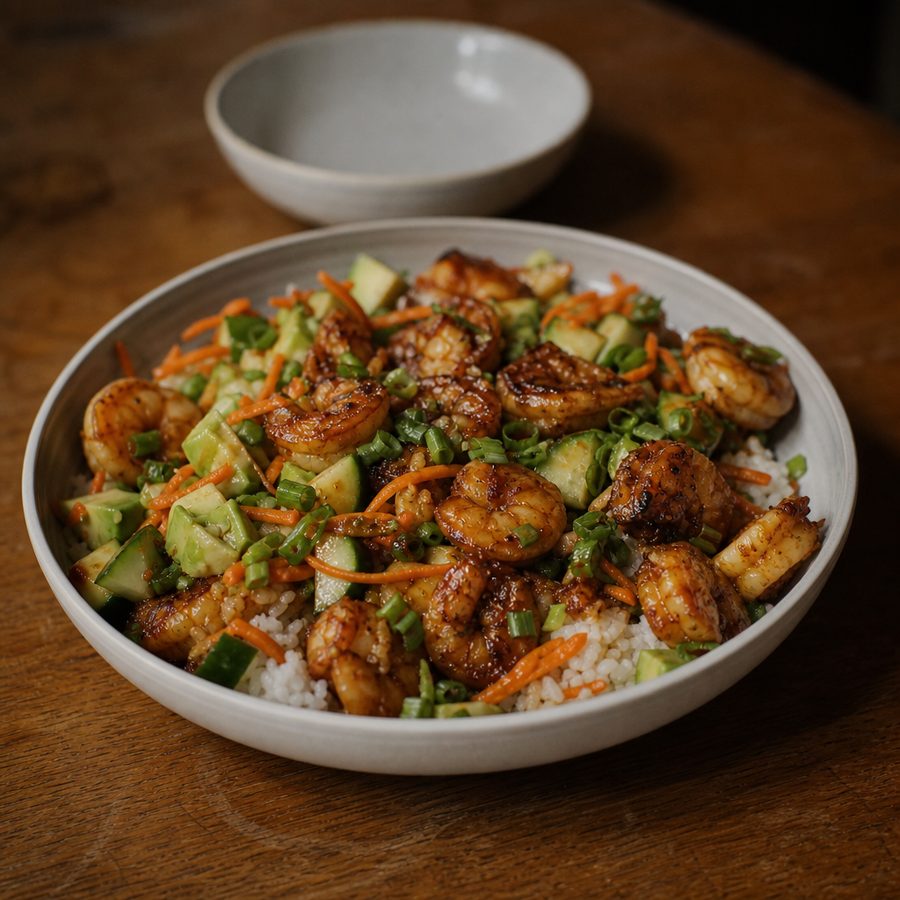
Warm shrimp glazed in ginger, soy sauce and lime over fluffy white rice, finished with cool cucumber, shredded carrot, creamy avocado and fresh scallion.
Why You'll Love This Recipe
This is a bright, warm-and-cool bowl for anyone who wants a lunch that eats like a treat but leaves them clear-headed for the afternoon. Tender shrimp carry most of the protein, rice gives it staying power, and a pile of raw cucumber, carrot and avocado keeps every bite fresh. It comes together fast once the rice is on, which makes it a realistic weekday meal rather than a weekend project.
The engine of the dish is the ginger-soy-lime glaze, which does double duty: half of it warms with the shrimp so the flavor soaks in while they heat, and the rest goes on raw at the end so you get a sharp, gingery lift on top. Because the shrimp are already cooked, they only need a brief turn in the pan to warm through and pick up the glaze; any longer and they tighten and go rubbery. Grating the ginger rather than mincing it releases more of its juice into the sauce.
Nothing on this bowl is the same temperature. The rice is soft and warm, the shrimp are savory and a little sweet, and the cucumber and carrot stay crisp and cold against them, while the avocado adds a buttery richness that ties it together. The lime and ginger keep the whole thing from feeling heavy, so you finish full but not weighed down, with a good hit of protein, fiber, and healthy fats.
Ingredients
- 560 g cooked shrimp, peeled
- 2 1/2 cups cooked white rice
- 1 cucumber, diced
- 2 carrots, shredded
- 1 avocado, sliced
- 3 scallions, sliced
- 3 tbsp soy sauce
- 2 tbsp lime juice
- 1 tbsp fresh ginger, grated
- 1 tbsp avocado oil
Instructions
- Have the rice ready: This builds on white rice that is already cooked, so warm it through, since a cold bed under warm shrimp makes the whole bowl lukewarm. Starting from dry instead, rinse the rice under cold water until it runs mostly clear and simmer it covered until the grains are tender and the liquid is absorbed, about 15 to 18 minutes, then let it steam covered for 5 minutes and fluff it with a fork.
- Make the glaze: Peel a knob of fresh ginger and grate it finely on a rasp or the small holes of a box grater. Whisk the grated ginger with the soy sauce and lime juice until combined.
- Prep the vegetables: Dice the cucumber into small cubes, shred the carrots on the large holes of a box grater, thinly slice the scallions, and cut the avocado in half, remove the pit, and slice the flesh last of all, because a cut avocado browns within a few minutes of meeting the air.
- Warm the shrimp: Heat the avocado oil in a skillet over medium heat. Add the peeled cooked shrimp and toss with half the glaze, warming just until heated through and glossy, about 3 minutes. Do not let them cook longer or they will turn rubbery.
- Build the bowls: Divide the warm rice among the bowls and arrange the glazed shrimp, the cucumber, the shredded carrot, and the sliced avocado on top in their own sections rather than tossed together, so each one still tastes like itself.
- Dress and serve: Drizzle the remaining glaze over each bowl and garnish with the sliced scallions. Dress at the table rather than in advance, since the cucumber starts weeping the moment salt lands on it.
Variations
- Brown rice base: Swap the white rice for cooked brown rice or another whole grain for a nuttier, chewier base with more fiber; give it a few extra minutes of simmering since it takes longer to turn tender.
- Spicy kick: Whisk a spoonful of sriracha or a pinch of red pepper flakes into the glaze, or add a drizzle of chili crisp at the end for heat that plays off the cool cucumber.
- Sesame finish: Sprinkle toasted sesame seeds over the top and add a few drops of toasted sesame oil to the glaze for a deeper, nutty aroma. This adds seeds.
- Edamame boost: Fold in shelled cooked edamame for extra plant protein and a pop of color alongside the shrimp and carrot.
- Salmon swap: Replace the shrimp with cooked, flaked salmon, warming it gently with half the glaze; this keeps the dish seafood-based while adding a richer, oilier fish.
Storage & Leftovers
Store leftovers in an airtight container in the refrigerator for up to two days. Keep the avocado separate if you can, since it browns and softens once cut; add it fresh when you serve.
To reheat, warm just the rice and shrimp gently in a covered dish in the microwave or in a skillet over low heat until the shrimp are heated through, then top with the cold vegetables. Avoid reheating the shrimp hard or long, as they toughen quickly.
To get ahead, cook the rice, whisk the glaze, and dice the cucumber and shred the carrot up to a day in advance and keep them in separate containers. At mealtime you only need to warm the shrimp and slice the avocado, and the bowl comes together in minutes.
Notes & Tips
- Buy the right shrimp: Look for shrimp already peeled and cooked to save time; if they are frozen, thaw them in a bowl of cold water and pat them thoroughly dry so the glaze clings instead of sliding off.
- Keep the shrimp tender: Since the shrimp are already cooked, you are only warming them; pull the pan off the heat as soon as they are hot and glossy, because extra time on the stove is what makes shrimp rubbery.
- Choose a ripe avocado: Pick an avocado that yields slightly to gentle pressure but is not mushy; slice it just before serving and add a squeeze of the lime juice to the cut surface to slow browning.
- Adjust the glaze to taste: Taste the glaze before it goes on and balance it to your liking, adding more lime for brightness or a touch more ginger for warmth; the soy sauce keeps it from getting too salty.
- Double the batch: The rice, glaze and shredded carrot all keep well, so make extra and portion them into containers for grab-and-go lunches; just hold the avocado and add it fresh each day.
- Round it out: For a bigger meal, serve the bowls with a side of miso soup or a simple seaweed salad, which echo the ginger and soy without competing with them.
Nutrition & Mindful Eating
- Warm rice, cooked shrimp and cold vegetables are the whole architecture of this bowl. The temperature difference is the point, the avocado makes everything cling together, and between the shrimp and the rice you get protein and real substance in a bowl that still eats fresh.
- Shrimp cooked briefly stay snappy and slightly sweet, which is what makes them work against soft rice, and they carry a dense protein in pieces small enough that every forkful gets some.
- Cucumber sliced thin is the crunch and the cold. It holds almost no flavor of its own, so it takes on the dressing completely, and the water it brings is why a bowl this filling still tastes refreshing.
- Avocado is the creamy thing that turns a pile of ingredients into a bowl, smearing into the rice as you mix and bringing the fat that helps your body take up the color in the carrot.
- Grated ginger, lime juice and soy sauce make a dressing that is sharp, salty and savory all at once, and the scallions scattered last are what you smell first when the bowl comes close.
- As you eat, mix up from the bottom so the warm rice meets the cold cucumber, and let the lime arrive at the end of each bite before you go back for the next forkful.
Frequently Asked Questions
Can I use raw shrimp instead of cooked?
Yes. Peel and devein raw shrimp, then cook them in the avocado oil over medium heat until they turn pink and opaque and curl into a loose C shape, about two to three minutes per side, before tossing with the glaze.
Is this bowl meant to be served warm or cold?
It is a warm-and-cool bowl: the rice and glazed shrimp go on warm while the cucumber, carrot and avocado stay cold and crisp. That contrast is the point, but you can also chill the whole thing and eat it cold like a rice salad.
How do I keep the avocado from turning brown?
Slice it right before serving and coat the cut surfaces with a little of the lime juice. If you are packing leftovers, leave the avocado out and add it fresh when you eat.
What can I use instead of soy sauce?
Tamari works as a direct swap and is a good choice if you are avoiding wheat, while coconut aminos give a slightly sweeter, milder result with less sodium. Adjust the lime and ginger to taste after swapping.