
Cottage Cheese Baked Egg Bites
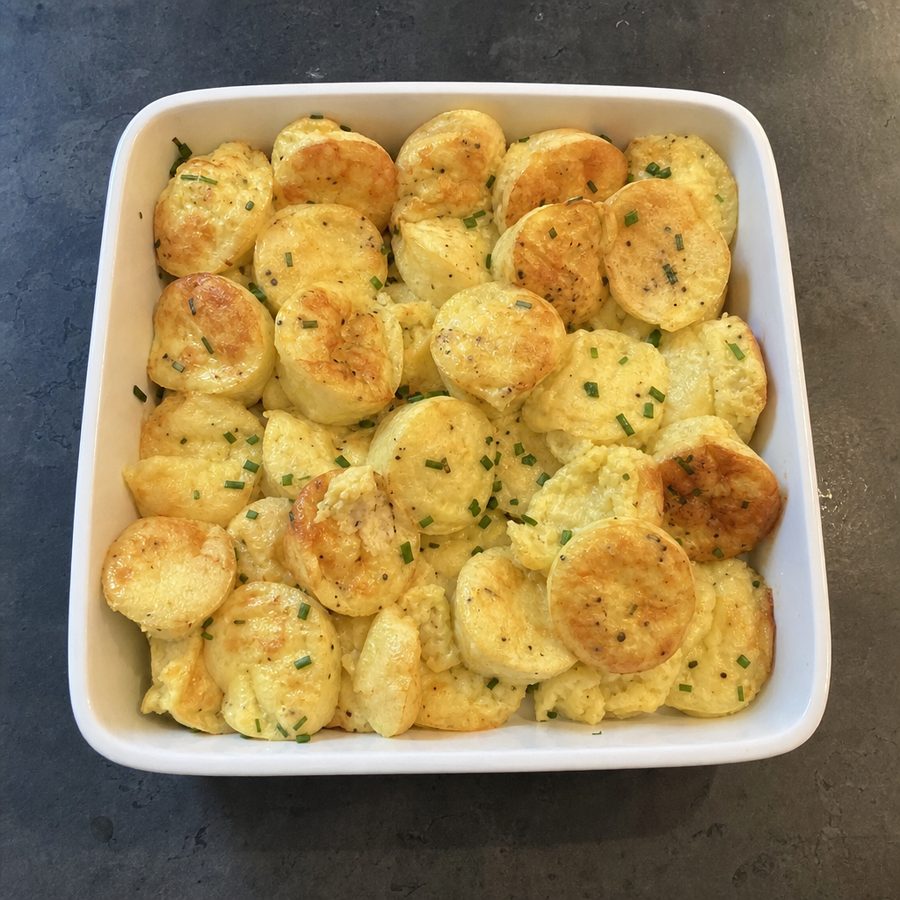
Cottage cheese, eggs, and grated parmesan blended smooth and baked into tender, custardy bites with a savory, cheesy edge and just a pinch of salt.
Why You'll Love This Recipe
These baked egg bites are for anyone who wants a warm, protein-dense snack they can make in one batch and grab through the week. There is no chopping and no stovetop work: cottage cheese, eggs, and parmesan go straight into a blender and then into the oven. The result is soft and custardy in the center with a lightly browned top, closer to a savory baked custard than a firm frittata.
It all depends on the blender. Cottage cheese on its own is lumpy and weeps liquid, but running it through the blender breaks the curds down completely and folds them into the eggs, so the batter bakes up smooth and creamy instead of watery or grainy. Parmesan does double duty here, seasoning the batter from within and giving the tops that gentle golden color and savory depth as they bake. Keeping the oven moderate and pulling the bites while the centers still jiggle is what keeps the texture tender rather than dry.
Protein and richness, both packed into something small. The eggs and cottage cheese together deliver a generous amount of complete protein, which helps a snack actually hold you over, while the fat from the yolks and cheese makes each bite feel indulgent. They are easy to portion, so they fit a quick breakfast, an afternoon pick-me-up, or something to eat on the way out the door.
Ingredients
- scant 1 cup cottage cheese
- 4 large eggs
- 1/2 cup grated parmesan (about 50 g)
- a pinch of salt
Instructions
- Preheat and grease: Preheat the oven to 325°F (163°C). Lightly grease the muffin cups so the baked bites release cleanly, coating the bottoms and up the sides of each cup.
- Blend the batter: Add the cottage cheese, eggs, grated parmesan, and salt to a blender. Blend on high until the mixture is completely smooth and pourable, about 30 to 45 seconds, stopping once to scrape down the sides so no curds remain.
- Fill the cups: Pour the smooth batter into the greased muffin cups, filling each about three-quarters full to leave room for the bites to puff as they bake.
- Bake: Bake for 18 to 20 minutes, until the tops are just set and pale gold and the centers still hold a slight jiggle when you nudge the pan. Avoid overbaking, which turns them rubbery.
- Cool and release: Let the bites cool in the pan for about 5 minutes so they finish setting and firm up. Run a thin knife or small spatula around the edge of each cup and lift the bites out.
Variations
- Sharper cheese: Swap the parmesan for another aged, grated hard cheese such as pecorino romano or aged cheddar for a sharper, saltier bite. This changes the type of dairy but keeps the same makeup.
- Bacon-studded: Cook bacon until crisp, crumble it, and stir it into the blended batter before filling the cups. This adds meat and gives the bites a smoky, savory bite.
- Smoked salmon: Fold flaked hot-smoked salmon into the batter after blending for a richer, briny result. This adds fish.
- Extra-rich custard: Blend in a few additional egg yolks along with the whole eggs for a silkier, more custardy center. This adds dairy-free richness from the eggs and makes the bites softer.
- Prosciutto-lined: Press a small piece of prosciutto into the bottom of each greased cup before pouring in the batter, so each bite bakes with a savory, salty base. This adds cured meat.
Storage & Leftovers
Store the cooled bites in an airtight container in the refrigerator for up to four days. Let them cool fully before sealing so trapped steam does not make the tops soggy.
To reheat, warm a couple of bites in the microwave for about 15 to 20 seconds, just until heated through. They can turn tough if overheated, so use short bursts and stop as soon as they are warm. They are also good straight from the fridge, eaten cold.
For make-ahead, bake a full batch at the start of the week and portion them into grab-and-go containers. You can also freeze the fully cooled bites in a single layer, then transfer them to a freezer bag and thaw overnight in the fridge before reheating.
Notes & Tips
- Blend until truly smooth: The difference between grainy bites and creamy ones is how thoroughly you blend. Let the blender run until you no longer see any curds and the batter pours like a thin milkshake.
- Go easy on the salt: Parmesan is already salty, so taste your intuition here and add only a pinch. You can always sprinkle a little flaky salt on top after baking if they need it.
- Grease every crevice: These bake up delicate and can stick. Coat the cups generously, including up the sides, and they will lift out in one piece.
- Use the jiggle test: They keep cooking from residual heat after they leave the oven, so pull them when the centers still wobble slightly. A fully firm center in the oven usually means an overbaked, rubbery bite once cooled.
- Double the batch: They store and reheat well, so it is worth making extra. The batter comes together in one blender, so scaling up adds almost no work.
Nutrition & Mindful Eating
- Cottage cheese, eggs and parmesan are doing all the work here. The eggs set the bite, the cottage cheese keeps the middle soft and custardy, and the parmesan browns on top, and between them there is enough protein to make a small snack feel like it counts.
- Cottage cheese goes into the blender for a reason. Whipping it smooths out the curds so the bites bake creamy rather than grainy, and the casein it carries digests slowly, which is part of why a couple of them hold you.
- Eggs are what turn a blender full of dairy into something you can pick up. They set gently in the oven, and the yolks bring choline along with vitamins A and D, which ride in on the same fat that makes the middle taste rich.
- Parmesan is the seasoning as much as it is the cheese. Aged hard cheese carries a savory depth that spreads through the whole batter, and it brings calcium along with it.
- The salt goes into the blender rather than over the top, so it works its way through the batter and pulls the savory notes forward. That is why the bites taste fully seasoned from the first bite to the last.
- As you eat, let the first bite tell you how soft the middle stayed against the browned parmesan edge, and take them one at a time from the tray so you can tell when you have had enough.
Frequently Asked Questions
Why are my egg bites watery or grainy?
That usually comes from underblending the cottage cheese. Its curds hold liquid, so if they are not broken down fully the batter separates as it bakes. Run the blender until the mixture is completely smooth before pouring it into the cups.
Can I make these without a blender?
A blender gives the smoothest result, but a food processor or an immersion blender works too. The goal is simply to break the cottage cheese curds down completely so the batter is uniform.
Why did mine turn out rubbery?
Rubbery bites are almost always overbaked. Pull them from the oven while the centers still have a slight jiggle, since they continue to set as they cool. Reheating too aggressively can also toughen them, so use short bursts.
Do these need to be greased or can I use liners?
Because the batter is delicate, greasing the cups directly gives the cleanest release. Paper liners tend to stick to these; if you prefer liners, use silicone ones and still grease them lightly.