
Cottage Cheese and Egg Bake
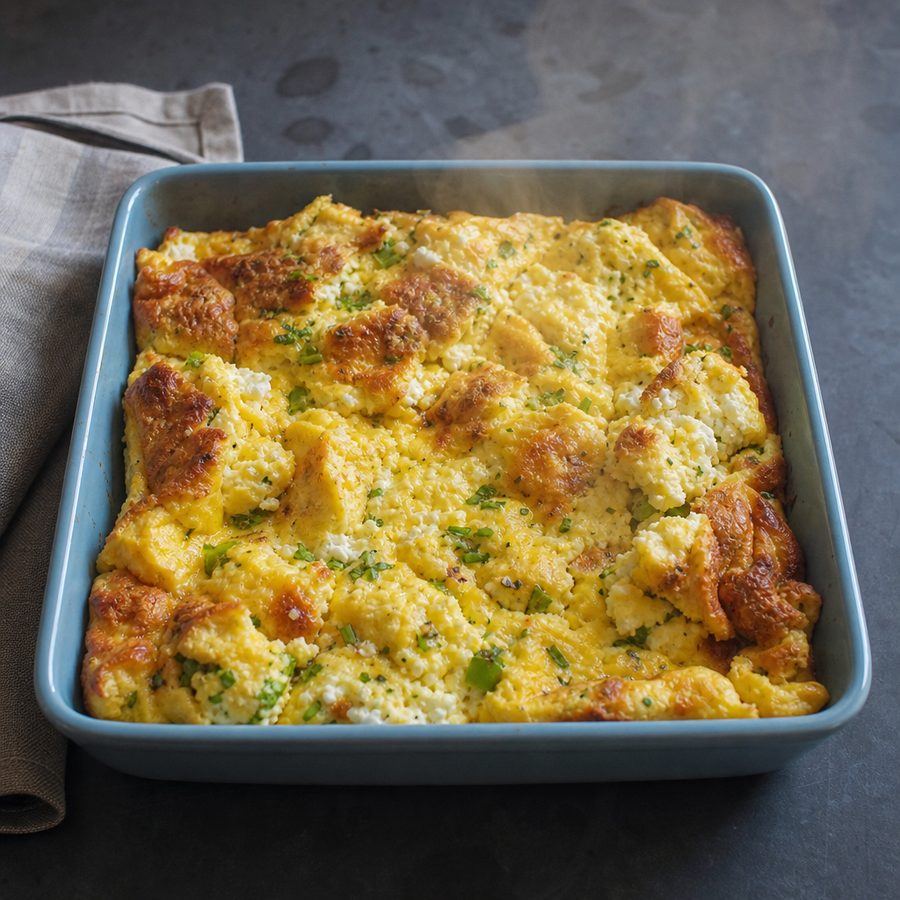
A tender, custardy baked casserole of whisked eggs folded with creamy cottage cheese and melted cheddar, finished with a golden cheese crust.
Why You'll Love This Recipe
This is a warm, protein-rich breakfast casserole for anyone who wants something hearty and savory they can make once and eat all week. The list is short: eggs, cottage cheese, and cheddar. It comes together with almost no hands-on work, which makes it a reliable option for busy mornings, meal prep, or feeding a table of people who want to stay full until lunch. Cut squares reheat well in a hot oven, which brings the top back rather than flattening it the way a microwave does.
The cottage cheese is the reason. Blended into the beaten eggs, its soft curds hold moisture and keep the bake tender and custard-like rather than dry or rubbery, the way a plain baked egg dish can turn out. The cheddar folded into the base melts through for savory depth, while the cheddar reserved for the top browns in the oven into a golden, slightly crisp crust that gives every square a bit of contrast in texture.
Eggs, cottage cheese, and cheddar together deliver a lot of protein and richness in a small, comforting portion, and the butter adds a savory roundness that makes the whole thing taste indulgent. It is the kind of dish that keeps you steady and satisfied for hours, with the soft, creamy interior and crisp cheese top making it feel like a treat rather than a routine breakfast.
Ingredients
- 10 large eggs
- 1 1/2 cups cottage cheese
- 1 cup shredded cheddar
- 2 tbsp butter
Instructions
- Preheat and prepare the dish: Preheat the oven to 350°F (175°C). Rub the inside of a baking dish generously with butter, coating the bottom and all the way up the sides so the bake releases cleanly.
- Whisk the eggs: Crack the eggs into a large bowl and whisk well until the yolks and whites are fully blended and the mixture is uniform and slightly frothy, with no streaks of clear white remaining.
- Build the base: Stir the cottage cheese into the beaten eggs, then fold in some of the shredded cheddar, reserving the rest for the top. Mix until the curds and cheese are evenly distributed throughout the eggs.
- Fill and top: Pour the egg mixture into the buttered dish and spread it level with the back of a spoon. Sprinkle the reserved cheddar evenly over the surface so it will melt into a browned crust.
- Bake until set: Bake for 28 to 30 minutes, until the top is golden, the center is fully set and no longer jiggles when you gently shake the dish, and a knife inserted in the middle comes out clean. The internal temperature should reach about 160°F (71°C).
- Cool and cut: Let the bake rest for about 10 minutes so it firms up, then cut it into squares and lift them out with a spatula.
Variations
- Bacon bake: Cook strips of bacon until crisp, drain, crumble, and fold the pieces into the egg base before baking. This adds pork and a smoky, salty bite.
- Smoked salmon: Fold flaked cold-smoked or cooked salmon into the base for a richer, savory version. This adds fish, so taste before you season since the salmon is already salty.
- Creamier custard: Whisk a little heavy cream into the eggs along with the cottage cheese for a softer, more delicate set. This adds dairy and makes the interior silkier.
- Different cheese: Swap the cheddar for Gruyère or Swiss for a nuttier, more melting character. This keeps it a cheese-forward bake while changing the flavor of the crust and base.
- Extra-rich yolks: Stir a few additional egg yolks into the base for a denser, more golden, more custardy bake with a deeper egg flavor.
Storage & Leftovers
Store leftover squares in an airtight container in the refrigerator, where they keep well for about four days. Let the bake cool to room temperature before covering so condensation does not collect and make the top soggy.
To reheat, warm a square in a 300°F (150°C) oven or toaster oven for several minutes until heated through. This keeps the cheese top crisp and the interior tender. A microwave works in a pinch but softens the crust and can make the eggs slightly rubbery if you overdo it, so heat in short bursts and stop as soon as it is warm.
This dish is ideal for making ahead. Bake it fully, cool, cut into squares, and refrigerate so you have grab-and-go portions all week. You can also freeze individual squares wrapped tightly; thaw overnight in the fridge and reheat in the oven for the best texture.
Notes & Tips
- Choose full-fat cottage cheese: Full-fat, small-curd cottage cheese gives the creamiest, most tender result. If liquid has pooled on top of the tub, spoon it off before adding the cheese.
- Blend for a smooth texture: If you dislike visible curds, pulse the cottage cheese in a blender or food processor before mixing it into the eggs. It disappears into the custard and the bake sets smooth and uniform.
- Go easy on added salt: Both the cottage cheese and the cheddar bring their own saltiness. Taste as you build the base and hold back on the salt if your cheeses are sharp or well-salted, so the finished bake is seasoned but not overly salty.
- Use sharp cheddar for more flavor: A sharp or extra-sharp cheddar delivers noticeably more punch than a mild block, which matters in a dish this simple. Shred it yourself from a block if you can, since pre-shredded cheese is coated to prevent clumping and melts less smoothly.
- Don't overbake: Pull the bake as soon as the center stops jiggling and a knife comes out clean. Left in too long, the eggs tighten and can weep water and turn rubbery, so err toward the lower end of the time range and check early.
- Double it for the week: This scales up cleanly for meal prep. Use a larger dish, add a few minutes to the bake time, and check for a set center. You will have breakfast portions ready to reheat for days.
Nutrition & Mindful Eating
- Eggs, cottage cheese and cheddar make one thing together. The eggs hold the shape, the cottage cheese keeps the middle tender where eggs alone would tighten, and the cheddar browns on top, and all three carry protein, which is why a square of this eats like a full breakfast.
- Eggs set the whole bake, and how you treat them decides the texture. Pulled from the oven while the center still has a slight wobble, they stay soft, and the yolks bring choline along with the fat-soluble vitamins A and D.
- Cottage cheese is the reason this is still creamy on day three. Its curds hold moisture through baking and reheating, and the casein in them digests slowly, which is part of why the bake carries you to lunch.
- Cheddar goes on top so it browns rather than melting away into the batter. The darker patches are where the flavor concentrates, and the cheese brings calcium along with the sharpness.
- Butter on the dish is not only about the bake coming out clean. It browns lightly against the pan and leaves a faint toasted edge on the bottom that you taste in the first bite of every square.
- As you eat, run the fork through the browned cheddar top into the soft middle and take both together, and let a square be something you sit down with, even briefly, rather than something you finish on the way out.
Frequently Asked Questions
Why did my bake turn out watery?
The most common cause is excess moisture from the cottage cheese. Spoon off any liquid sitting on top of the cottage cheese before mixing, avoid overbaking (which makes eggs release water), and let the finished bake rest so it firms up before cutting.
Can I make this without the cottage cheese?
The cottage cheese is what keeps this bake tender and custardy rather than firm and dry, so it is central to the dish. If you leave it out, you will get a much denser, more traditional baked-egg texture, and you may want to add cream to bring back some softness.
What size dish should I use?
Use a dish that holds the egg mixture at a depth of roughly an inch to an inch and a half. Too shallow and it overcooks before the cheese browns; too deep and the center struggles to set. If you go larger and shallower, check for doneness a few minutes early.
Can I bake this in a muffin tin for grab-and-go portions?
Yes. Butter the cups well, divide the mixture among them, and bake at the same temperature. They will set faster, so start checking several minutes early and pull them once the centers are firm and no longer jiggly.