
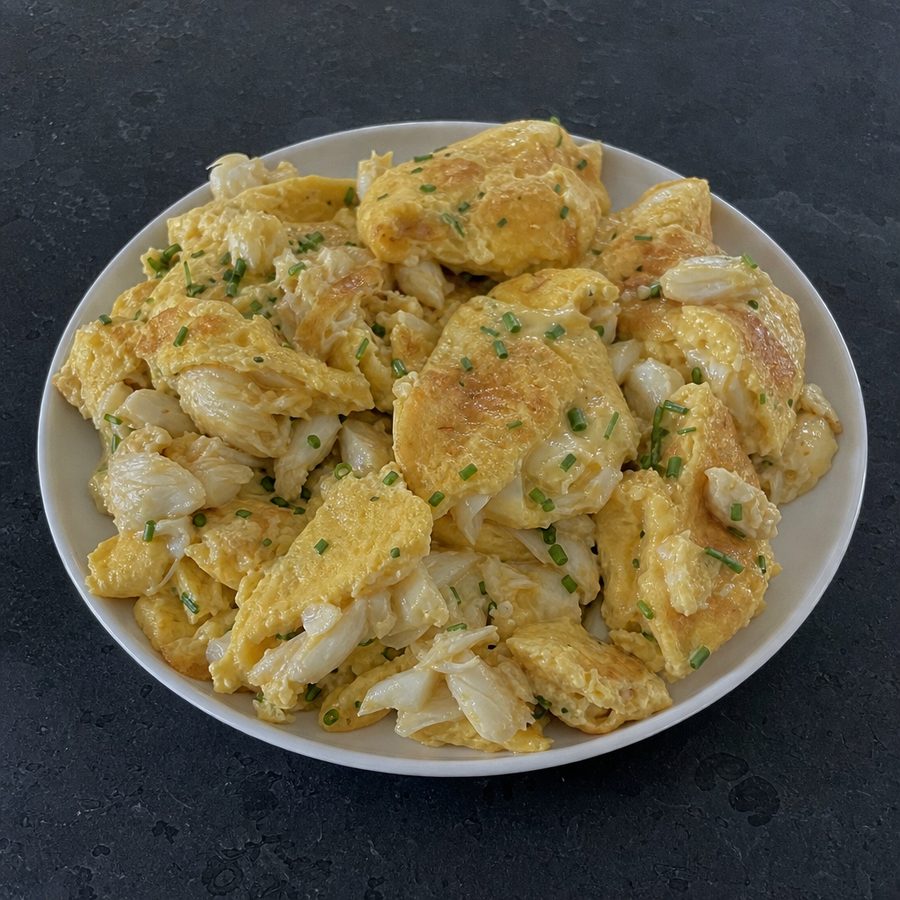
Cheddar & Chive Crab Omelet
A tender folded egg omelet wrapped around sweet lump crab, shredded cheddar, and fresh chives, brightened with a little lemon and cooked in butter.
Why You'll Love This Recipe
This is a quiet, elegant breakfast for anyone who wants something that feels indulgent without weighing them down. The folded egg is rich and buttery, but the filling of sweet crab and tangy goat cheese keeps it light and fresh rather than heavy. It comes together fast enough for a weekday yet looks special enough for a slow weekend morning or a simple brunch for guests, and it leans heavily on protein.
The technique is what makes it work. Whisking the eggs until they are fully uniform and slightly frothy, then cooking them gently in foaming butter over medium heat, gives you a tender custard-like sheet instead of a rubbery, browned one. Pushing the set edges toward the center while tilting the pan lets the raw egg flow underneath, so it cooks evenly and stays soft. Pulling the omelet while the top is still barely moist means the residual heat finishes it as it folds, and the warm eggs gently soften the goat cheese into the crab.
Butter and cheese on one side, lemon and chives on the other. Crab and eggs together deliver a large amount of complete protein that keeps you full for hours, while the lemon juice and chives cut through the butter and cheese so nothing feels cloying. Goat cheese adds a creamy tang with a lighter touch than many aged cheeses, and the whole plate stays fresh-tasting. It is the kind of breakfast that tastes rich but leaves you feeling clear-headed and steady rather than sluggish.
Ingredients
- 400 g cooked crab meat
- 10 large eggs, beaten
- 1 cup shredded cheddar
- 4 tbsp chives, snipped
- 2 shallots, minced
- 2 tbsp butter
- 1 tbsp olive oil
- 2 tsp fresh lemon juice
Instructions
- Snip the chives: Gather the chives into a small bundle and snip them into fine rings with kitchen scissors or slice thinly with a sharp knife. Keep them in two piles, since half goes into the crab and half finishes the plate.
- Season the crab: Turn the lump crab meat out onto a plate and gently pick through it with your fingers, discarding any bits of shell or cartilage. Toss it lightly with the lemon juice and half of the snipped chives, keeping the lumps as whole as possible.
- Beat the eggs: Crack the eggs into a bowl and whisk briskly until the yolks and whites are fully blended and the mixture looks slightly frothy with small bubbles on top. Whisk it for a good 30 seconds, since a smooth, uniform beat is what gives a tender, even omelet.
- Cook the omelet base: Warm a little of the olive oil with a knob of the butter in a nonstick skillet over medium heat until the butter foams but does not brown. Add a spoonful of the minced shallots and cook for about a minute, until they soften and smell sweet but take on no color. Pour in a portion of the beaten eggs and let them set for a few seconds, then use a spatula to push the cooked edges toward the center while tilting the pan so the raw egg runs underneath. Stop while the surface is still just barely moist and glossy, about a minute; do not let it brown or dry out.
- Fill and fold: Sprinkle some of the seasoned crab and shredded cheddar over one half of the omelet. Slide the spatula under the empty half and fold it over the filling to make a half-moon, then let it sit for 20 seconds off the direct heat so the cheese melts into the crab. Slide the omelet out onto a warm plate.
- Repeat and finish: Wipe the pan if needed, add a little more oil and butter along with the rest of the shallots, and cook the remaining omelets the same way, filling and folding each one. Garnish the finished omelets with the reserved chives and serve right away while they are hot and creamy inside.
Variations
- Smoked salmon: Fold in a little thinly sliced smoked salmon along with, or in place of, the crab for a richer, smokier filling. This adds fish.
- Herb swap: Replace some of the chives with snipped fresh dill or tarragon, both of which pair naturally with crab and add a fresh, slightly anise note.
- Creamier cheese: Swap the goat cheese for softened cream cheese or mascarpone if you prefer a milder, less tangy filling. This changes the dairy used.
- Green add-in: Wilt a handful of baby spinach or arugula in the butter before adding the eggs for extra greens and color folded into each omelet.
- Warm heat: Add a pinch of red pepper flakes or a few dashes of hot sauce to the crab for a gentle kick that plays off the sweet meat and tangy cheese.
Storage & Leftovers
Cooked omelets are best eaten fresh, but leftovers will keep in an airtight container in the refrigerator for up to two days. The texture firms up once chilled, and the crab is delicate, so plan to eat them soon rather than storing them long.
To reheat, warm an omelet gently in a nonstick pan over low heat with a small pat of butter, turning once, just until heated through. Low and slow keeps the eggs tender; high heat or a long spin in the microwave will make them rubbery and can dry out the crab.
To get ahead, snip the chives and pick through and season the crab with lemon a few hours in advance, keeping both covered in the refrigerator. You can also whisk the eggs and hold them chilled, then whisk again briefly before cooking so the omelets come together in minutes when you want to eat.
Notes & Tips
- Buy the best crab you can: Fresh or pasteurized refrigerated lump crab meat has the sweetest flavor and biggest pieces. If you use canned, drain it well and pat it dry so the omelet does not turn watery.
- Always pick through the meat: Even premium lump crab can hide small shell fragments. Spread it out and run your fingers through it before seasoning so no one bites into a shard.
- Let the goat cheese sit out: Crumbling goat cheese straight from the fridge is a struggle. Let it warm on the counter for a few minutes and it will break into soft, even crumbles that melt faster into the eggs.
- Use a truly nonstick pan: A well-seasoned nonstick or good ceramic skillet is what lets you fold the omelet cleanly. On a sticky surface the delicate eggs tear when you try to fold them.
- Don't overfill: A modest amount of crab and cheese folds neatly and heats through. Overloading one half makes the omelet split open and leaves the center cold.
- Serve it simply: A handful of dressed greens, sliced tomato, or a wedge of lemon on the side rounds out the plate without competing with the delicate crab.
Nutrition & Mindful Eating
- The crab, the cheddar and the shallot are three different kinds of savory and they stack. The shallot is sweet and soft at the bottom, the crab is delicate in the middle, the cheddar is sharp over the top, and the eggs hold all three together with the protein that carries the morning.
- Shallot is the step people skip and should not. A few minutes in butter over low heat turns it translucent and sweet, and it puts a base note under an omelet that would otherwise be all top notes.
- Crab needs the gentlest handling in the pan. Warm it through inside the fold rather than cooking it along with the eggs, so it stays in soft threads and keeps its sweetness, and it carries vitamin B12 and zinc into breakfast.
- A sharp cheddar earns its place because the crab is so mild. Grate it so it melts fast in the residual heat and streaks through the fold, and it brings calcium and a little more protein along with the tang.
- Butter and olive oil share the pan so the heat stays gentle and the eggs never brown, and the chives go on raw at the very end. That fresh oniony green against melted cheddar is the last thing you taste and the best part.
- As you eat, find the shallot underneath everything else and the cheddar gone stringy where it met the heat, and give yourself the few minutes at the table that an omelet this quick still deserves.
Frequently Asked Questions
Can I use imitation crab instead of real crab?
You can, but the flavor and texture change noticeably. Imitation crab is sweeter, softer, and made from processed fish with added starch and sugar, so the omelet will taste less delicate. Real lump crab meat is worth it here where the crab is the star.
Why did my omelet turn out rubbery or browned?
That usually means the heat was too high or it cooked too long. Keep the pan at medium so the butter foams but does not brown, and pull the omelet while the surface is still just barely moist. The residual heat finishes it as you fold.
Can I make one big omelet instead of individual ones?
Folding a very large omelet cleanly is difficult and the delicate crab tends to break it. This filling works best cooked in individual portions, which also keeps each one tender and lets the cheese melt evenly.
What can I serve with it to make it a fuller meal?
A simple side of dressed greens, sliced tomatoes, or fresh fruit keeps the plate light and fresh. If you want something heartier, a slice of good toast on the side rounds it out, though that adds gluten.