
Crab-Stuffed Baked Salmon
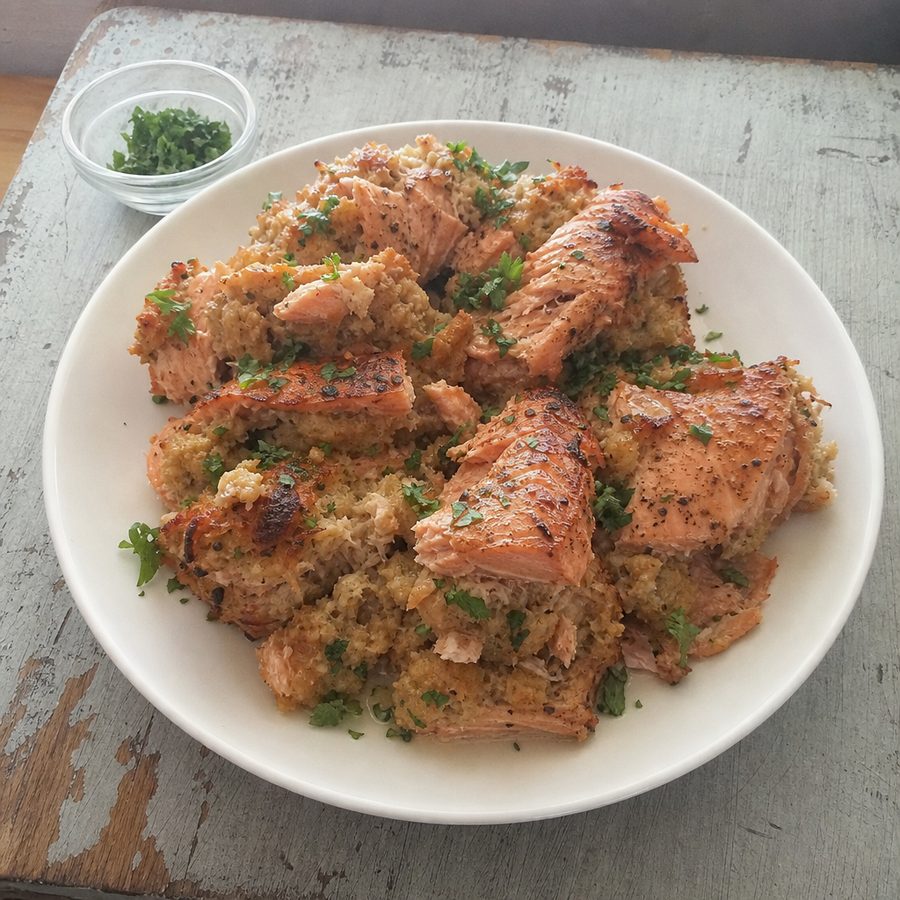
Salmon fillets are cut into pockets and filled with a rich, buttery mixture of crab meat, parmesan, and egg, then baked until the fish is just opaque and the stuffing is set.
Why You'll Love This Recipe
This is a dinner for anyone who wants the ease of baked fish but something more special than a plain fillet. It leans entirely on the natural richness of salmon and shellfish, so it works for a quiet weeknight and holds up just as well as the centerpiece of a small dinner. Nothing about it is fussy: the whole dish comes together in one baking dish and is cooked through in under half an hour.
Cut a pocket, do not build a mound. By slitting the side of each fillet rather than piling stuffing on top, you trap the crab, parmesan, and egg inside the fish, where they steam gently and stay moist while the salmon bakes around them. The egg sets as it cooks and binds the filling so it slices cleanly instead of spilling out, while the melted butter carries the flavor of the parmesan into every bite. Baking at a steady moderate heat cooks the salmon just to the point of flaking without drying the surface.
Two proteins meet in one bite here, the firm, flaky salmon against the soft, savory crab filling laced with sharp parmesan, and neither one gets lost behind the other. It is rich and filling on its own, deeply savory, and nourishing thanks to the oily fish and shellfish at its core. A single stuffed fillet eats like a full meal, so you do not need much beyond it to feel well fed.
Ingredients
- 4 salmon fillets (about 5 oz each)
- 10 oz cooked crab meat
- 1/3 cup grated parmesan
- 3 tbsp butter, melted
- 1 egg
Instructions
- Preheat and prep: Preheat the oven to 400°F (200°C). Rub a little of the butter around a baking dish so the fillets will not stick, and melt the rest of the butter in a small saucepan or in the microwave until it is fully liquid.
- Make the filling: Pick through the crab meat with your fingers and discard any bits of shell or cartilage. In a bowl, combine the crab, grated parmesan, egg, and half of the melted butter. Stir until it comes together into a moist, cohesive stuffing that holds its shape when pressed.
- Pocket the salmon: Pat the salmon fillets dry with paper towels. Working with one at a time, lay a fillet flat and, using a sharp thin knife, cut a horizontal slit into the thick side to open a deep pocket. Do not cut all the way through the ends or top; you want an enclosed pouch to hold the filling.
- Stuff the fillets: Pack the crab mixture firmly into each pocket, filling it fully without forcing the fish to tear. Set the stuffed fillets in the buttered baking dish, spacing them so they are not touching.
- Bake: Brush the tops of the fillets with the remaining melted butter. Bake until the salmon turns opaque and flakes easily with a fork and the thickest part reaches 125 to 130°F (52 to 54°C) on an instant-read thermometer, about 18 to 20 minutes. That is medium-rare; the FDA gives 145°F (63°C) for seafood, which is worth taking the salmon to if the crab filling matters more to you than a silky fillet. Let the fillets rest a few minutes before serving so the filling settles.
Variations
- Lobster instead of crab: Swap the crab meat for chopped cooked lobster for a sweeter, firmer filling; this keeps it shellfish-based but changes the texture toward larger, meatier bites.
- Different fish: Use thick fillets of arctic char or steelhead trout in place of salmon for a similar oily richness and the same pocketing method; the filling and bake time stay the same.
- Sharper cheese: Replace the parmesan with an aged pecorino romano or gruyère for a saltier or nuttier note; this still adds hard cheese, so it remains a dairy-rich filling.
- Bacon in the filling: Stir a little crisp, crumbled cooked bacon into the crab mixture for a smoky, savory edge; this adds pork and a bit more salt and fat.
- Parmesan crust: Sprinkle extra grated parmesan over the tops of the fillets before baking so it browns into a thin, crisp crust; this adds more dairy and a firmer finish.
Storage & Leftovers
Refrigerate leftover stuffed fillets in an airtight container within two hours of baking, and eat them within three days. Because the filling contains egg and shellfish, keep it well chilled and do not leave it sitting at room temperature.
To reheat without drying the salmon, set a fillet in a covered baking dish with a small splash of water and warm it in a 300°F (150°C) oven just until heated through. Gentle, low heat protects the fish; a microwave works in a pinch but can toughen the salmon and make the filling rubbery, so use short bursts and stop as soon as it is warm.
To get ahead, mix the crab filling a day in advance and keep it covered in the refrigerator. You can even cut the pockets and stuff the fillets a few hours before dinner, then hold them covered in the baking dish and slide them into the oven when you are ready to eat.
Notes & Tips
- Choose the right crab: Lump or backfin crab meat holds together in the filling and gives you clean, meaty bites; whatever you buy, run your fingers through it first, because even good crab hides thin shards of shell.
- Buy thick, center-cut fillets: Even, center-cut pieces of salmon are much easier to slit into a deep pocket than thin tail ends, and they cook more evenly so the outside is not overdone before the center is set.
- Go easy on added salt: Both the crab and the parmesan are already salty, so if you season the filling at all, keep it to a light touch; you can always add a pinch more, but you cannot take it back.
- Chill the filling to pack it: If the crab mixture feels loose, rest it in the refrigerator for a few minutes before stuffing; a cold filling firms up and packs into the pockets far more neatly.
- Use a thermometer: Salmon goes from moist to dry quickly, so pull the fillets when the thickest part reads 125 to 130°F (52 to 54°C); carryover heat finishes it during the short rest.
- Serve leftovers cold: A leftover stuffed fillet is very good straight from the fridge, sliced cold, so consider baking a couple of extra fillets to eat the next day without reheating.
Nutrition & Mindful Eating
- Salmon and crab are two very different kinds of seafood and putting them together is the whole idea. The salmon is oily, deep-flavored and flakes into big pieces, the crab stays sweet and fine in the middle, and between them the plate carries a serious amount of protein.
- Salmon decides whether this works, so watch the fish rather than the clock. Pulled when the center has just turned opaque, it stays silky and gives up some of its fat into the filling, and that fat is where the long-chain omega-3s live.
- Crab in the middle keeps the fillet from being one texture all the way through. It stays sweet and loose against the firmer fish, and it brings selenium and zinc, which are easy to come by in shellfish and harder elsewhere.
- Parmesan and a little egg hold the stuffing together. The egg sets it just enough to stay in place when you cut the fillet, the parmesan browns where it meets the heat, and its aged saltiness does the seasoning for the crab.
- Butter goes into the filling and over the top, and it is the reason the whole fillet smells the way it does coming out of the oven. It browns lightly on the surface, keeps the crab from drying, and it is part of why a piece of this holds you through the evening.
- As you eat, slide your fork down and take fish and filling in the same bite, feeling how far the salmon has given way, and let a dinner this rich go slowly enough that you notice arriving at full.
Frequently Asked Questions
Can I use canned crab instead of fresh?
Yes. Good-quality canned or refrigerated crab works well here; drain it well and pick through it for shell before mixing. Avoid imitation crab, which is a different, softer product with a milder flavor and added fillers.
How do I know when the salmon is done?
The fillet should turn from translucent to opaque and flake apart when nudged with a fork. For certainty, use an instant-read thermometer in the thickest part and pull the fish at 125 to 130°F (52 to 54°C), since it will keep cooking a little as it rests.
Can I start with frozen salmon?
Yes, but thaw the fillets completely first, ideally overnight in the refrigerator, then pat them very dry. Trying to slit and stuff a partially frozen fillet is difficult, and excess water will make the filling loose.
My filling keeps spilling out. What am I doing wrong?
Two things help: cut the pocket deep but leave the ends and top intact so it stays enclosed, and chill the crab mixture so it holds together before you pack it in. Setting the fillets slit-side up in the dish also keeps the stuffing from sliding out as they bake.