
Crispy Baked Beet Chips
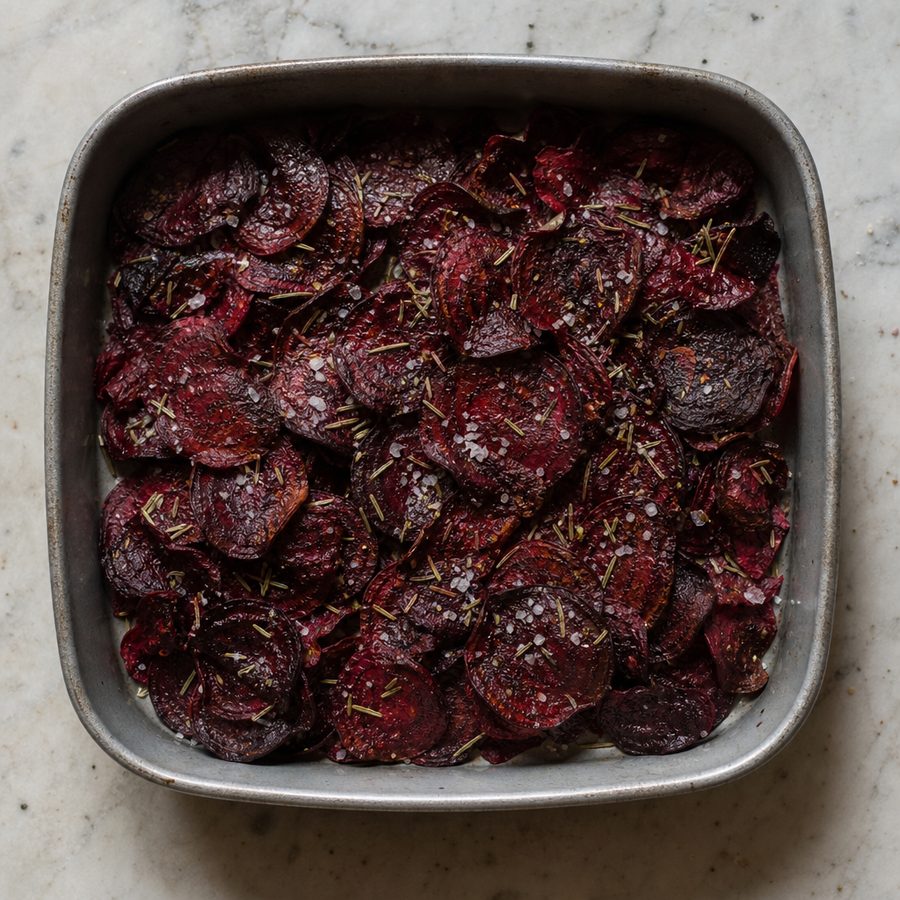
Paper-thin rounds of fresh beet, tossed with olive oil and chopped rosemary and slow-baked until they crisp into deep-red, salt-flecked chips that are earthy and savory.
Why You'll Love This Recipe
Beets are sweet enough to caramelize and dense enough to slice paper thin, which is a rare combination in a vegetable and the reason they make better chips than almost anything else. The sugar concentrates as the water leaves, so an earthy raw root comes out of a low oven faintly sweet and deeply savory at once. They stain everything they touch, so this is a job for a weekend afternoon and a plastic board rather than a wooden one, and for the low oven you would not want to run on a weeknight.
The whole method rests on two things: thinness and dryness. Cutting the beets paper-thin on a mandoline means there is very little water to drive off, and patting them dry before they are oiled removes the surface moisture that would otherwise steam them soft. The low 300°F (150°C) oven then dehydrates the slices slowly and evenly instead of burning the edges before the middle sets, which is why they crisp rather than scorch. A light coat of olive oil carries the rosemary and helps conduct gentle, even heat across each slice.
The crunch here is real, and it is earned. There is fiber in every bite, and the flavor is layered rather than one-note salty, so a small handful actually feels like enough. Beets bring earthy sweetness and color from their natural pigments, olive oil adds a savory richness that keeps the chips from tasting austere, and the rosemary and flaky salt lift the whole thing so it reads like a treat, not a compromise.
Ingredients
- 3 medium beets, scrubbed
- 2 tbsp olive oil
- 1 tbsp finely chopped rosemary
- 1/2 tsp flaky salt
Instructions
- Preheat and prep the trays: Preheat the oven to 300°F (150°C) and line two rimmed baking sheets with parchment paper. Slow, low heat is what dries the beets into chips rather than scorching them, so give the oven time to come fully up to temperature.
- Slice the beets: Scrub the beets well under running water, then trim off the root tail and stem end. Using a mandoline set thin, slice each beet into paper-thin rounds, about the thickness of a coin. Even thickness matters here. Thicker slices stay leathery in the center while thin ones around them burn. Keep your fingers well clear of the blade or use the mandoline's hand guard.
- Dry the slices: Lay the beet rounds out on clean kitchen towels or paper towels and pat them completely dry on both sides, pressing gently to pull out surface moisture. The drier the slices go into the oven, the crisper they bake.
- Season: Finely chop the rosemary. Put the beet slices in a large bowl, drizzle with the olive oil, add the chopped rosemary, and toss gently with your hands until every slice carries a thin, even coat. Too much oil pools and steams the chips, so aim for a light sheen, not a slick.
- Arrange in a single layer: Lay the slices flat on the parchment-lined trays in a single layer with none overlapping. Crowding traps steam and leaves soft spots, so use both trays and work in batches if needed.
- Bake until crisp: Bake at 300°F (150°C) for 30 to 35 minutes, rotating the trays top to bottom and front to back about halfway through so they color evenly. The chips are done when they look dry and dull rather than glossy, have darkened slightly, and feel stiff. They crisp up further as they cool, so pull them once they stop looking wet.
- Salt and cool: Sprinkle the chips with flaky salt while they are still warm so it sticks, then slide the parchment onto a wire rack and let them cool for a few minutes. They firm from bendy to fully crisp as they sit.
Variations
- Garlic and herb: Add a little garlic powder to the oil along with the rosemary for a savory, allium-forward chip. Fresh minced garlic tends to burn at this low bake, so the dried form works better here.
- Warm and smoky: Toss the slices with a little ground ginger and a pinch of cinnamon before baking for a deeper, warmer note that plays against the beets' sweetness.
- Salt and vinegar: Swap the rosemary for a light mist of apple cider vinegar after baking, then salt while warm, for a bright, tangy chip. Let them dry a few extra minutes so the vinegar sets.
- Citrus and thyme: Use chopped fresh thyme in place of rosemary and add a little finely grated orange zest to the oil for a fragrant, slightly floral version.
- Mixed roots: Slice parsnips or sweet potatoes the same paper-thin way and bake alongside the beets for a multicolored chip bowl. Keep the beets on their own parchment so their color does not stain the paler roots.
Storage & Leftovers
Store the fully cooled chips in an airtight container at room temperature, not the refrigerator. The fridge's humidity is what turns crisp chips limp. Kept dry and sealed, they hold their crunch for a couple of days; a small piece of paper towel in the container helps absorb any stray moisture.
If they do soften, you can re-crisp them: spread the chips on a parchment-lined tray and warm in a 300°F (150°C) oven for a few minutes, then let them cool. Skip the microwave, which steams them soft rather than drying them out.
To get ahead, you can slice and pat the beets dry earlier in the day and keep the rounds between dry towels until you are ready to oil and bake. The chips themselves are best within a day or two of baking, so for a party, bake them the same day and store them sealed at room temperature until serving.
Notes & Tips
- Pick firm, medium beets: Choose beets that feel heavy and firm with taut skin; older, softer beets have lost moisture unevenly and crisp less reliably. Medium beets slice into a nice chip size. Very large ones give floppy rounds.
- A mandoline is worth it: Consistent paper-thin slices are the whole game, and a knife rarely gets there. If you cut by hand, go as thin and even as you can and expect a few thicker ones to stay chewy in the middle.
- Watch the last few minutes: The window between crisp and burnt is short at the end. Once the slices look dry and dull instead of glossy, start checking often. The thin edges brown first.
- They crisp as they cool: Pull the chips while they are still slightly bendy rather than waiting for them to feel rock-hard on the tray; they stiffen as they cool. Waiting for full crispness in the oven usually means overbaking.
- Salt while warm: Flaky salt clings to the chips only while they are warm and faintly oily. Sprinkle it on straight out of the oven; salt added after they cool mostly slides off.
- Serve them with a dip: Their sturdy crunch stands up to a thick dip. A herbed white bean spread or a tahini-lemon sauce turns a bowl of these into a proper snack board. Beans are a legume and tahini is sesame, so the autoimmune protocol leaves both out.
- Peeled and roasted hotter: Peel the beets before slicing and roast at 350°F for 30 to 35 minutes, flipping each slice about halfway through, for a darker, sweeter chip with no skin at the edge. Use fine sea salt in place of the flaky salt and let them cool completely on the trays.
Nutrition & Mindful Eating
- Three ingredients and a slow oven are the entire recipe. The beet supplies the sugar and the color, the olive oil carries the rosemary onto every slice, and the heat does the rest by driving off water until what is left shatters.
- Beets taste of soil in the best possible way, and roasting concentrates that into something closer to sweet than savory. The crimson comes from betalains, the pigments that will also stain your board and your fingers.
- The thinner the slice, the better the chip. Anything cut unevenly gives you a bowl where half the pieces snap and half are still leathery, which is why a steady hand or a mandoline matters more here than any seasoning.
- Rosemary is a strong herb and it earns its place against a vegetable this sweet, going piney and resinous in the oven so the smell fills the kitchen well before the tray comes out.
- Beets bring fiber along with their sweetness, so a small handful eaten slowly registers as a real snack. The sound they make is doing some of that work too.
- As you eat, take one at a time and listen for the snap, giving the earthy sweetness a moment to show up before you reach back into the bowl.
Frequently Asked Questions
Why did my beet chips turn out chewy instead of crisp?
Almost always it is thickness or moisture. If the slices are not paper-thin and evenly cut, the centers stay leathery; and if they go into the oven damp, the surface water steams them soft. Slice thin on a mandoline, pat both sides completely dry, and use only a light coat of oil so it does not pool.
Do I need to peel the beets first?
No. Just scrub them well under running water and trim off the root tail and stem end. The skin is thin, crisps up along with the flesh, and holds extra color and fiber.
Will my hands and cutting board get stained?
Beets do stain. The color rinses off skin fairly quickly, but for cutting boards and towels, use ones you do not mind tinting, and wipe up juice promptly. If you make the mixed-root version, keep the paler vegetables on separate parchment so they do not pick up the red.
Can I make these in an air fryer instead?
Yes, though it takes attention. Work in small single-layer batches at a low temperature and check often, since the moving air crisps them fast and unevenly. The oven method is more forgiving when you want a larger amount at once.