
Crispy Brussels Sprout Leaves
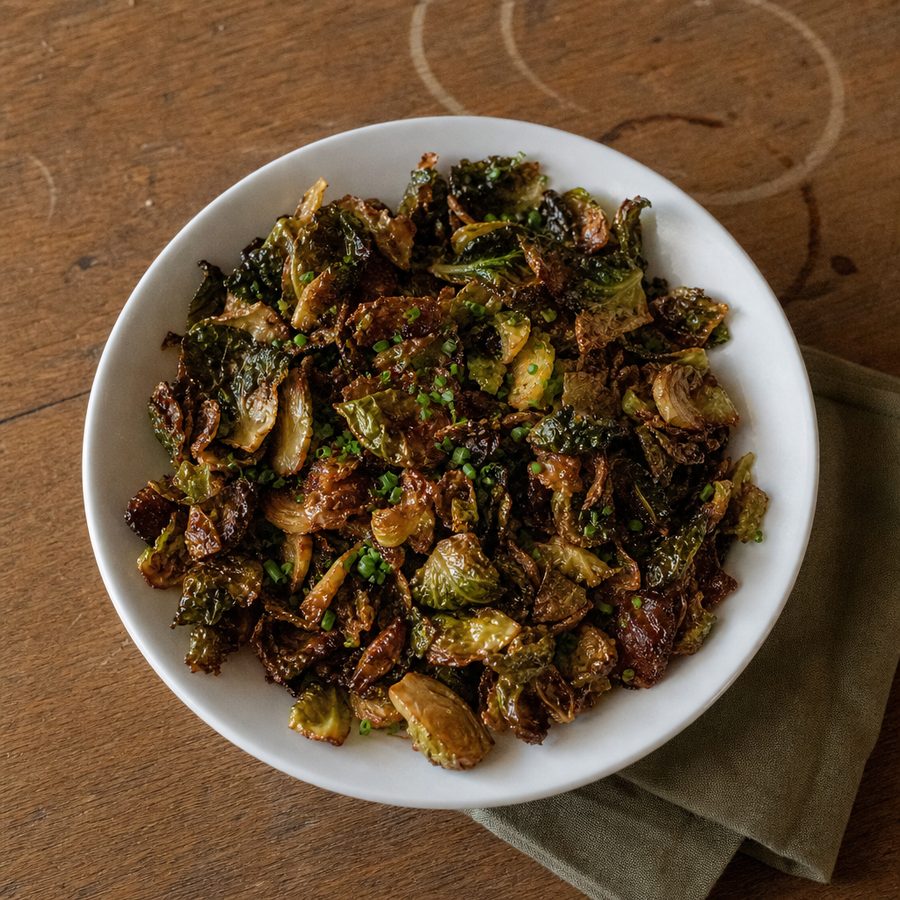
Individual Brussels sprout leaves roasted with olive oil and sea salt into delicate, lacy chips with browned, crackling edges.
Why You'll Love This Recipe
Pulling a sprout apart leaf by leaf takes about ten minutes and it is the whole recipe. A halved sprout roasts into something soft in the middle with a browned face; separated leaves have no middle at all, so every one of them goes thin and brittle and shatters when you bite it. Trim the base, peel until you reach the tight core, then slice that and roast it too. Do it in November when sprouts are at their best and cheapest, with the radio on, because the ten minutes are dull and the result is worth them.
The magic is in peeling the sprouts into separate leaves rather than roasting them whole or halved. A single leaf has almost no thickness, so in a hot oven it dries and browns fast, curling into a lacy, crisp petal instead of the soft, dense interior you get from a roasted sprout half. A thin, even coat of olive oil carries the heat across each surface and helps the edges brown, while a light hand with salt keeps the flavor bright as the leaves shrink and their taste concentrates.
An audible crunch gives way to a nutty, faintly sweet roasted flavor, with none of the heaviness of a fried snack. Brussels sprouts bring real fiber and a range of vitamins, and the olive oil adds a savory richness that makes the leaves feel like a treat rather than a chore. It is the kind of snack that scratches the itch for something crisp and salty while leaving you actually nourished.
Ingredients
- 3 cups Brussels sprouts (about 350 g)
- 2 tbsp olive oil
- 1/2 tsp sea salt
Instructions
- Preheat and prepare: Preheat the oven to 375°F (190°C) and line one or two baking sheets with parchment paper. You will want enough surface area to spread the leaves out without crowding, so use a second sheet if needed.
- Separate the leaves: Trim a thin slice off the stem end of each Brussels sprout. Peel the leaves apart into individual petals, working from the outside in; as the sprout tightens toward the center, trim the stem again to release another round of leaves. Keep going until you reach the small, dense core that will not peel.
- Season the leaves: Put the separated leaves in a large bowl. Drizzle with the olive oil and sprinkle with the sea salt, then toss gently with your hands until every leaf is lightly and evenly coated. A thin film of oil is all they need; puddles will make them soggy.
- Arrange in a single layer: Spread the leaves across the lined sheets in a single, even layer so no leaves overlap. Overlapping pieces trap steam and stay limp, so give them room and use both sheets if the leaves are piling up.
- Roast until crisp: Roast for 10 to 12 minutes, until the edges are deeply browned and the leaves are crisp and lacy. Watch closely in the final couple of minutes, as they move from browned to burnt quickly. Larger outer leaves crisp faster than the smaller inner ones, so pull any that darken early.
- Cool and serve: Let the leaves cool on the sheet for a couple of minutes. They firm up and grow crispest as they cool. Serve while still crisp.
Variations
- Garlic: Toss the leaves with a little garlic powder along with the salt before roasting for a savory, roasted-garlic edge. Fresh minced garlic can scorch on the thin leaves, so the dried form holds up better here.
- Lemon and rosemary: Add finely chopped fresh rosemary to the oil before tossing, and finish the roasted leaves with a little grated lemon zest for a bright, herbal lift.
- Coconut aminos glaze: Swap out some of the salt and toss the leaves with a small amount of coconut aminos for a deeper, slightly sweet-savory flavor. Because coconut aminos are wet, keep the coat thin and watch the leaves closely so they still crisp.
- Balsamic finish: Roast the leaves plain, then drizzle them very lightly with balsamic vinegar just before serving for a tangy, faintly sweet contrast against the crisp edges.
- Bacon crumble: Sprinkle the finished leaves with crumbled crispy bacon for a smoky, salty topping; note that this adds pork.
Storage & Leftovers
These are at their best within an hour or two of roasting, when they are still crisp. If you have leftovers, store them in an airtight container at room temperature for up to a day, or in the refrigerator for up to two days. Expect them to soften as they sit, since the crisp texture depends on being freshly dried out.
To bring back the crunch, spread the leaves on a baking sheet and warm them in a 350°F (175°C) oven for a few minutes until they crisp up again. Skip the microwave, which steams them limp rather than re-crisping them.
To get ahead, peel the sprouts into leaves up to a day in advance and keep the raw leaves in an airtight container in the refrigerator. Toss with the olive oil and salt only when you are ready to roast, so they go into the oven dry rather than sitting in oil and wilting.
Notes & Tips
- Choose the right sprouts: Look for firm, tightly closed sprouts with bright, unblemished leaves. Larger sprouts are actually easier to peel into whole petals, while very small ones are fiddly and yield mostly cores.
- Do not waste the cores: The dense inner cores that will not peel are perfectly good roasted. Halve them, toss with the same oil and salt, and roast them on the side; they simply need a few more minutes than the leaves.
- Go easy on the salt: The leaves shrink dramatically as they crisp, which concentrates the salt. A light sprinkle before roasting is plenty, and you can always add a pinch more at the table once you taste them.
- Dry leaves crisp best: If you rinse the sprouts, pat the leaves thoroughly dry before oiling them. Surface water turns to steam and keeps the leaves from crisping.
- Know when they are done: The truest cue is color and sound: the edges should be deeply browned and the leaf should feel brittle and lightweight, not floppy. A leaf that still bends is not done.
- Serve them fresh alongside a dip: These are best eaten soon after roasting while the crunch is at its peak. They make a nice crisp partner to a creamy olive oil or coconut-based dip, or a scoop of guacamole made without nightshades.
Nutrition & Mindful Eating
- Sprouts, olive oil and a hot oven are all there is, so how you handle the leaves decides the result. Spread in a single layer they toast; piled up they steam, and steamed sprout leaves are a different and much sadder food.
- Brussels sprouts are small cabbages and they behave like it, turning sweet and nutty once the leaf edges take color. The sulfur compounds that make them smell so distinctly of cabbage are the same ones that have made this family of vegetables so well studied.
- Olive oil is doing more than greasing the pan. It conducts heat onto the surface of each leaf so they brown rather than dry out, and the fat it brings helps the carotenoids in those green leaves come along with the meal.
- Salt goes on before the tray goes in, which draws just enough moisture to the surface for the leaves to crisp properly and seasons them through rather than sitting on top of them.
- These come out uneven on purpose. Some leaves go lacy and almost scorched, some stay tender near the core, and eating a handful that varies that much keeps your attention on the bowl longer than a uniform snack would.
- As you eat, go for the darkest leaves first and taste how much sweeter the browned ones are, then slow down enough to let a small bowl feel like the snack it is.
Frequently Asked Questions
Why did my leaves turn out soggy instead of crisp?
The two usual culprits are too much oil and crowding. Use just a thin film of oil so the leaves are barely coated, and spread them in a single layer with room between them. When leaves overlap, they trap steam and stay limp instead of drying into chips.
What do I do with the little cores left after peeling?
Do not toss them. The tight inner cores that refuse to peel roast up beautifully. Halve them, toss with the same oil and salt, and roast alongside the leaves, giving them a few extra minutes since they are denser and need longer to cook through.
Can I use a different oil?
Yes. Any oil with a reasonably high smoke point works at this temperature. Avocado oil is a good neutral choice, and melted coconut oil works too, though it lends a faint coconut note. Olive oil gives the most classic, savory flavor here.
They lost their crunch after a few hours. How do I bring it back?
These are freshest right out of the oven and soften as they sit, especially in humid air. To re-crisp, spread them on a baking sheet and warm in a 350°F (175°C) oven for a few minutes. Avoid the microwave, which steams them soft rather than crisping them.