
Crispy Oven Bacon and Parmesan Crackers
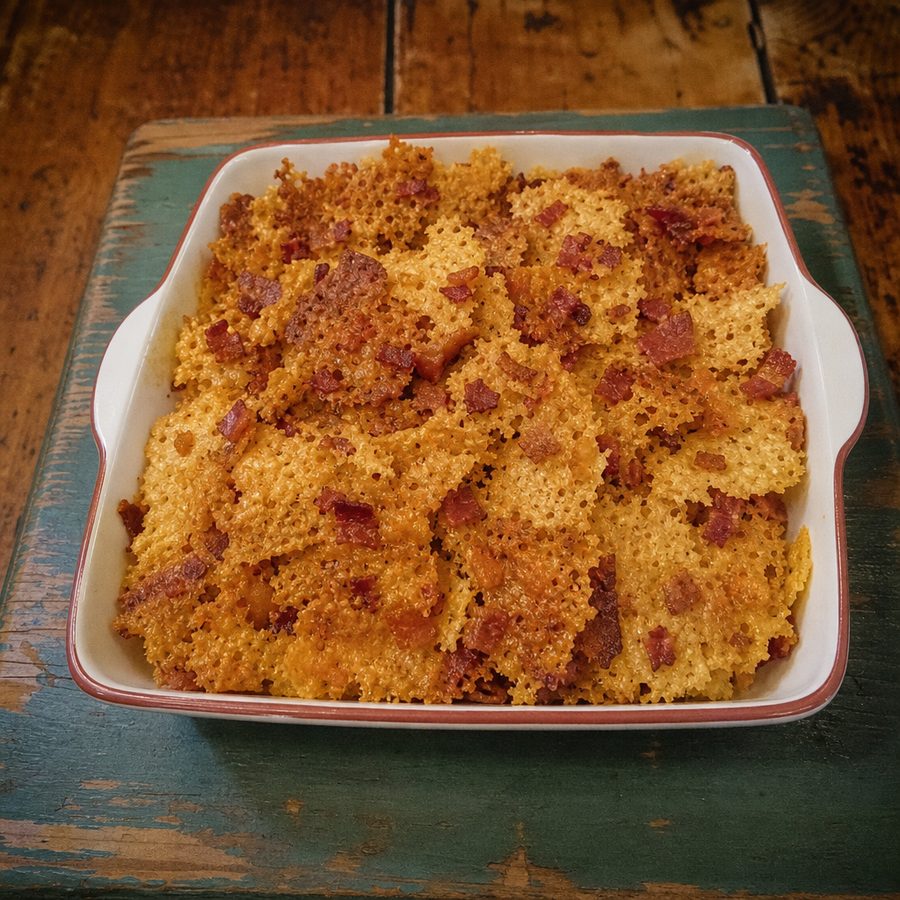
Nutty grated parmesan baked into thin, lacy rounds studded with crumbled crisp bacon until they cool into savory crackers that shatter at the first bite.
Why You'll Love This Recipe
Two ingredients and no dough at all: the parmesan melts into thin lace, the bacon presses into it while it is still soft, and the whole thing sets into a cracker as it cools rather than as it bakes. That cooling is the part people get wrong, since a round lifted off the tray while warm bends and stays bent. Ten minutes of oven time makes a trayful, so this is the snack to make on an afternoon when the craving is specifically for something salty and crunchy rather than for a meal.
The parmesan itself is doing it. As a hard, aged, low-moisture cheese, it holds a lot of fat and protein and very little water, so under heat it melts, spreads, and browns into a lacy, caramelized net instead of turning into a puddle. That browning is where the deep, nutty, savory flavor comes from, and the crumbled bacon adds smoke and a second layer of crunch. The single most important step is letting the crackers cool fully on the pan, because they are soft when hot and only turn brittle and snappy as the cheese cools and re-hardens.
These satisfy the way salty snacks do, and because they are built on protein and fat rather than starch, a small handful is genuinely filling rather than the start of a bigger session. The parmesan brings a concentrated savory hit, the bacon brings richness, and the two of them are the entire ingredient list. That is worth pausing on: a two-ingredient cracker with no flour in it at all, which is not something you can buy in a box.
Ingredients
- 1 cup grated parmesan
- 5 slices bacon
Instructions
- Heat the oven and line the pan: Heat the oven to 400°F (200°C) and line a sheet pan with parchment paper. The parchment is not optional with a cracker made entirely of cheese, because melted parmesan bonds to bare metal as it cools and the crackers tear apart when you try to lift them off.
- Start the bacon in a cold pan: Lay the bacon in a cold skillet and cook it over medium heat for 8 to 10 minutes, turning once or twice, until deeply browned and crisp. A cold start renders the fat out slowly so the slices stay flat and cook through evenly, where bacon dropped into a hot pan buckles and burns at the edges. Drain it, let it firm up, then chop it fine.
- Mound the parmesan and flatten it: Spoon the grated parmesan into small, evenly spaced mounds on the parchment, leaving a good inch between them because they spread as they melt and neighbors run into each other. Press each mound flat into a thin, even round with the back of the spoon, since a thick center stays chewy while the edges are already dark.
- Press the bacon into the cheese: Press the crumbled bacon into the surface of each round so the pieces sit slightly embedded rather than resting on top. Embedded, they are held in place once the cheese sets; scattered on the surface they fall off the moment somebody picks a cracker up.
- Bake 6 to 8 minutes and watch it: Bake for 6 to 8 minutes, until the cheese is lacy, bubbling, and golden at the edges. Stay near the oven for the last two minutes, because parmesan goes from golden to bitter and dark in well under a minute at this temperature and there is nothing to be done about it afterward.
- Cool them completely on the pan: Leave the crackers where they are and let them cool completely before lifting them. Straight from the oven they are soft and pliable, and the snap arrives as they cool and the fat firms, so moving them early bends them out of shape permanently.
Variations
- Sharper cheese: Swap the parmesan for another hard aged cheese such as asiago or aged grana for a sharper, saltier bite. This keeps them dairy-based but changes the depth of flavor.
- Pancetta instead of bacon: Use finely diced pancetta, cooked until crisp, in place of the bacon for a cleaner, less smoky pork flavor. This swaps one cured pork for another.
- Prosciutto crumble: Crisp thin slices of prosciutto in the oven until they shatter, then crumble them onto the rounds instead of bacon for a delicate, salty topping. This changes the meat used.
- Sausage-topped: Brown and finely crumble fresh pork breakfast sausage and press it into the rounds in place of the bacon. This adds a different meat with a heartier, more crumbly texture.
- Flaky salt finish: Sprinkle a little flaky salt over the rounds just before baking for extra crunch and a brighter savory edge. Both the cheese and bacon are already salty, so add sparingly.
Storage & Leftovers
Once fully cooled, keep the crackers in an airtight container. Keep them in the refrigerator, where they hold about a week. There is cooked bacon in them, so a counter is not the right place however dry they feel, and they do soften in the cold: three or four minutes in a 350°F (175°C) oven, then a couple of minutes to cool, brings the snap back.
To bring back the snap, spread them on a sheet pan and warm in a low oven for a few minutes, then let them cool again before eating. Skip the microwave, which steams them soft and rubbery instead of crisp.
To get ahead, cook and crumble the bacon and grate the parmesan in advance, storing each separately in the refrigerator. When you want fresh crackers, you only have to portion, top, and bake, which comes together in minutes.
Notes & Tips
- Grate your own: Grate the parmesan yourself from a block. Bagged pre-shredded parmesan is coated with anti-caking starch that keeps the pieces from melting into a smooth, lacy sheet, so freshly grated crisps far better.
- Blot the bacon: Press the cooked bacon well on paper towels before crumbling. Excess rendered fat clinging to the bits can pool under the cheese and leave the finished crackers soft and oily instead of crisp.
- Keep them thin and even: Flatten each mound to a thin, uniform round. Thick spots stay chewy in the middle while thin edges brown, so an even layer gives you a cracker that crisps all the way through.
- Watch the color as your cue: Golden with lacy, bubbling edges means done; a deep amber all over means it is about to turn bitter. Pull them the moment the edges color, since the residual heat of the pan keeps working.
- Let the pan do the setting: Resist moving the crackers while they are hot and floppy. Lifting them early tears the delicate cheese; once cool they release cleanly and hold their shape.
- Serve as a scoop: Because they are sturdy once crisp, these hold up well as an edible scoop for soft cheeses, a runny egg yolk, or a slice of cold cured meat if you want to turn a snack into a small plate.
Nutrition & Mindful Eating
- Parmesan and bacon are the whole recipe, and they work because they behave in opposite directions. The cheese melts into a lace that sets hard as it cools, and the bacon, chopped small and scattered through it, gives that lace something to bite on.
- Parmesan is aged long enough that it is nearly dry, which is why it crisps rather than pooling, and the same aging concentrates its protein and calcium into every shard. It is also where the deep nutty savor comes from.
- Bacon brings smoke and fat, and cooking it right through to crisp before it goes into the cheese is what keeps it snappy rather than chewy in the middle. The fat it renders soaks into the parmesan lace and carries the smoke everywhere.
- The tray goes from bubbling and molten to set and brittle in the couple of minutes after it leaves the oven, and that cooling window is the only tricky part. Lift one too early and it folds; wait and it snaps.
- A few of these go further than their size suggests. Protein and fat this concentrated register quickly, and the salty, smoky edge is the thing most people are actually after when they reach for something crunchy.
- As you eat, break one in half and hear how loudly it goes, then let a small plate of something this intense be enough on its own terms.
Frequently Asked Questions
Why did my crackers turn out chewy instead of crisp?
They almost always crisp as they cool, not in the oven, so give them time to cool completely on the pan before judging. If they are still soft, they were likely spread too thick or pulled before the edges turned golden; grate the cheese finely, flatten thin, and bake until the edges are truly golden.
Can I use pre-shredded parmesan from a bag?
You can, but freshly grated from a block gives much better results. Pre-shredded cheese is coated with a starchy anti-caking agent that keeps it from melting into the smooth, lacy sheet you want, so the crackers come out patchier and less crisp.
Do I need parchment, or can I bake them right on the pan?
Use parchment or a silicone baking mat. Melted parmesan sticks aggressively to bare metal and will tear apart when you try to lift it, while parchment lets the cooled crackers release cleanly.
My bacon burned before the cheese browned last time. What went wrong?
That happens when raw bacon goes on and has to cook through during the short bake. Cook and crumble the bacon first so it is already crisp, then it simply warms and sets into the cheese during the few minutes in the oven.