
Crispy Pan-Seared Chicken Breast
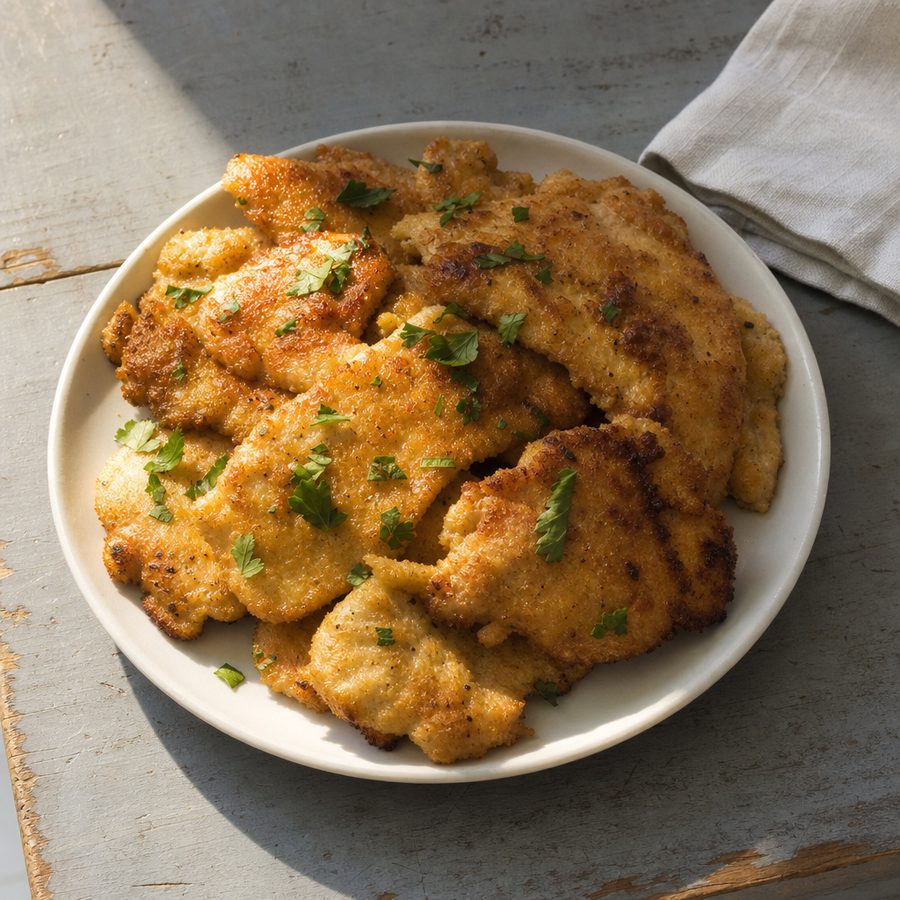
Butterflied chicken breasts seared hard in hot butter until deeply golden and juicy inside, then finished with a glossy swirl of butter and a clean hit of salt.
Why You'll Love This Recipe
This is a fast, honest plate built around a single great cut of meat: butterflied chicken breast seared until the outside is crisp and deeply browned and the inside stays juicy. It is for anyone who wants a quick, filling meal that leans entirely on the quality of the meat and the fat it cooks in, with nothing to chop and nothing to measure but salt. Because it comes together in one pan in minutes, it works as easily on a busy weekday as it does when you want something plain and good.
The technique doing the work here is a hard sear in butter on a thin cutlet. Butterflying the breast into an even cutlet gives you more surface area to brown and a shorter cook time, so the outside develops that golden, savory crust before the center overcooks and dries out. A properly hot pan and a dry, salted surface are what create the browning; the butter carries flavor and helps the crust color evenly. Finishing with fresh butter off the heat gives you a glossy, rich pan sauce that clings to the meat.
A crisp, well-browned exterior gives way to a tender, juicy interior, all of it coated in butter, and the difference between those two textures is what keeps a plain cut of chicken interesting. Chicken breast is mild and high in protein, which makes this filling, and the butter adds richness and staying power so a simple plate feels complete. It is proof that with good meat, plenty of heat, and salt, you do not need much else.
Ingredients
- 4 boneless chicken breasts (about 1.75 lb)
- 5 tbsp butter
- 1 tsp salt
Instructions
- Butterfly the breasts into even cutlets: Lay a boneless breast flat on a cutting board with your palm on top, and with a sharp knife held parallel to the board slice horizontally through the thick side, stopping just before you cut all the way through, then open it like a book into one thin, even cutlet. Do the same with each breast. A whole breast is nearly twice as thick at one end as the other, which is why it is dry at the tip by the time the middle is safe.
- Dry them, and salt at the last minute: Pat both sides of every cutlet thoroughly dry with paper towels, because a dry surface is what browns while a wet one steams. Salt both sides evenly just before they go into the pan: salt pulls moisture to the surface within a few minutes, so a cutlet salted early and left sitting is wet again exactly when it needs to be dry.
- Heat the pan until the butter foam subsides: Set a heavy skillet over medium-high heat and give it a good 2 minutes to come up to temperature, then add half the butter and swirl it as it melts. When the foaming settles down, the water in the butter has boiled off and the pan is ready. That moment matters, since butter dropped into a cool pan simply sits there and butter left past this point starts to brown and then burn.
- Sear 4 to 5 minutes a side, to 165°F: Lay the cutlets in without crowding them, working in batches if you need to, and sear undisturbed for 4 to 5 minutes, until the underside is golden brown and lifts cleanly. Turn them once and sear the second side for 4 to 5 minutes more, until it is golden and the thickest part reads 165°F (74°C) on an instant-read thermometer. Moving them around the pan interrupts the crust that is forming and is the most common reason home-seared chicken comes out pale.
- Finish with butter off the heat, then rest: Take the pan off the burner, add the remaining butter, and swirl until it melts into the drippings and turns glossy. Off the heat is deliberate: the pan is still hot enough to melt it but no longer hot enough to split it, so it stays a sauce rather than separating into oil. Spoon it over the cutlets and let them rest for 3 minutes before cutting, so the juices settle back into the meat instead of running onto the plate.
Variations
- Sear in beef tallow: Swap the butter in the pan for beef tallow. It holds a higher heat before browning, so you get an even deeper, crispier crust and a more roasted, beefy note on the meat.
- Cook it in ghee: Use ghee in place of the butter for the sear. With the milk solids already removed, it takes high heat cleanly and browns the meat without the flecks that regular butter can leave.
- Melt hard cheese on top: In the last minute of cooking, grate a hard aged cheese such as Parmesan over the cutlets and let it melt into a savory, salty crust. This adds more dairy.
- Top with a fried egg: Fry an egg in the buttery pan drippings after the chicken comes out and set it on top of each cutlet, so the runny yolk becomes a rich sauce. This adds egg.
- Sear in bacon fat: Render a few strips of bacon first, then sear the cutlets in the rendered fat for a smoky, savory edge, and crumble the crisp bacon over the top. This adds pork.
Storage & Leftovers
Let the chicken cool, then store it in an airtight container in the refrigerator for up to 3 to 4 days. Keeping the pieces whole rather than sliced helps them hold their moisture.
To reheat without drying it out, warm the cutlets gently in a covered skillet over medium-low heat with a little butter, turning once, until just heated through. A quick, hot reheat is better than a long one; the meat is already cooked, so you only need to bring it back to temperature. Avoid microwaving on high, which toughens the breast meat.
To get ahead, you can butterfly the breasts a day in advance and keep them covered in the refrigerator, then dry and salt them right before searing. Salting well ahead of time draws moisture to the surface and works against a good crust, so hold that step until you are ready to cook.
Notes & Tips
- Buy even breasts: Look for chicken breasts that are close to the same size and thickness so they butterfly into matching cutlets and finish cooking at the same moment. Very large, thick breasts are hardest to cook evenly.
- Dry is everything: Take an extra moment to pat the meat truly dry before it hits the pan. Any surface moisture turns to steam and stops the crust from forming, which is the whole point of this dish.
- Do not crowd the pan: Leave space between the cutlets. Packed together they cool the pan and release moisture, and you get pale, steamed chicken instead of a golden sear. Cook in batches if your skillet is small.
- Trust the thermometer: An instant-read thermometer is the reliable way to know it is done: pull the cutlets at 165°F (74°C) in the thickest spot. On a thin cutlet the window between juicy and dry is short, so check rather than guess.
- Let it release on its own: When you lay a cutlet down, leave it alone. It will stick at first and then loosen from the pan when the crust has formed, which is your cue that it is ready to flip.
- Save the pan drippings: The browned butter and juices left in the skillet are full of flavor. Spoon every bit over the meat, or keep the pan warm and pour it on just before serving.
Nutrition & Mindful Eating
- Chicken, butter and salt are all that is on the plate, so technique carries the dish. The salt goes on early and draws moisture to the surface, the surface is patted dry again, and the hot butter turns that dry surface into a crust.
- Chicken breast is fine-grained and mild, which is exactly why the crust matters so much, and it gives you protein at a density few other foods manage. Pulled off the heat while it is just done, it stays tender all the way through.
- Butter spooned over the meat in the last minutes browns fast and smells of toasted milk, and that foaming butter is what lays color down evenly across a surface a pan alone would only touch in patches.
- Letting it sit for a few minutes off the heat decides whether the juice ends up in the meat or on the board. Slice too early and you can watch it run away from you.
- Protein this dense holds you well into the afternoon, and the fat from the butter is what makes it eat like a meal rather than a portion of meat. A single breast, sliced thick, goes a long way.
- As you eat, find the point where the crust gives way to the soft meat underneath, and give the plate a few unhurried minutes before you decide you are done.
Frequently Asked Questions
Why butterfly the chicken instead of cooking it whole?
A whole breast is thick and uneven, so the outside overcooks before the center is safe. Slicing it into a thin, even cutlet gives you more surface to brown and a much shorter cook time, which is how you get a crisp crust and a still-juicy inside.
My butter keeps burning before the chicken browns. What am I doing wrong?
The pan may be too hot, or you are waiting too long after the foam subsides. Get the skillet hot, add the butter, and lay the meat in once the foam dies down. If your heat runs high, ghee or beef tallow take a hotter sear before browning.
How do I know it is done without cutting into it?
Use an instant-read thermometer in the thickest part and pull the cutlet at 165°F (74°C). Cutting into it to check lets the juices run out; the thermometer tells you the same thing without that.
Can I use chicken thighs instead of breasts?
Yes. Boneless thighs sear well and are more forgiving because they stay moist, though they are richer and will take a little longer than a thin breast cutlet. Cook them to the same 165°F (74°C) internal temperature.