
Crispy Plantain Chips
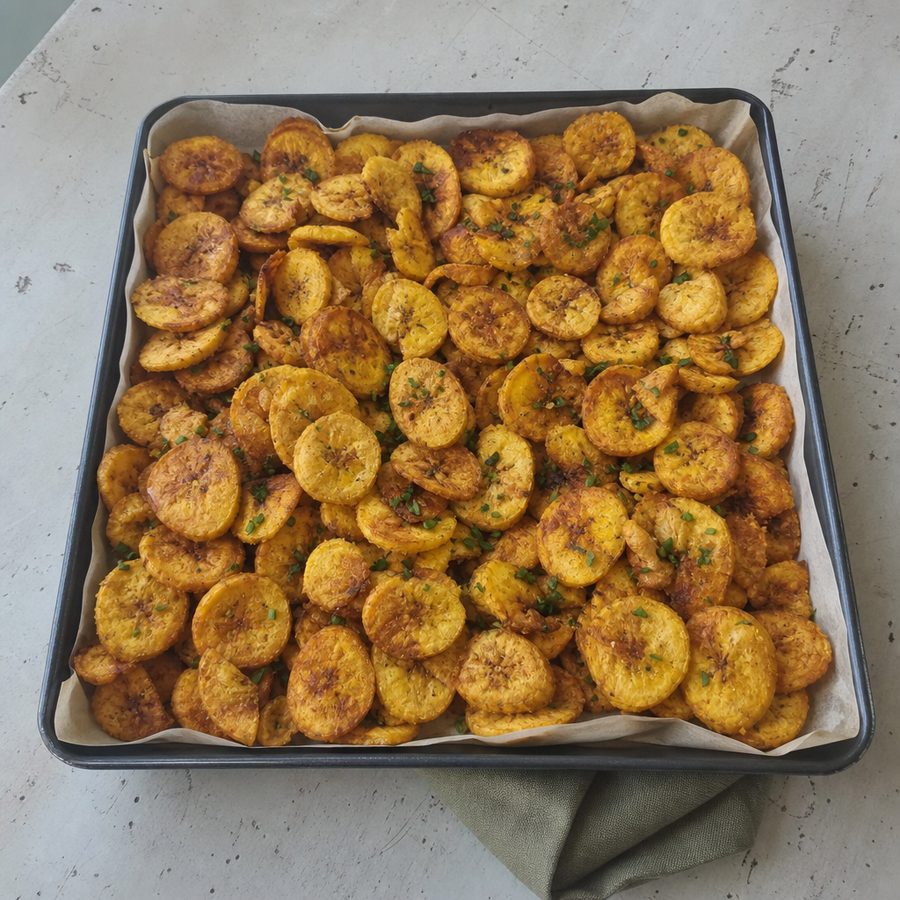
Thin coins of green plantain tossed with melted coconut oil and sea salt, then baked until they turn golden and shatter-crisp.
Why You'll Love This Recipe
Buy them green and hard, with no yellow anywhere on the skin. A ripening plantain turns its starch into sugar, and sugar burns before it crisps, so the same fruit that makes a lovely sweet fried side three days later will give you dark, bitter chips today. Green ones are also easier to slice thin, which is the other half of the job. It is a good use for a Sunday afternoon, and a good reason to keep a hard plantain on the counter rather than waiting for it to be ready for something else.
Choose plantains that are still fully green, and slice them thin and even. Green plantains are starchy rather than sweet, so they crisp in a dry oven the way a potato might, while a yellow, ripened plantain would caramelize and stay chewy. A light, even coat of melted coconut oil conducts heat against each coin so it browns rather than merely drying, and the single-layer arrangement lets moisture escape as steam instead of steaming the chips soft. The final cooling on the tray is not a throwaway step; that is when the starch sets and the crunch locks in.
Texture matters here as much as flavor: a clean, brittle snap, and a mild, slightly nutty taste from the coconut oil that carries the salt. Plantains bring slow-digesting starch and fiber along with potassium, so a handful feels more grounding than an airy snack that vanishes on the tongue. It is the kind of thing you can make plainly salted for everyday snacking and feel good about eating from a bowl.
Ingredients
- 2 large green plantains (about 400 g)
- 2 tbsp coconut oil, melted
- 1/2 tsp sea salt
Instructions
- Preheat and prep: Preheat the oven to 400°F (200°C) and line one or two baking sheets with parchment paper.
- Peel the plantains: Trim off both ends of each green plantain. Run a paring knife lengthwise through the peel along one of the natural ridges, taking care to cut only through the skin and not into the flesh. Slip your thumb under the skin and pry it away in sections; green plantain peel is tight and clings, so work patiently around the whole fruit until the pale starchy flesh is fully exposed.
- Slice into coins: Slice the peeled plantains crosswise into thin, even coins, about an eighth of an inch thick. Keeping the thickness consistent is what lets them crisp at the same rate; a mandoline set thin makes quick, uniform work of this, but a steady hand with a sharp knife is fine.
- Toss with oil and salt: Place the coins in a bowl, pour over the melted coconut oil, and sprinkle with the sea salt. Toss gently with your hands until every coin is lightly and evenly coated with a sheen of oil.
- Arrange in a single layer: Spread the coins in a single layer on the lined sheets so that none overlap. Crowding traps steam and leaves you with soft spots, so use a second sheet if needed rather than piling them on.
- Bake and flip: Bake for 20 to 25 minutes, flipping each coin once at the halfway point, until the chips are golden at the edges, dry to the touch, and beginning to curl. Thinner coins near the pan's edge may color first, so pull any that darken early and let the rest finish.
- Cool to crisp: Let the chips cool completely on the trays. They firm up and reach their full crunch as they cool, so resist tasting until they have come down to room temperature.
Variations
- Garlic and herb: Toss the coins with a little garlic powder and dried rosemary or thyme along with the salt for a savory, aromatic chip.
- Toasted coconut: Swap the coconut oil's mild flavor forward by finishing the warm chips with a light shower of unsweetened shredded coconut, which crisps in the residual heat and adds nutty depth.
- Citrus and salt: Grate a little lime or orange zest over the chips as they come out of the oven; the bright oils cling to the warm surface without adding moisture.
- Warm spice: Dust the oiled coins with ground cinnamon and a pinch of ground ginger before baking for a gently spiced, faintly sweet edge that suits the plantain's starch.
- Thick-cut plantain wedges: Slice the plantains on a long diagonal into oval planks instead of coins for a sturdier, more scoopable chip; add a few minutes to the bake so the thicker cut dries through.
Storage & Leftovers
Store the fully cooled chips in an airtight container at room temperature, where they keep their crunch for about three to four days. Do not refrigerate them; the moisture in a refrigerator softens the starch and turns crisp chips leathery.
If they lose their snap, spread them back on a lined sheet and warm in a 350°F (175°C) oven for a few minutes until they crisp again, then cool once more before eating. Skip the microwave, which steams rather than dries and leaves them limp.
To get ahead, you can peel and slice the plantains a few hours in advance and hold the raw coins in a bowl of cool water to keep them from browning; drain and pat them thoroughly dry before tossing with oil, since surface water keeps them from crisping.
Notes & Tips
- Pick truly green plantains: Choose plantains that are firm and fully green with no yellow patches; the greener and harder they are, the more starch and less sugar they hold, which is what gives you a crisp chip instead of a chewy one.
- Warm the peel to loosen it: If a green peel refuses to come off, let the plantain sit at room temperature for a bit or run it under warm water, which relaxes the tight skin and makes prying it away far easier.
- Thin and even is everything: A mandoline gives you the uniform thinness that makes chips crisp at the same rate; if you cut by hand, aim for coins no thicker than an eighth of an inch and set aside any thick ones to bake a touch longer.
- Dry the coins before oiling: Any surface moisture turns to steam and softens the chip, so pat the slices dry with a towel before tossing them with the coconut oil.
- Salt right out of the oven for extra cling: The salt in the recipe seasons them through, but a final tiny pinch on the hot, oiled surface as they leave the oven sticks best if you like a saltier chip; taste and adjust to your liking.
- Double the batch and bake in shifts: These disappear fast, so slice extra and bake on staggered sheets rather than crowding one pan; a single uncrowded layer is the difference between crisp and soggy.
Nutrition & Mindful Eating
- Plantain, coconut oil and salt is the whole list, and the ripeness of the plantain decides everything. Green and firm, it slices cleanly and crisps; any softer and the sugars catch and darken before the middle has dried out.
- Green plantain is dense and starchy in a way a banana never is, and much of that starch is the resistant kind that travels down to the bacteria in your colon rather than being broken down early. It is also why these taste savory.
- Coconut oil stays solid on the counter and melts fast in the oven, coating each slice evenly and leaving a faint sweetness behind that plays against the salt.
- Peeling a green plantain is a job in itself. The skin does not slip off, so you score it and lever it away in strips, and the flesh underneath is pale, firm and squeaks slightly under the knife.
- These break with a hard, clean snap rather than crumbling, and the starch in them makes a handful sit more solidly than the crunch suggests.
- As you eat, catch the salt first and the faint coconut behind it, and put the bowl down between handfuls so the snack stays a snack.
Frequently Asked Questions
My chips came out chewy instead of crisp. What went wrong?
The most common causes are plantains that were too ripe, coins sliced too thick, or a crowded pan. Use fully green, firm plantains, slice them thin and even, spread them in a single layer with no overlap, and let them cool completely on the tray, which is when they reach full crunch.
Can I use ripe yellow plantains instead of green ones?
Not for a crisp chip. Ripe plantains have converted much of their starch to sugar, so they caramelize and turn soft and chewy rather than crisping. Stick with green plantains for this; save the ripe ones for something sweeter.
Why won't the peel come off?
Green plantain skin clings much more tightly than a banana's. Trim both ends, score the peel lengthwise through the skin only, and pry it off in sections with your thumb. Letting the plantain warm to room temperature or running it under warm water first relaxes the skin and helps.
Can I make these in an air fryer?
Yes. Toss the coins with the coconut oil and salt, arrange them in a single layer in the basket without overlapping, and air fry at around 375°F (190°C), shaking or flipping partway through, until golden and dry. Work in batches so they crisp evenly, and let them cool before eating.