
Crispy Sage Delicata Rings
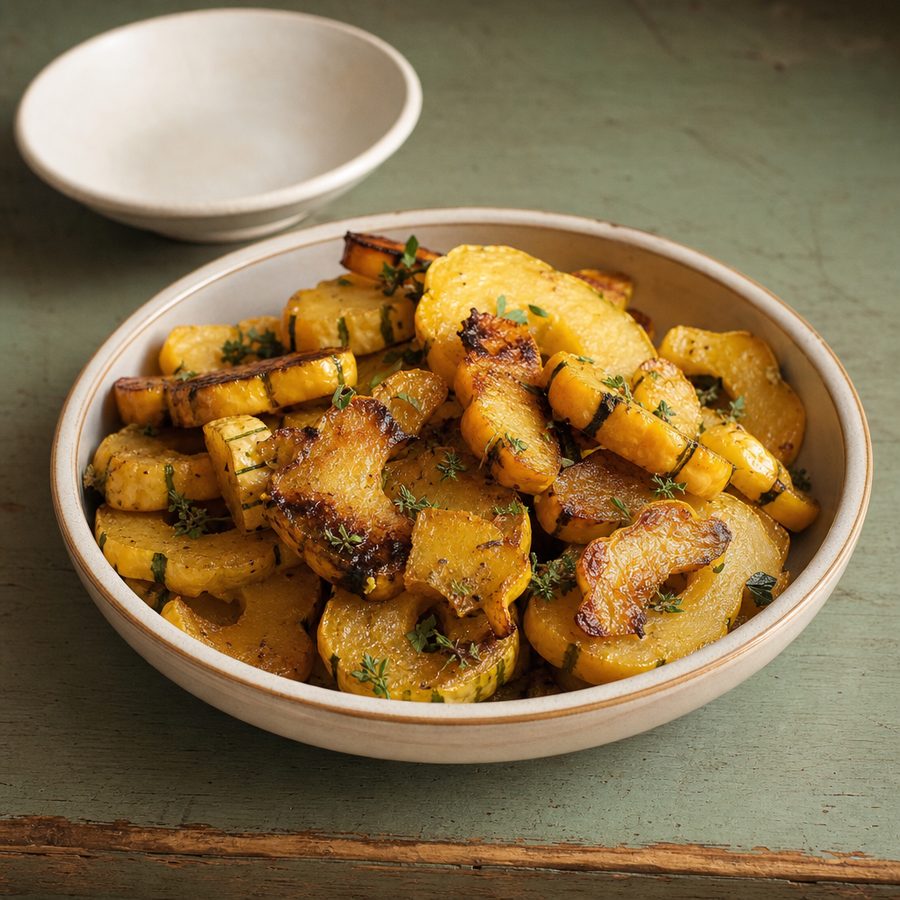
Half-moon rings of delicata squash tossed with olive oil, dried sage, and sea salt, then roasted until tender in the middle and golden and crisp at the edges.
Why You'll Love This Recipe
This is a simple roasted vegetable snack for anyone who wants something warm, crunchy, and satisfying to reach for between meals without a long ingredient list. Delicata squash is one of the easiest winter squashes to handle because its skin is thin enough to eat, which means no peeling and no wrestling with a tough rind. A few pantry staples turn it into finger food that holds its own on a snack board or next to a bowl of soup.
The magic here is in the shape and the heat. Slicing the squash into thin half-moons and giving each ring room on the pan lets the cut surfaces sit flat against the hot metal, where the natural sugars in the squash caramelize into a crisp, browned edge while the inside stays soft. Dried sage, tossed on with the oil before roasting, toasts gently in the oven and lends a warm, woodsy aroma that suits the squash's mild sweetness. Flipping the rings once partway through gives you two browned faces instead of one.
What makes these worth eating is the contrast: crackly, caramelized edges around a creamy, custard-soft center. The squash brings natural sweetness and plenty of fiber, and the olive oil adds a savory richness that makes the snack feel more filling than a plain vegetable. It is the kind of thing you can graze on slowly, and because it is roasted rather than fried, it stays light.
Ingredients
- 2 small delicata squash (about 500 g)
- 2 tbsp olive oil
- 1 tsp dried sage
- 1/2 tsp sea salt
Instructions
- Preheat and prep the pan: Preheat the oven to 425°F (220°C). Line a large sheet pan with parchment paper, or leave it bare if you want maximum browning, since bare metal gives a darker crust and parchment gives an easier lift.
- Cut the squash: Scrub the delicata squash under running water and pat dry; the skin is thin and edible, so there is no need to peel it. Trim off the stem ends, halve each squash lengthwise, and scoop out the seeds and stringy pulp with a spoon. Lay each half cut-side down and slice crosswise into half-moon rings about 1/2 inch thick, keeping them even so they cook at the same rate.
- Season: Put the rings in a large bowl. Drizzle with the olive oil, sprinkle on the dried sage and the sea salt, and toss with your hands until every piece is lightly coated. Use your hands rather than a spoon, because you can feel the dry patches a spoon misses.
- Roast: Spread the rings in a single layer on the sheet pan, leaving a little space between them so they roast rather than steam. Roast for 24 to 28 minutes, flipping each piece once at the halfway point, until they are deep golden and crisp at the edges but tender when pierced in the center.
- Serve: Let the rings rest on the pan for a minute or two so the edges firm up, then serve them warm, since delicata softens quickly once it leaves the heat.
Variations
- Garlic sage: Toss a little minced garlic in with the oil and sage before roasting for a deeper, savory edge.
- Rosemary or thyme: Swap the dried sage for dried rosemary or thyme to change the herb note while keeping the same method.
- Maple cinnamon: Trade the sage for a dusting of cinnamon and a light drizzle of maple syrup over the hot rings for a sweeter version; this adds added sugar.
- Lemon and herb: Finish the roasted rings with fresh lemon zest and a squeeze of lemon juice to brighten the sweetness of the squash.
- Coconut aminos glaze: Toss the rings with a splash of coconut aminos along with the oil for a savory-sweet, lightly glazed finish.
Storage & Leftovers
Store cooled rings in an airtight container in the refrigerator for up to four days. They will soften as they sit, since the crisp edges give up their crunch to the moisture in the fridge, but the flavor holds well.
To bring back the texture, reheat the rings on a sheet pan in a 400°F (200°C) oven for about five to eight minutes until hot and re-crisped. Skip the microwave, which steams them and leaves them limp.
To get ahead, you can slice the squash into rings a day in advance and keep them in a covered container in the refrigerator, then toss with the oil, sage, and salt and roast when you want them fresh and hot.
Notes & Tips
- Choosing squash: Pick delicata that feel firm and heavy for their size with cream-colored skin and green stripes; pass on any with soft spots or dull, shriveled skin.
- Leave the skin on: The pale, striped skin is thin and roasts up tender, so there is no reason to peel it; peeling only makes the rings fall apart.
- Keep the slices even: Aim for a consistent 1/2-inch thickness so the rings finish at the same time; thin ones scorch while thick ones stay raw in the middle.
- Give them room: Crowding is the main reason squash steams instead of crisps, so use a second pan rather than piling the rings together if you are making a large batch.
- Season to taste: Add a pinch of flaky sea salt to the rings right as they come out of the oven if you like a saltier, more snackable finish.
- Serve them right away: These are best warm from the oven when the edges are at their crispest; set them out as a snack on their own or alongside a bowl of soup.
Nutrition & Mindful Eating
- Squash, olive oil and sage in a hot oven give you two textures in one piece. The scalloped rim browns and firms up, the flesh just inside stays creamy, and the dried sage toasts on the surface until the whole tray smells of it.
- Delicata has thin enough skin to eat, which saves the wrestling other winter squash demands and keeps each ring intact. The flesh is sweeter than it looks, and the pale orange it holds comes with the carotenoids the body turns into vitamin A.
- Sage roasted in oil is a different herb from sage stirred into a pan. The leaves go dark and crisp and the flavor turns from woodsy to almost nutty, and it perfumes the whole tray while it happens.
- Olive oil brushed on both sides is what gets the cut edges to caramelize, and the sugars in the squash do the rest, going amber where they meet the hot metal. Those browned edges are the first thing anyone eats.
- A ring eaten with your fingers gives you the crisp rim and the soft center in the same bite, and the salt lands on that sweetness in a way that keeps you coming back for one more.
- As you eat, work your way around a ring and feel the texture change from browned edge to soft center, letting the toasted sage smell slow you down.
Frequently Asked Questions
Do I have to peel the delicata squash?
No. Delicata has a thin skin that softens as it roasts, so you can leave it on. Just scrub the outside well before slicing.
Why did my rings turn out soft instead of crisp?
The usual causes are slices that are too thick, a crowded pan that traps steam, or wet squash. Cut even 1/2-inch rings, spread them in a single layer with space between them, and pat the cut squash dry before tossing with oil.
Can I use a different squash?
Yes. Butternut or acorn squash work, though you will need to peel butternut and acorn since their skins are tougher, and the roasting time may shift a few minutes depending on how thick you slice them.
How do I keep leftovers from going limp?
Cool them completely before storing, and reheat in a hot oven rather than the microwave. A few minutes at 400°F (200°C) brings back much of the crisp edge.