
Crispy-Skin Butter Chicken Thighs
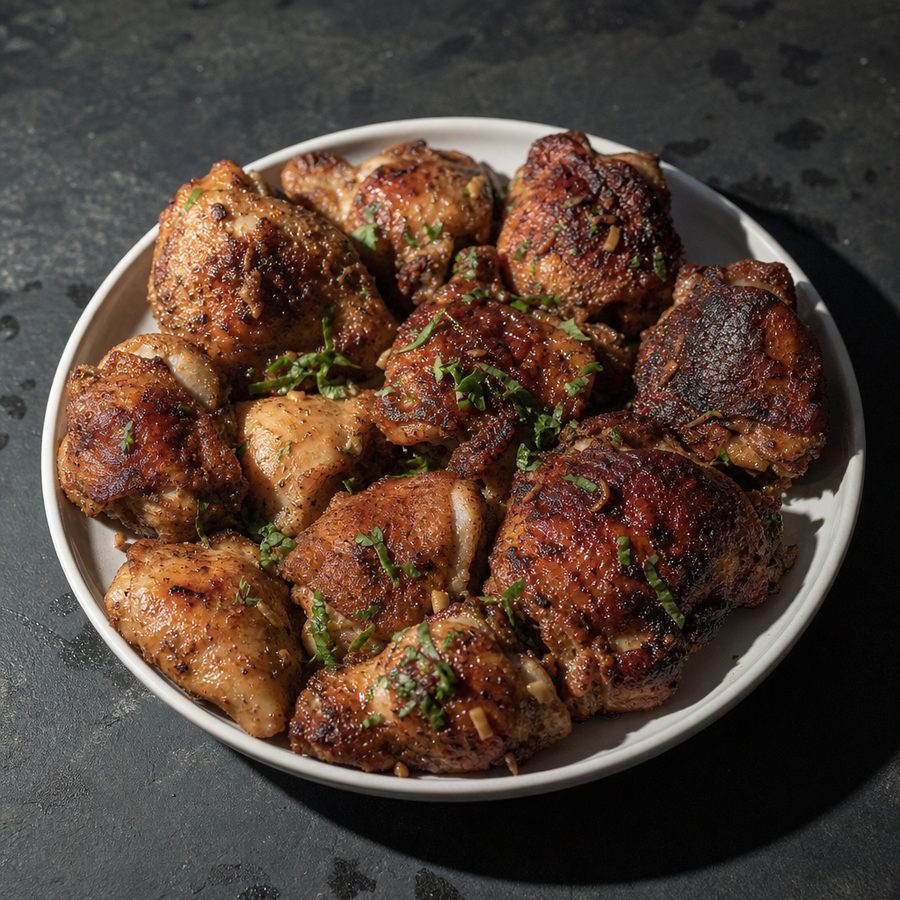
Bone-in, skin-on chicken thighs seared skin-down until the skin turns deep golden and shatteringly crisp, then finished in butter and salt for a rich, savory dinner.
Why You'll Love This Recipe
One honest idea holds this together: chicken skin, given time and gentle heat, becomes one of the best textures in the kitchen. It is for anyone who loves crackling, crisp skin and rich dark meat, and for cooks who want a simple main with a short ingredient list and almost no hands-on fuss. Bone-in thighs are forgiving, hard to dry out, and deeply flavorful, which makes this a good dish whether you are cooking for yourself or feeding a table.
The technique is the whole trick. Laying the thighs skin-down in a cold, dry pan and bringing the heat up slowly gives the fat under the skin time to melt out and render fully, so the skin flattens, dries, and crisps into a shatter-thin crust instead of shrinking and curling. Once the skin is set, butter goes in and the thighs finish in a hot oven, where the meat cooks through evenly and the butter bastes the surface with nutty richness. Salt on the skin early draws out surface moisture, which also helps the browning.
What lands on the plate is substantial and satisfying. Dark-meat thighs are rich in complete protein that keeps you full, the rendered skin and butter add a savory richness that makes the dish feel like a treat, and the whole thing comes together with nothing to distract from the meat itself. Spooning the warm pan fat back over the thighs at the end ties it together, and a five-minute rest keeps every bite juicy.
Ingredients
- 8 bone-in, skin-on chicken thighs
- 3 1/2 tbsp butter
- 1 tsp salt
Instructions
- Salt and start cold: Pat the chicken thighs completely dry on both sides with paper towels; a dry surface is what lets the skin crisp instead of steam. Season the skin side with salt. Lay the thighs skin-side down in a cold, dry ovenproof skillet, spacing them so they are not touching. Do not preheat the pan.
- Render the skin: Set the skillet over medium heat and cook the thighs undisturbed for 12 to 15 minutes. Starting cold and heating gradually pulls the fat out of the skin slowly so it renders and turns deep golden and crisp rather than burning. Resist moving or peeking under them; lift one gently near the end to confirm the skin is browned and releases easily from the pan.
- Preheat the oven: While the skin renders, preheat the oven to 400°F (200°C) so it is fully up to temperature when the thighs are ready to go in.
- Add butter and flip: Add the butter to the skillet and let it melt into the rendered fat. Flip each thigh so the crisped skin faces up, spooning a little of the pan fat over the top.
- Finish in the oven: Transfer the skillet to the preheated oven and roast for 12 to 15 minutes, until the thighs are cooked through and an instant-read thermometer inserted into the thickest part near the bone reads 175°F (80°C). The juices should run clear.
- Rest and serve: Move the thighs to a plate or board and rest for 5 minutes so the meat relaxes and stays juicy when cut. Serve skin-side up and spoon the buttery pan fat over the top.
Variations
- Brown-butter finish: Let the butter you add to the pan cook a minute longer until it smells nutty and turns golden-brown before you spoon it over the thighs. It deepens the richness without changing anything else.
- Render in a different fat: Swap the butter for beef tallow or duck fat to finish the thighs. The skin still crisps the same way, and you get a savorier, less dairy-forward richness in the pan.
- Hard cheese crust: In the last few minutes of oven time, grate a hard aged cheese over the crisp skin and let it melt and brown into a salty crust. This adds more dairy.
- Bacon-fat basted: Render a few strips of bacon first, set them aside, and use the rendered bacon fat in place of the butter to baste and finish the thighs. This adds pork.
- Drumsticks instead: Use bone-in, skin-on drumsticks in place of the thighs. They render and crisp the same way; give them a few extra minutes in the oven and cook to the same internal temperature at the bone.
Storage & Leftovers
Refrigerate leftover thighs in an airtight container within two hours of cooking and use them within three to four days. Pour any leftover pan butter into the container with them; it sets in the fridge and melts back into a sauce when reheated.
To reheat without losing the crisp skin, skip the microwave, which turns the skin soft. Set the thighs skin-side up in a skillet or on a small tray and warm in a 375°F (190°C) oven until heated through, about 10 to 12 minutes; the last few minutes re-crisp the skin. A quick pass skin-down in a hot dry pan also brings the crackle back.
To get ahead, you can salt the thighs and lay them out uncovered on a rack in the fridge several hours or overnight before cooking. The chilled air dries the skin further, which gives you even crispier results, and you go straight from fridge to cold pan when it is time to cook.
Notes & Tips
- Dry skin is everything: The single biggest factor in crisp skin is a dry surface. Pat the thighs hard with paper towels, and if you have time, leave them uncovered in the fridge for a few hours so the skin dries out even more.
- Buy thighs of even size: At the counter, pick thighs that are close to the same size and thickness so they finish cooking at the same time. Very large ones may need an extra couple of minutes in the oven.
- Trust the color, then the thermometer: The skin is ready to flip when it is deep golden and lifts cleanly from the pan on its own. For the meat, an instant-read thermometer at the bone reading 175°F (80°C) is your real doneness signal; dark meat is best cooked past the point where chicken breast would be.
- Save the rendered fat: You will end up with more golden fat in the pan than you need for serving. Strain the extra into a jar and keep it in the fridge to cook eggs or other meats in later; it carries a lot of savory flavor.
- Use a heavy ovenproof pan: A cast-iron or heavy stainless skillet holds steady heat and moves straight from stovetop to oven. Avoid nonstick and anything with a plastic handle, which will not take the oven heat.
- Salt to taste at the table: The skin is salted before cooking, but the meat underneath is milder. A small pinch of flaky salt on the cut meat at the table lets each person adjust seasoning without oversalting the pan.
Nutrition & Mindful Eating
- Skin, dark meat and butter are the three parts of this. The skin crisps, the meat underneath stays moist because the fat is basting it the whole time, and the butter in the pan browns and becomes the sauce you spoon back over.
- Thigh meat is darker because those muscles do more work, and the myoglobin that gives it that color is bound up with the iron and B12 the cut carries. It also tastes more of chicken than any other part of the bird.
- Skin side down in a hot pan, undisturbed, is the whole trick, and the temptation to move it is the main way this goes wrong. Left alone it releases on its own and comes up brown, tight and audibly crisp.
- Butter added once the skin has set browns quickly and turns nutty, and spooning it over the thighs carries the vitamins A and D that ride in dairy fat right through the dish. Salt on the skin beforehand pulls out the moisture that would otherwise keep it soft.
- A thigh or two eats like a proper dinner rather than a portion of protein, and the fat under that skin is a good part of why. It holds you well into the evening, which is why a plate of these with something green alongside needs nothing else.
- As you eat, cut through the skin and listen to it, then taste how much the buttery pan juices change the meat underneath, and let dinner take longer than it strictly needs to.
Frequently Asked Questions
Why do I start the thighs in a cold pan instead of a hot one?
Starting cold and heating slowly gives the fat under the skin time to melt out completely before the skin can scorch. That gradual render is what produces flat, evenly crisp skin. Dropping thighs into an already-hot pan tends to seize and curl the skin and brown it before the fat has rendered.
My skin came out soft and rubbery. What went wrong?
Almost always it is moisture or impatience. Make sure the thighs are patted bone-dry before they hit the pan, do not crowd them so steam can escape, and give the skin the full rendering time undisturbed. If you flip too early, before the skin is deep golden and releases on its own, it will not have crisped.
Can I make this fully on the stovetop without the oven?
You can, but it takes more attention. After the skin is crisp and you have flipped the thighs, lower the heat, add the butter, and cover loosely, cooking gently until they reach 175°F (80°C) at the bone. The oven simply gives you steadier, more even heat and frees up the stovetop.
Why cook the thighs to 175°F (80°C) when chicken is safe at 165°F (74°C)?
Chicken is safe at 165°F (74°C), but dark meat like thighs has more connective tissue that only breaks down with a little more heat. Taking thighs to about 175°F (80°C) renders that tissue and makes the meat more tender and juicy rather than tough, without drying it out the way it would a breast.