
Crispy Tofu and Sesame Bok Choy Bowl
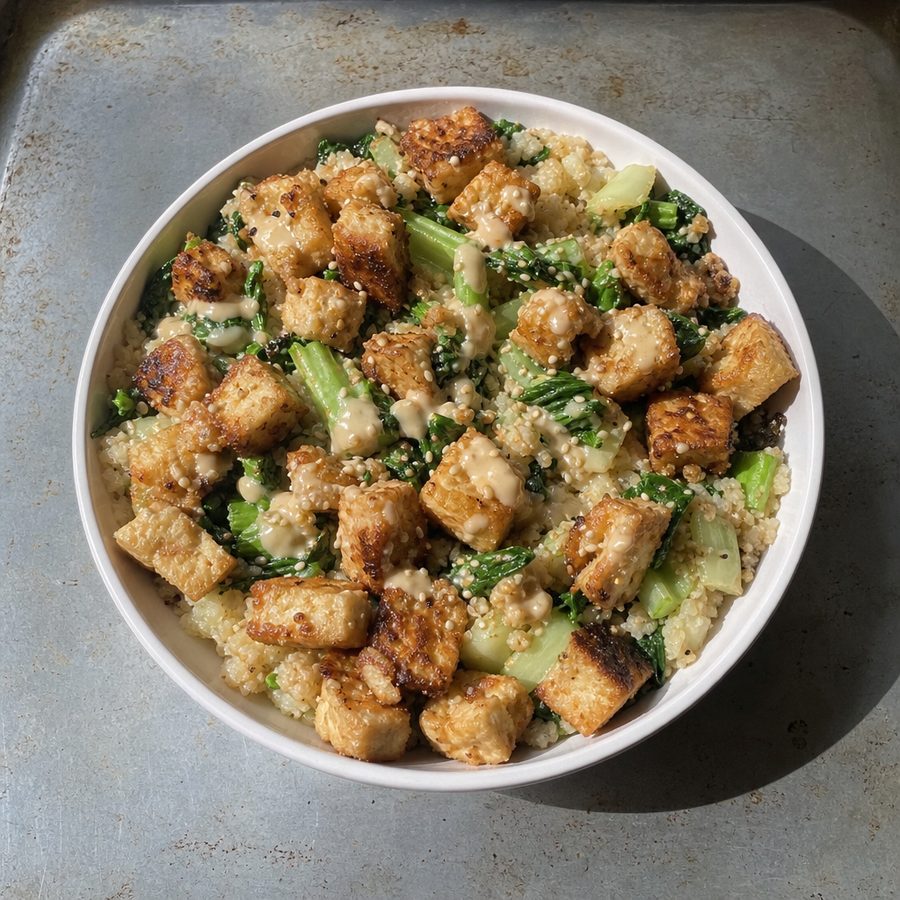
Golden pan-crisped tofu piled over sesame-glazed bok choy and riced cauliflower, finished with a tahini drizzle and a shower of toasted sesame seeds.
Why You'll Love This Recipe
A plant-based meal that eats like a full plate rather than a side salad. Golden cubes of tofu supply the substance and protein, sesame-kissed bok choy brings a fresh green bite, and riced cauliflower stands in for the grain, soaking up the salty-nutty sauce. It comes together in one skillet in under half an hour, which makes it as practical for a weeknight lunch as it is satisfying.
The tofu asks you to wait. Pressing out the water and letting each face sit undisturbed in hot oil builds a crisp, golden crust instead of a pale, soft cube. Cooking in stages in the same pan matters too: the tofu crisps first, the garlic and ginger bloom in the residual heat, the sturdy bok choy stems go in ahead of the tender leaves, and the cauliflower gets its own moment in toasted sesame oil so it turns nutty and dry rather than watery. The coconut aminos add a rounded, faintly sweet saltiness, and the tahini thinned with water pulls it all together with a creamy, bitter-rich finish.
Textures vary, and everything in it is whole food. Tofu delivers complete plant protein, the bok choy and cauliflower add fiber and plenty of volume so the bowl feels generous, and the sesame oil, sesame seeds, and tahini contribute rich, satisfying fats that carry flavor and keep you full. Because it leans on vegetables and healthy fats rather than starch, it stays light on the stomach while still tasting like a proper, comforting meal.
Ingredients
- 18 oz firm tofu, cubed
- 2 tbsp toasted sesame oil
- 3 tbsp avocado oil
- 3 tbsp tahini
- 4 cups chopped bok choy
- 3 cups riced cauliflower
- 2 tbsp coconut aminos
- 1 tbsp grated ginger
- 3 garlic cloves, minced
- 1 1/2 tbsp sesame seeds
Instructions
- Press and cube the tofu: Drain the firm tofu and press out excess moisture by wrapping the block in a clean kitchen towel and setting a plate or skillet on top for about ten minutes. Cut the pressed tofu into bite-sized cubes and pat the outsides dry once more, since a dry surface is what lets it crisp rather than steam.
- Prep the aromatics and vegetables: Peel and grate the ginger, mince the garlic, and roughly chop the bok choy, keeping the thicker white stems separate from the leafy greens so you can add them at different times. Have the riced cauliflower measured and ready near the stove.
- Crisp the tofu: Heat the avocado oil in a large nonstick or well-seasoned skillet over medium-high until it shimmers. Add the tofu cubes in a single layer, leaving space between them, and let each side sit undisturbed for two to three minutes before turning, until every face is deep golden and firm, about eight to ten minutes total. Transfer the tofu to a plate.
- Saute the aromatics and bok choy: Lower the heat to medium and add the garlic and ginger to the same skillet, stirring for about thirty seconds until fragrant but not browned. Add the bok choy stems first and cook for a minute, then add the leafy greens and cook until the stems are crisp-tender and the leaves have wilted, about two to three minutes. Push everything to one side of the pan.
- Cook the cauliflower rice: Pour the toasted sesame oil into the cleared side of the skillet and add the riced cauliflower. Saute, stirring often, until it is tender and looks dry rather than wet, about three to four minutes; avoid overcooking, which turns it mushy.
- Sauce and finish: Return the tofu to the skillet, pour in the coconut aminos, and toss everything together to coat and warm through. In a small bowl, stir the tahini with a splash of water, adding a little at a time until it is pourable, then drizzle it over the bowl. Sprinkle with the sesame seeds and serve warm.
Variations
- Spicy chili-garlic: Stir a spoonful of chili-garlic paste or a pinch of red pepper flakes into the coconut aminos for a warming heat that plays off the sweet tahini.
- Citrus-brightened: Finish with a squeeze of fresh lime and a little grated zest to lift the richness of the sesame and tahini with a clean, tart edge.
- Mushroom and greens: Add sliced shiitake or cremini mushrooms to the skillet with the bok choy stems for an extra savory, meaty depth without changing the makeup of the dish.
- Herb and scallion: Shower the finished bowl with sliced scallions and torn cilantro for a fresh, aromatic contrast to the warm, nutty base.
- Crunchy peanut swap: Replace the tahini drizzle with a thinned peanut butter sauce for a deeper roasted flavor; note that this adds peanuts.
Storage & Leftovers
Store leftovers in an airtight container in the refrigerator for up to four days. Keep the tahini drizzle in a separate small container if you can, since the tofu holds its texture better when it is not sitting in sauce.
Reheat in a skillet over medium heat with a small drizzle of oil to bring back some of the tofu's crispness; a couple of minutes tossing in the hot pan works far better than a microwave, which tends to soften the crust. Add a splash of water if the cauliflower looks dry, then finish with fresh tahini.
To get ahead, press and cube the tofu, mince the garlic, grate the ginger, and chop the bok choy up to a day in advance and keep them in separate containers. With the prep done, the whole bowl cooks in one skillet in minutes.
Notes & Tips
- Buy the right tofu: Reach for firm or extra-firm, not silken or soft; the sturdier blocks hold their shape and crisp up, while softer styles fall apart in the pan.
- Press it well: The single biggest factor in crisp tofu is dryness, so give it the full pressing time and pat it again just before it hits the oil; wet tofu steams and stays pale.
- Do not crowd the skillet: Leave space between the cubes so they sear instead of steam; if your pan is small, crisp the tofu in two batches rather than piling it in.
- Judge the cauliflower by look: It is done when it turns tender and looks dry rather than glossy and wet, usually just a few minutes; pull it before it collapses into mush.
- Loosen the tahini gradually: Add water to the tahini a little at a time; it seizes and thickens at first, then suddenly turns smooth and pourable, so go slowly to reach a drizzle-able consistency.
- Adjust the salt at the end: Coconut aminos vary in saltiness by brand, so taste before serving and add a little more for depth or a splash of water to mellow it.
Nutrition & Mindful Eating
- Tofu, bok choy and riced cauliflower each do a different job. The tofu brings the protein and the crunch, the bok choy stays green and juicy through the cooking, and the cauliflower underneath drinks up whatever sauce runs off the top.
- Tofu takes on whatever it is cooked in, so pressing it dry and giving it real heat is the difference between golden edges and a pale cube. It brings complete plant protein, and the crisp shell over the soft center is why it works here.
- Bok choy is two vegetables in one stem. The white part stays crunchy and juicy even after it hits the pan, the leaves wilt down in seconds, and the whole thing carries vitamin C and a mineral-green flavor that stands up to sesame.
- Tahini, toasted sesame oil and sesame seeds stack the same ingredient three ways, ground, pressed and whole, so the sesame arrives as creaminess, as aroma and as a small hard pop between your teeth.
- Ginger and garlic go in near the end, where the heat is high and the time is short, so they stay sharp and fragrant. That warmth at the back of the bowl is what keeps every mouthful bright against the coconut aminos.
- As you eat, listen for the crackle of the tofu against the squeak of the bok choy stems, and let the sesame and ginger register fully before the next bite.
Frequently Asked Questions
Why is my tofu not getting crispy?
Almost always it is moisture or crowding. Press the tofu until it is dry, pat it again before it goes in, use hot oil, and give the cubes room in the pan. Let each side sit undisturbed until golden before you turn it, rather than stirring constantly.
Can I use frozen riced cauliflower?
Yes, but thaw it first and squeeze out the extra water in a towel, or it will release liquid and steam in the pan instead of turning tender and nutty. Cook it a minute or two longer until it looks dry.
What can I use instead of coconut aminos?
Tamari or another gluten-free soy sauce works and gives a saltier, more assertive result, so start with a little less and taste. Coconut aminos are milder and slightly sweet, so you may want a pinch of extra seasoning if you swap.
My tahini turned into a thick paste when I added water. Did I ruin it?
Not at all; that seizing is normal. Keep adding water a little at a time and stirring, and it will loosen past the paste stage into a smooth, pourable drizzle.