
Cucumber Tzatziki Cups
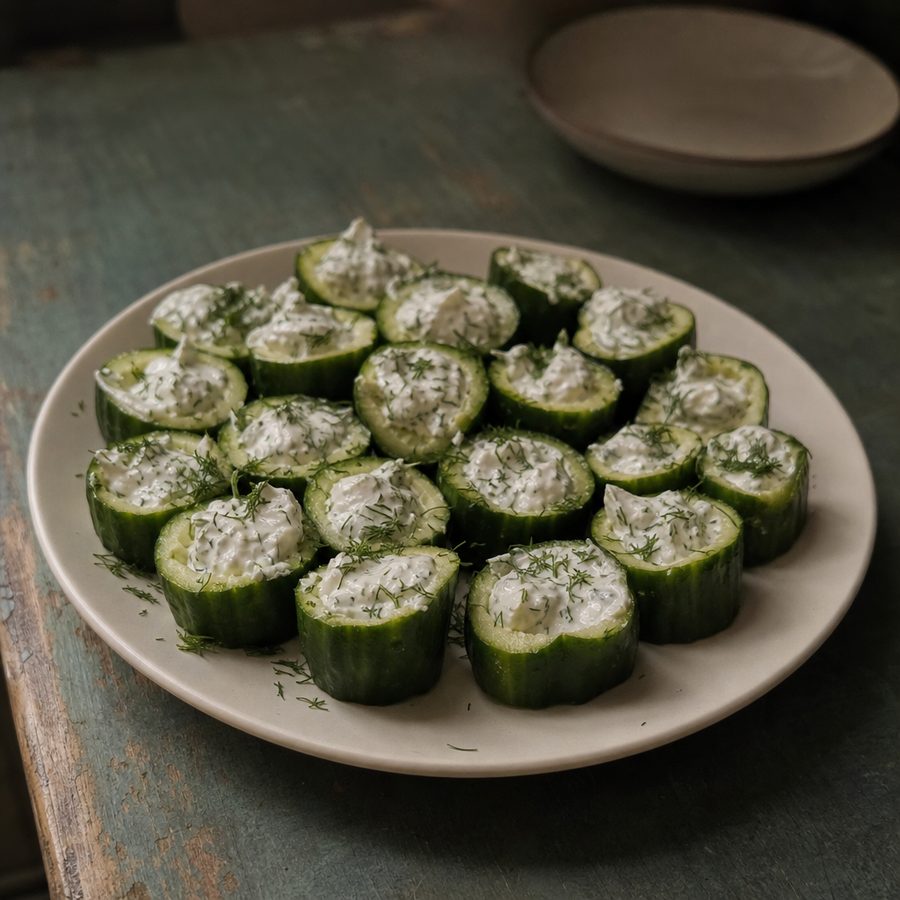
Crisp cucumber rounds hollowed and filled with cool garlic-herb tzatziki, a light, refreshing two-bite snack you can prep in fifteen minutes with no cooking.
Why You'll Love This Recipe
These are for the hot afternoon when you want something cool and light that still feels like a real snack. If you keep a low-carb Mediterranean kitchen and you are looking for a fresh bite that is not another handful of nuts or cheese, hollowed cucumber rounds filled with garlic-herb tzatziki hit that spot. They suit anyone who wants a fifteen-minute, no-cook snack to prep for the week, or a light two-bite thing to set out when people drop by.
The whole recipe rests on draining well. Squeezing the grated cucumber hard in a towel is what keeps the tzatziki thick enough to hold in the little cups instead of turning watery and sliding off. Greek yogurt gives it body and tang, garlic and lemon sharpen it, and the dill and mint keep it bright and cool. A short chill lets the garlic and herbs settle in so no single flavor stays raw or harsh against the yogurt.
As a snack it satisfies in a quieter way than something salty and rich. The Greek yogurt brings real protein, the olive oil adds enough fat to keep it from feeling like empty crunch, and the cool creaminess against the crisp cucumber makes each bite feel like a small refreshment. Four filled cups is genuinely enough to take the edge off hunger without weighing you down, which is exactly what you want mid-afternoon.
Ingredients
- 1 1/2 cups Greek yogurt
- 2 cucumbers grated + 1 for cups
- 2 cloves garlic, grated
- 3 tbsp chopped dill
- 2 tbsp chopped mint
- 2 tbsp olive oil
- 1 tbsp lemon juice
- 1/4 tsp salt
Instructions
- Salt the grated cucumber and let it drain: Grate two of the cucumbers on the coarse side of a box grater, toss the shreds with a pinch of the salt in a sieve set over a bowl, and leave them for ten minutes. Salt pulls the water out through the cut surfaces, so ten minutes of standing does more than any amount of squeezing does on its own. Then gather the shreds in a clean towel and wring them hard over the sink. You want them almost dry.
- Grate the garlic into the lemon juice: Grate the garlic on a rasp straight into the lemon juice and leave it while the cucumber drains. Raw garlic in yogurt gets stronger by the hour, and a bowl that tastes balanced at noon can be fierce by evening. Ten minutes in acid takes that edge off before it ever meets the dairy. Grated rather than chopped means it disappears into the sauce instead of turning up in one unlucky mouthful.
- Fold it together and taste it cold: Stir the wrung-out cucumber into the Greek yogurt with the garlic and lemon, the dill, the mint, the olive oil, and the rest of the salt. Fold rather than beat, since yogurt thins out if you work it hard. Taste it now and expect it to want more salt than seems reasonable: cucumber is watery and bland and it dilutes everything around it, which is why underseasoned tzatziki is the usual failure.
- Cut the cups and dry them out: Slice the remaining cucumber into rounds about three quarters of an inch thick and scoop a shallow well in the top of each with a melon baller or the tip of a teaspoon, leaving a floor at the bottom so nothing runs out. Stand the rounds on a paper towel while you work, cut side down. A wet cup slides on the plate and waters down the tzatziki you just spent ten minutes thickening.
- Fill them at the last minute: Spoon the tzatziki into the cups and serve them within the hour. Filled cups look their best straight away and the cucumber keeps releasing water underneath the filling for as long as they sit, so if you are making these for people arriving later, keep the tzatziki and the cut rounds in separate containers in the refrigerator and fill them when the door goes. The sauce itself is better for a few hours of sitting.
Variations
- Add feta: Crumble a little feta into the tzatziki for extra salt, tang, and a bit more staying power.
- Swap the herbs: Use parsley or chives in place of the mint for a more savory, less cooling herb profile.
- Spicy edge: Stir in a pinch of Aleppo pepper or a little grated chili to warm up the cool yogurt base.
- Cherry tomato cups: Hollow halved cherry tomatoes instead of cucumber rounds for a sweeter, juicier two-bite version.
- Za'atar finish: Sprinkle za'atar over the filled cups just before serving for a toasty, herby top note.
Storage & Leftovers
Store the tzatziki on its own in an airtight container in the fridge for up to three days. Keeping it separate from the cut cucumber is the trick, since the filling stays thick and the cucumber cups stay crisp rather than going soft and watery in storage.
The flavor of the tzatziki actually improves after a few hours as the garlic and herbs mellow into the yogurt. If it releases a little liquid, just stir it back in before using. Give leftover cups a quick blot with a towel to freshen the crunch before filling.
For make-ahead, prep the tzatziki up to a day or two early and slice and hollow the cucumber cups the morning you want them. Fill them within an hour or so of serving so they stay crisp; assembling too far in advance is the one thing that softens them.
Notes & Tips
- Squeeze hard: Wring the grated cucumber as dry as you can, since leftover water is what thins the tzatziki most.
- Pick firm cucumbers: Choose firm, straight cucumbers for the cups so the rounds sit flat and hold a clean well.
- Thick rounds hold better: Cut the cups a solid three-quarters of an inch thick so the walls do not split when you scoop.
- Do not scoop through: Leave a base when you hollow each round so the filling has somewhere to sit and does not leak out.
- Chill briefly: A short chill lets the garlic and herbs settle in, but longer than an hour softens the cups.
- Salt at the end: Taste and add salt after mixing, since the yogurt and cucumber both shift how salty it reads.
Nutrition & Mindful Eating
- Cucumber and yogurt are a pairing that works because they are opposites in every way except temperature. The cucumber is crisp and watery, the yogurt is thick and tangy, and the herbs and lemon sit between them.
- Greek yogurt is strained, which is why it holds its shape in a cucumber cup rather than sliding out, and that straining also concentrates its protein and calcium. The live cultures are what give it the sour edge.
- Cucumber is mostly water, so wringing the grated shreds hard before they go in keeps the filling from loosening. The skin left on gives each cup a snap and a faint bitterness that the yogurt needs.
- Dill, mint and raw garlic are a sharp combination, and they should be. The dill is grassy, the mint is cold on the finish, and garlic grated fine rather than chopped spreads all the way through so no one gets a single fierce bite.
- Lemon juice and olive oil go in last and change the texture as much as the taste, loosening the yogurt into something spoonable and carrying the herb flavor through it. The oil brings the monounsaturated fat that makes a cold snack feel like it counts.
- As you eat, take them one at a time and let the cold mint arrive on the finish, giving a snack this small a minute of real attention.
Frequently Asked Questions
Can I use regular yogurt instead of Greek?
Greek yogurt works best because it is already thick, but you can use regular yogurt if you strain it first through a cloth for an hour or two. Otherwise the filling will be too loose to hold in the cups. Plain, unsweetened is what you want either way.
Can I make the tzatziki ahead of time?
Yes, and it is better for it. Make the tzatziki up to two days ahead and keep it airtight in the fridge, where the garlic and herbs mellow nicely. Slice and fill the cucumber cups within about an hour of serving so they stay crisp.
How many cups make a serving?
A serving is four filled cups, and the recipe makes six servings. That is a light snack on its own, so pair it with a few olives or some feta if you want to turn it into something closer to a small plate.
Is this a good low-carb Mediterranean snack?
It is one of the lightest ways to snack in this style. Built on yogurt, cucumber, olive oil, and fresh herbs, it uses classic Mediterranean ingredients.