
Veggie Frittata
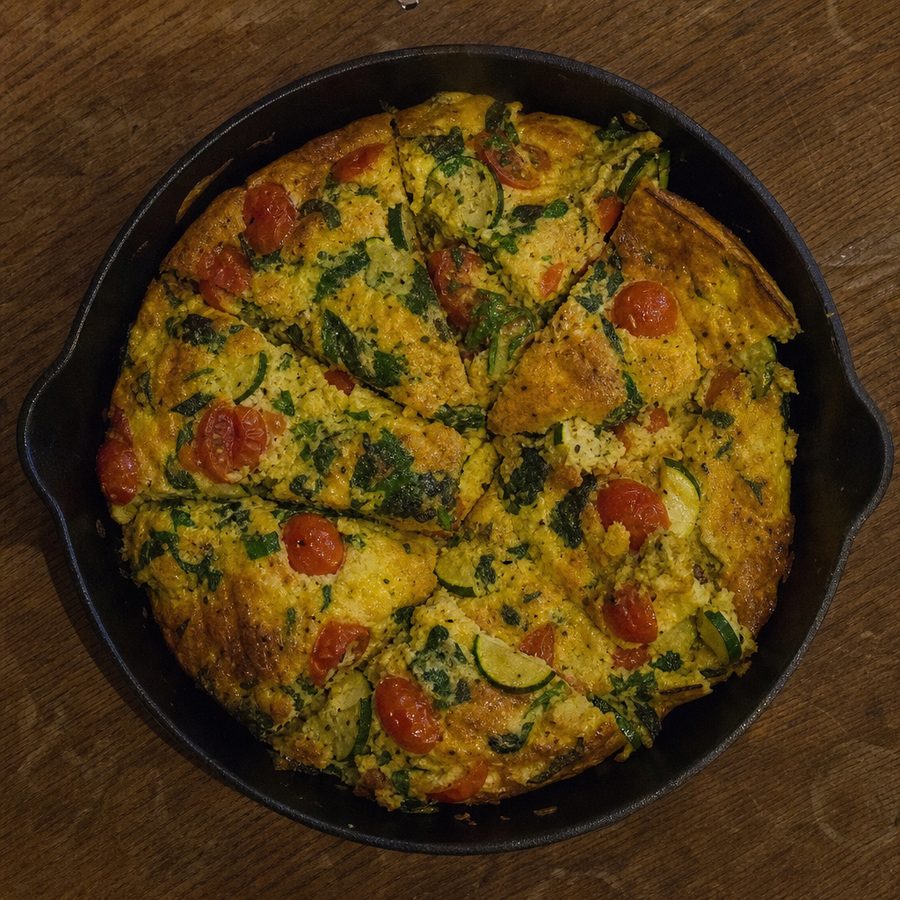
A fluffy oven-baked frittata folded with tender sauteed zucchini, sweet halved cherry tomatoes, and wilted spinach, made savory and creamy with nutritional yeast in place of cheese and finished with torn fresh basil.
Why You'll Love This Recipe
Eggs and a generous load of vegetables, all of it in one skillet, filling you up without ever weighing you down. It suits anyone cooking without dairy, anyone trying to eat more vegetables at the dinner table, and anyone who wants a protein-rich plate that reheats beautifully for the next day. It is forgiving enough for a beginner and interesting enough to make on repeat.
The zucchini and onion hit the pan well before the eggs do. Zucchini holds a lot of water, and cooking it down before the eggs go in drives off that moisture so the frittata sets firm instead of turning watery. Wilting the spinach in the same pan does the same job. The nutritional yeast whisked into the eggs is what stands in for cheese, lending a gentle savory, nutty depth and a rounder mouthfeel, so you never miss the dairy. Finishing in the oven cooks the eggs evenly from all sides, giving you that even, custardy set rather than a browned, rubbery bottom.
The eggs, the vegetables, and the oil all count. The eggs bring high-quality complete protein that keeps you full for hours, the spinach, zucchini, and tomatoes add fiber, color, and a range of vitamins, and the olive oil carries heart-friendly fats and helps your body absorb the fat-soluble nutrients in the vegetables. It is light but substantial, warm and comforting, and the sweet burst of tomato against the savory egg and bright basil keeps every bite lively.
Ingredients
- 10 large eggs
- 2 small zucchini, sliced
- 1 cup cherry tomatoes, halved
- 3 cups spinach
- 1 medium onion, diced
- 3 tbsp nutritional yeast
- 1 tbsp olive oil
- 2 cloves garlic, minced
- 3 tbsp torn basil
- 1/2 tsp salt
Instructions
- Preheat and prep: Preheat the oven to 375°F (190°C). Dice the onion, slice the zucchini into thin half-moons, mince the garlic, halve the cherry tomatoes, and tear the basil into small pieces. Get everything ready before the pan goes on, since the whole dish moves quickly once the eggs are poured.
- Saute the aromatics: Heat the olive oil in an oven-safe skillet over medium heat. Add the diced onion and sliced zucchini and cook, stirring now and then, until the onion turns translucent and the zucchini is soft and lightly golden at the edges, about 6 minutes.
- Wilt the greens: Add the minced garlic and the spinach and cook until the garlic is fragrant and the spinach has fully collapsed, about 2 minutes. Spread the vegetables into an even layer across the bottom of the skillet, so the eggs settle around them rather than pooling to one side.
- Whisk the eggs: Crack the eggs into a bowl and whisk with the nutritional yeast and salt until the yolks and whites are fully blended and slightly frothy. Pour the egg mixture evenly over the vegetables in the skillet and gently shake the pan to settle it.
- Bake until set: Arrange the halved cherry tomatoes cut-side up over the top. Transfer the skillet to the oven and bake at 375°F (190°C) until the center is set and no longer jiggles when you nudge the pan and a knife inserted in the middle comes out clean, about 15 minutes.
- Garnish and slice: Take the skillet out of the oven with a dry mitt, and leave the mitt over the handle afterward, because a skillet handle straight from a 375°F oven looks exactly like a cool one. Garnish with the torn basil, let the frittata rest for a few minutes to firm up, then slice into wedges and serve.
Variations
- Mushroom and thyme: Swap the zucchini for sliced cremini mushrooms and add a little fresh thyme with the garlic. Cook the mushrooms until they release their liquid and it evaporates so the frittata still sets firm.
- Roasted red pepper: Stir in chopped jarred roasted red peppers along with the spinach for a sweet, smoky note and a jolt of color. Pat them dry first so they do not add excess moisture.
- Herb garden: Trade the basil for a mix of chopped dill, parsley, and chives folded in at the end for a fresh, green, garden-forward flavor.
- A little heat: Add a pinch of red pepper flakes to the eggs, or scatter thinly sliced fresh chili over the top before baking, for a gentle warmth that plays against the sweet tomatoes.
- Feta finish: Crumble feta over the top before it goes in the oven for a tangy, salty bite; note that this adds dairy.
Storage & Leftovers
Refrigerate leftover wedges in an airtight container for up to four days. Let the frittata cool to room temperature before sealing it so condensation does not collect and make the eggs weep. Wedges also stack well between sheets of parchment.
To reheat, warm a wedge in a 325°F (163°C) oven or toaster oven until heated through, about 10 minutes, which keeps the texture from going rubbery. A quick pass in a covered skillet over low heat works too. The microwave is fine in a pinch, but use short bursts on medium power so the eggs stay tender rather than turning tough. Leftover wedges are also good cold, straight from the fridge.
For make-ahead, you can bake the whole frittata a day in advance and refrigerate it, then serve it cold or gently rewarmed. You can also chop and saute the vegetables ahead of time and store them in the fridge, so on a busy evening you only need to whisk the eggs and bake.
Notes & Tips
- Choose an oven-safe skillet: A well-seasoned cast iron or an ovenproof stainless skillet moves from stovetop to oven without a hitch. Avoid pans with plastic or rubber handles, and if the handle is uncertain, wrap it in foil before baking.
- Dry your zucchini and greens: Zucchini and spinach are mostly water, and that water is the enemy of a firm frittata. Cook them down fully in the pan until the excess moisture has evaporated before the eggs go in.
- Nutritional yeast is the cheese stand-in: It brings the savory, nutty note that would normally come from cheese. Start with less if you are new to it and taste, since the flavor gets more pronounced as it bakes.
- Test doneness by the wobble: The frittata is ready when the center no longer jiggles as a whole when you gently shake the pan and a knife slipped into the middle comes out clean. A little residual heat will finish it as it rests.
- Let it rest before slicing: Giving the frittata a few minutes out of the oven lets the eggs firm up, so the wedges hold their shape cleanly instead of tearing.
- Serve it any time of day: A simple green salad with a squeeze of lemon or a slice of crusty bread rounds it into a full meal, and the wedges are just as good packed cold for lunch the next day.
Nutrition & Mindful Eating
- The eggs, the softened aromatics and the vegetables come together in one pan. The eggs set around everything and bring the protein, the onion and garlic give the whole thing its savory base, and the zucchini and spinach keep it from ever feeling dense.
- Onion and garlic cooked slowly in olive oil before the eggs go in turn sweet and mellow, and the prebiotic fibers they carry feed the bacteria in your gut. That long cooking is also what makes them gentle on stomachs that find them sharp when raw.
- Spinach cooked down almost disappears into the egg, which is how a large handful ends up inside a single wedge, and the folate and iron in those leaves come along with it into every bite.
- Fresh basil torn over the top once the pan is out of the oven stays raw, so its perfume is the first thing you get, and the tomatoes underneath have gone jammy and sweet against the savory nutritional yeast.
- Zucchini sliced thin melts into the custard and keeps the middle soft, and a wedge of this with the eggs behind it holds you the way a proper dinner does.
- As you eat, watch for the basil first, then the sweetness the onions gave up over that slow start, and leave the plate in front of you long enough to notice when you are comfortably full.
Frequently Asked Questions
Can I make this without nutritional yeast?
Yes, the frittata still works without it, though you lose the savory, cheese-like depth it provides. Add a little extra salt and a grind of black pepper to keep the flavor lively, or stir in fresh herbs for more character.
Why did my frittata turn out watery?
Most often it is undercooked vegetables. Zucchini and spinach hold a lot of water, so saute them until the excess moisture has cooked off and the pan looks dry before you add the eggs. Patting halved tomatoes dry before topping helps too.
Can I use a regular skillet and transfer it to a baking dish?
Yes. If your skillet is not oven-safe, saute the vegetables on the stovetop, then scrape everything into a greased baking dish, pour the egg mixture over, top with tomatoes, and bake as directed.
Is this good for meal prep?
It is. The wedges keep well in the fridge for several days and reheat gently in the oven or a covered skillet, and they are perfectly good eaten cold, which makes them an easy grab-and-go option.