
Butter Chicken
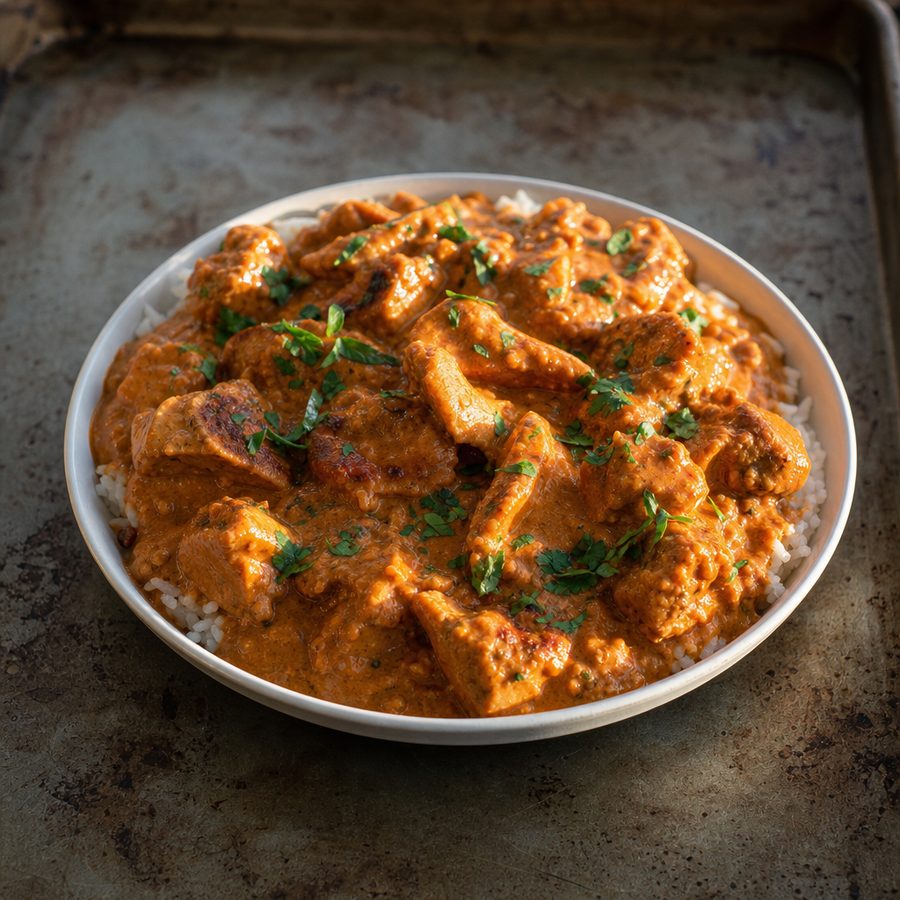
This dairy-free butter chicken trades butter, cream, and yogurt for coconut milk in a spiced tomato sauce. Tender chicken simmers until cooked through, served over brown rice.
Why You'll Love This Recipe
Classic butter chicken leans on butter, heavy cream, and yogurt for its rich, velvety sauce. This version keeps the warm, spiced character you love but uses coconut milk instead. The coconut brings a gentle richness that carries garam masala, cumin, ginger, and paprika, while crushed tomatoes give the sauce body and a mild tang. You still get that comforting, saucy plate, just without any dairy in the pot from start to finish.
Because you start with raw chicken breast and cook it right in the sauce, the protein stays tender and the juices end up in the pan rather than down the drain. Brown rice adds fiber and a nutty, chewy base that soaks up the sauce. The whole plate comes together in one pan after the rice is cooked, so cleanup stays simple. It is the kind of dinner that feels generous without asking much of you on a busy night.
If someone at your table avoids dairy, this lets everyone share the same meal without a separate pot or an awkward swap. The spice level is easy to adjust up or down, so it works for cautious eaters and heat lovers alike. Leftovers hold well and often taste even better the next day, once the flavors have had time to settle. Serve it with a squeeze of lime and fresh cilantro if you have them on hand.
Ingredients
- 2 lb boneless skinless chicken breasts (raw)
- 1 cup coconut milk
- 1 3/4 cups crushed tomatoes
- 1 onion, diced
- 4 cloves garlic
- 2 cups cooked brown rice
- 1 tbsp coconut oil
- 2 tsp garam masala
- 1 tsp ground cumin
- 1 tsp ground ginger
- 1 tsp paprika
- 1/2 tsp salt
Instructions
- Prep the chicken: Cut the chicken breasts into 1-inch pieces and pat them dry with a paper towel, then season with the salt. Do it thoroughly, since dry chicken browns and wet chicken steams.
- Brown the chicken: Heat the coconut oil in a large skillet over medium-high heat. Add the chicken in a single layer, working in batches so the pan is not crowded, and brown on all sides for a few minutes. Remove to a plate; it does not need to be cooked through yet.
- Soften the aromatics: Lower the heat to medium and add the diced onion to the same pan. Cook for about five minutes until softened, then add the minced garlic and cook for one more minute until fragrant.
- Bloom the spices: Stir in about 2 teaspoons garam masala, 1 teaspoon cumin, 1 teaspoon ground ginger, and 1 teaspoon paprika. Cook for 30 to 60 seconds, stirring constantly, until the spices smell toasty, because ground spice gives up far more of itself to hot fat than it ever will to a simmering sauce.
- Build the sauce: Pour in the crushed tomatoes and coconut milk, stirring to combine and scraping up any browned bits from the bottom of the pan. Bring to a gentle simmer.
- Simmer to 165°F (74°C): Return the chicken and any juices to the pan. Simmer, stirring occasionally, for 12 to 15 minutes until the sauce thickens and the chicken reaches 165°F (74°C) on an instant-read thermometer. Serve over the brown rice.
Variations
- Extra creamy: Stir in a couple more tablespoons of coconut milk or a spoonful of coconut cream at the end for a richer, silkier sauce.
- Turn up the heat: Add cayenne, red pepper flakes, or a diced fresh chili along with the spices for a curry with real warmth.
- Use chicken thighs: Swap boneless skinless thighs for the breasts if you prefer darker meat that stays especially tender through the simmer.
- Add vegetables: Fold in a handful of spinach or frozen peas during the last few minutes of simmering for extra color and fiber.
- Make it plant-based: Replace the chicken with two cans of drained chickpeas for a dairy-free and meat-free version that still holds plenty of protein.
Storage & Leftovers
Let leftovers cool, then store the curry in an airtight container in the refrigerator for up to four days. Keep the rice in a separate container so it holds its texture. The sauce may thicken as it chills, which is normal and easy to loosen when you reheat.
The curry freezes well for up to three months. Portion it into freezer-safe containers, leaving a little room at the top for expansion, and label each with the date. Thaw overnight in the refrigerator before reheating. Freezing the sauce without the rice keeps the best texture.
To reheat, warm the curry gently in a saucepan over medium-low heat, stirring now and then, until it is hot throughout. Add a splash of water or coconut milk to thin the sauce if needed. The microwave also works in short bursts, stirring between each to heat evenly.
Notes & Tips
- Cut evenly: Aim for uniform 1-inch pieces so the chicken cooks at the same rate and none of it dries out before the rest is done.
- Do not crowd the pan: Brown the chicken in batches; a crowded pan steams the meat instead of giving it that golden, flavorful surface.
- Bloom the spices: Cooking the dry spices in the hot pan for under a minute wakes up their aroma and makes the whole sauce taste deeper.
- Check the temperature: An instant-read thermometer is the surest way to know the chicken has reached 165°F (74°C) without overcooking it.
- Cook rice ahead: Rinse and cook the brown rice earlier in the day or the night before so dinner only involves the sauce.
- Taste before serving: Give the sauce a taste at the end and adjust the salt or spices; tomatoes and coconut milk can each shift the balance.
Nutrition & Mindful Eating
- The chicken, the tomatoes and the coconut milk make this sauce what it is. The tomatoes bring the acidity and the color, the coconut milk rounds them into something silky, and the chicken cooks in the middle of it all and takes on the spice.
- Chicken breast is close-grained and mild, so it takes the flavor of the sauce completely, and simmering it from raw in the pan is what keeps it tender. It brings the protein along with B vitamins and selenium.
- Crushed tomatoes cooked down until they darken are the base of the whole dish, and heating them is what makes their lycopene easier for your body to reach, so that long simmer is doing more than one job.
- Onion and garlic soften in the coconut oil first, then the garam masala, cumin, ground ginger and paprika go into that hot fat before any tomato, which is how the sauce ends up tasting layered rather than dusted.
- Brown rice under the sauce keeps a firm chew and holds its shape against all that liquid, and between the rice and the chicken a plate of this holds you for hours.
- As you eat, run the sauce over the rice and see how far the garam masala has worked into the chicken, then slow down enough to let the meal settle rather than finishing it standing at the stove.
Frequently Asked Questions
How do I adjust the spice level?
This recipe is mild as written. For more heat, add cayenne, red pepper flakes, or a diced fresh chili with the spices. For a gentler version, reduce the paprika and skip any chili, then finish with a little extra coconut milk to mellow it.
Can I serve it over cauliflower rice instead?
Yes. Cauliflower rice is a good swap that lowers the carbs on the plate. Saute it in a dry pan for a few minutes until just tender, then spoon the curry over the top the same way you would with brown rice.
Can I make this ahead of time?
Absolutely. The sauce often tastes better after a day in the fridge as the spices settle. Cook it fully, refrigerate for up to four days, and reheat gently on the stove with a splash of water or coconut milk to loosen the sauce.
Where does the carbohydrate come from?
Mostly from the brown rice rather than the curry itself. Spooning it over cauliflower rice, or over a smaller portion of rice, brings the number down.