
Creamy Cauliflower and Cashew Soup
This dairy-free take on cheddar soup leans on blended cauliflower, soaked cashews, and nutritional yeast for a cheesy, silky bowl with no cheese or milk at all.
Why You'll Love This Recipe
If you have moved away from dairy but still miss a warm, cheesy bowl, this soup gives you that same comfort without any cheese or milk. Cauliflower cooks down soft and mild, then blends into a smooth base. Soaked cashews add the creamy body you would normally get from butter and cream, while nutritional yeast brings the savory, cheddar-like note. Together they make a bowl that tastes rich but stays fully plant-based.
Beyond the flavor, this bowl gives you real substance. It holds you through the afternoon rather than leaving you reaching for a snack an hour later. The cashews and nutritional yeast do most of the protein work, while the cauliflower and onion bring the fiber. It is the kind of lunch that feels light on the spoon yet steady in your body, which is not something a creamy soup usually manages.
The method is straightforward. You simmer the vegetables in one pot until they are fork-tender, then everything goes into the blender with the soaked cashews and nutritional yeast. A minute or two of blending is what turns a pot of soft vegetables into something genuinely creamy, so let it run until no grit remains. One batch serves four, and it reheats well, which makes it a friendly choice for a lunch you can portion out across the week.
Ingredients
- 4 cups cauliflower florets
- 2/3 cup raw cashews, soaked
- 1/4 cup nutritional yeast
- 1 onion, diced
- 1 carrot, for color
- 4 cloves garlic
- 1 tbsp olive oil
- 1/2 tsp salt
Instructions
- Soak the cashews: If you haven't already, cover 2/3 cup raw cashews with hot water and let them sit for at least 15 minutes, or up to 4 hours in cold water. Soaking softens them so they blend into a smooth cream with no chalky bits. Drain before using.
- Build the base: Warm 1 tbsp olive oil in a large pot over medium heat. Add the diced onion and a pinch of the salt, cooking 5 to 6 minutes until soft and translucent. Add 4 cloves minced garlic and stir for 30 seconds, just until fragrant, so it doesn't brown and turn bitter.
- Simmer the vegetables: Add 4 cups cauliflower florets, the diced carrot, and enough water or broth to just cover, about 3 cups. Bring to a gentle boil, then lower to a simmer and cook 12 to 15 minutes, until the cauliflower is fork-tender and falls apart easily.
- Blend until silky: Transfer the vegetables and their liquid to a blender along with the drained cashews and 1/4 cup nutritional yeast. Blend on high for 1 to 2 minutes until completely smooth. Work in batches if needed, and vent the lid so steam can escape safely.
- Adjust and finish: Return the soup to the pot and warm it over low heat. Taste and add the remaining salt as needed. If it is thicker than you like, stir in water a splash at a time until it pours the way you want.
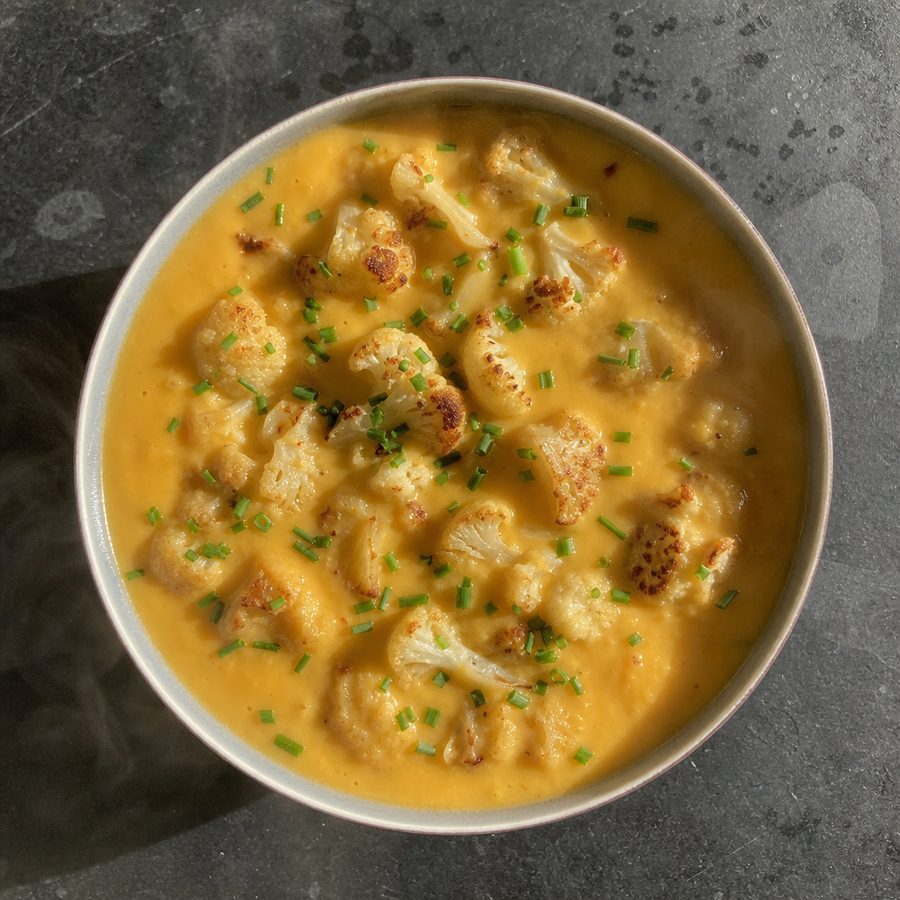
- Serve: Ladle into four bowls, about 1.5 cups each. A crack of black pepper or a few chopped chives on top adds a little contrast to the creamy base.
Variations
- Smoky: Stir in 1/2 teaspoon smoked paprika or a pinch of chipotle powder for a warm, smoky edge.
- Broccoli cheddar style: Swap half the cauliflower for broccoli, or stir in small steamed florets at the end for a chunkier soup.
- Extra sharp: Add a teaspoon of Dijon mustard and a squeeze of lemon to sharpen the cheesy tang.
- Green boost: Blend in a handful of fresh spinach at the end for color and extra greens without changing the flavor much.
- Roasted depth: Roast the cauliflower and garlic at 425°F (220°C) until golden before simmering for a deeper, nuttier flavor.
Storage & Leftovers
Let the soup cool, then store it in an airtight container in the fridge for up to 4 days. The flavor actually settles and deepens after a day, so leftovers make an easy lunch. Give it a stir before reheating, as the cashew base can thicken and separate slightly while it sits.
This soup freezes and reheats without splitting. Portion it into freezer-safe containers, leaving a little room at the top for expansion, and freeze for up to 3 months. Thaw overnight in the fridge before reheating for the smoothest result, though a quick blend can bring back any lost texture.
Reheat gently on the stovetop over low to medium heat, stirring often so the bottom doesn't scorch. Add a splash of water or broth to loosen it back to a pourable consistency. A microwave is fine. Let it rest partway through and give the heat a moment to even out, which does more for a blended soup than more power does.
Notes & Tips
- Soak longer if you can: I get the silkiest texture when I soak the cashews for a few hours, but hot water for 15 minutes works in a pinch.
- Use a high-speed blender: A powerful blender makes the biggest difference for that smooth, creamy finish, so run it longer than you think you need to.
- Vent the lid: Always leave the blender lid cracked and covered with a towel when blending hot soup so steam can escape safely.
- Salt in stages: I add salt a little at a time and taste as I go, since nutritional yeast already brings a savory saltiness.
- Save the cooking liquid: Blend the vegetables with their own simmering liquid rather than fresh water so none of the flavor goes down the drain.
- Toast for depth: A quick browning of the onion and garlic before simmering gives the finished soup a rounder, more savory base.
Nutrition & Mindful Eating
- Cauliflower and cashews do this together. The cauliflower breaks down into a soft body once it is simmered and blended, the cashews add the fat that makes it velvet, and the nutritional yeast is what makes it taste like cheese.
- Cauliflower simmered until a knife slides straight through it blends into something genuinely creamy, and it brings fiber and vitamin C into a soup whose whole appeal is how smooth it is.
- One carrot goes in for color as much as anything, deepening the gold and adding a background sweetness that keeps a savory pot from turning flat, and the beta-carotene comes with it.
- Onion and garlic softened in olive oil before any liquid goes in are where the depth comes from, and the prebiotic fibers in both feed the bacteria in your gut while the long simmer makes them easy on the stomach.
- Blended hot, the soup comes out thick enough to coat the back of a spoon, and the fat from the cashews and the olive oil is why a bowl of vegetables holds you the way this one does.
- As you eat, breathe in the steam before the first spoonful and feel how thickly the soup coats the spoon, going slowly enough that the warmth registers as much as the flavor.
Frequently Asked Questions
I can't eat cashews, what can I use instead?
Raw sunflower seeds or hemp seeds are the best nut-free swaps; soak sunflower seeds the same way, and expect a slightly earthier flavor. Silken tofu also works for creaminess without nuts.
My soup came out too thick or too thin, how do I fix it?
For thick soup, stir in water or broth a splash at a time until it pours the way you like. For thin soup, simmer it uncovered a few minutes, or blend in a few extra soaked cashews.
Can I make this ahead and reheat it?
Yes. It keeps in the fridge for up to 4 days and reheats gently on the stove or in the microwave. Add a little water when reheating, since the cashew base thickens as it sits.
Is there any potato or dairy in this?
Neither. Cauliflower rather than potato keeps this on the lighter side, and with no cheese or milk there is nothing from an animal in the pot.