
Creamy Tomato Soup
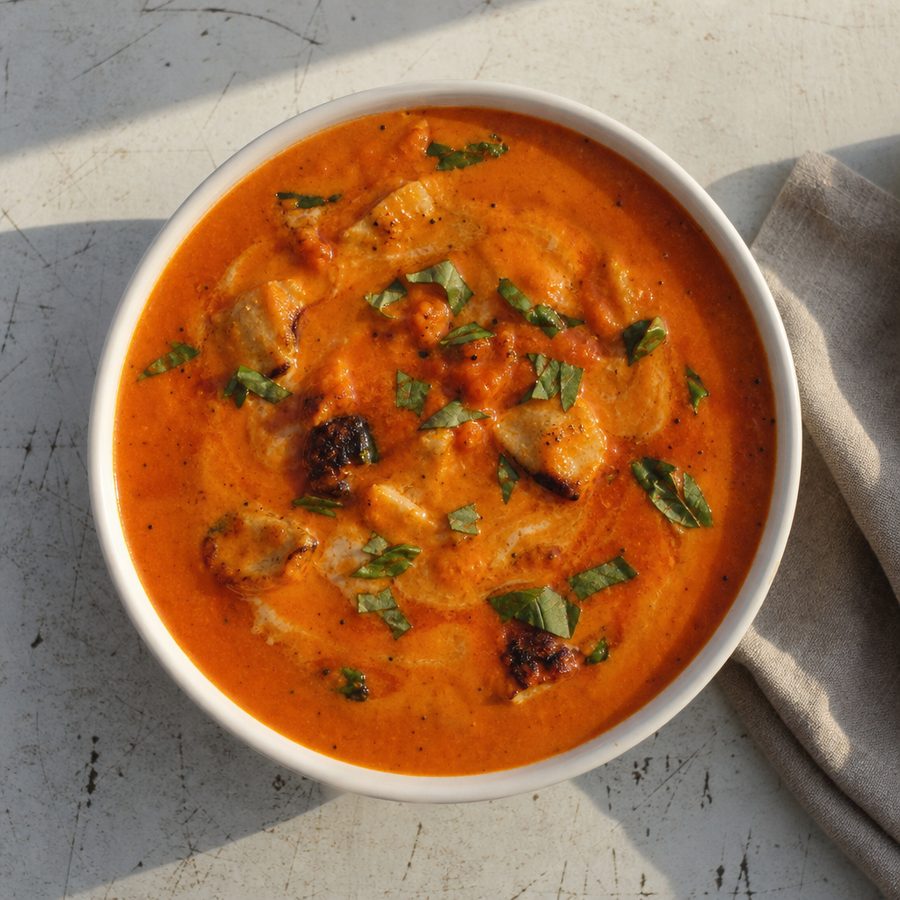
A velvety, slow-simmered tomato soup where crushed tomatoes and sweet sauteed onion and garlic are blended smooth with fresh basil and coconut milk for a rich, creamy bowl without a drop of dairy.
Why You'll Love This Recipe
This is the comforting tomato soup people reach for on a cool day or alongside a crisp grilled sandwich, made for anyone skipping dairy who still wants that creamy, spoon-coating texture. It leans on crushed tomatoes and a short list of aromatics, so it comes together on a weeknight without a trip to the store. Coconut milk is doing the work cream would normally do, and at this quantity it reads as richness rather than as coconut.
The creaminess here comes from coconut milk rather than cream. Stirred in at the very end and blended smooth, it adds body and a subtle richness that softens the natural acidity of the tomatoes without tasting distinctly of coconut. The other quiet workhorse is the slow saute of onion and garlic, which builds a sweet, savory base before the tomatoes ever go in, and the 15-minute simmer that lets the raw, sharp edge of the tomatoes mellow into something rounded and deep.
A bowl of this is nourishing as well as satisfying. Tomatoes bring lycopene and vitamin C, the olive oil contributes heart-friendly monounsaturated fat that also helps your body absorb the tomatoes' fat-soluble nutrients, and the fresh basil and garlic add aroma and antioxidants. It is naturally rich in fiber and light enough to leave room for whatever you dunk into it, while the velvety texture makes it feel far more indulgent than its short ingredient list suggests.
Ingredients
- 3 cups crushed tomatoes
- 3/4 cup coconut milk
- 1 onion, diced
- 4 cloves garlic
- 2 tbsp olive oil
- 1/2 cup fresh basil
- 3/4 tsp salt
Instructions
- Dice the onion small: Peel and finely dice the onion, and peel and mince the garlic. Keeping the pieces small matters because they have only a few minutes to soften before the tomatoes go in, and any piece still firm at that point stays firm, since acid stops onion softening any further.
- Soften the onion, then the garlic: Warm the olive oil in a large saucepan over medium heat, add the onion, and cook for 5 to 7 minutes, stirring now and then, until soft and translucent. Add the garlic and cook about 1 minute more, just until fragrant, taking care that it does not brown, because burnt garlic in a soup this simple has nowhere to hide.
- Simmer 15 minutes to take the edge off: Pour in the crushed tomatoes with the salt, bring it to a gentle bubble, then lower the heat and simmer uncovered for 15 minutes, stirring occasionally, until the color deepens and it tastes rounded rather than sharp. That fifteen minutes is what cooks the tinny edge out of canned tomatoes, and there is no shortcut for it.
- Add the basil and coconut milk off the boil: Tear or roughly chop the basil, then stir the coconut milk and the basil into the pot and warm it through for a minute without letting it come to a hard boil. Boiling would split the coconut milk into oil and grit, and it would cook the basil to the color of old spinach, when the point of both is that they go in late.
- Blend it off the heat, carefully: Take the pot off the heat and blend the soup smooth with an immersion blender. If you are using a countertop blender, work in batches with the jar no more than half full and the lid held down under a folded towel, because hot liquid expands into steam and will lift the lid off and spray a whole jar of tomato soup across the kitchen. Taste for salt before serving.
Variations
- Roasted red pepper: Blend in a couple of jarred roasted red peppers with the tomatoes for a sweeter, smokier soup with a rounder body.
- Fire-roasted heat: Swap in fire-roasted crushed tomatoes and add a pinch of red pepper flakes with the garlic for a smoky, gently spicy bowl.
- Herb swap: Trade the basil for fresh thyme or a spoonful of chopped dill for a different aromatic direction; stir woody herbs in earlier so they soften.
- Umami boost: Stir a spoonful of tomato paste into the onions before the crushed tomatoes go in for a deeper, more concentrated tomato flavor.
Storage & Leftovers
Cooled fully and stored in an airtight container, the soup keeps in the refrigerator for up to four days. The flavor actually deepens overnight as the aromatics continue to mellow.
Reheat gently in a saucepan over medium-low heat, stirring often, just until steaming; avoid a rolling boil, which can dull the fresh basil and cause the coconut milk to separate. A quick stir or a brief whisk brings any separation back together, and you can loosen a thick reheated batch with a splash of water.
To get ahead, make the soup through the simmer, then cool and refrigerate or freeze it before adding the coconut milk and basil. Stir those in fresh when you reheat for the brightest color and flavor. Frozen tomato base keeps well for up to three months; thaw overnight in the refrigerator before warming.
Notes & Tips
- Choose your tomatoes well: The soup only has a handful of ingredients, so the tomatoes carry it. Reach for a good-quality can of crushed tomatoes, ideally one labeled San Marzano style, which tends to be sweeter and less acidic.
- Tame the acidity: If your tomatoes taste sharp even after simmering, a small pinch of baking soda or a tiny bit of maple syrup rounds them out; add a little at a time and taste as you go.
- Shake the can of coconut milk: Coconut milk separates on the shelf, with the thick cream settling on top. Shake the can well before opening so you get an even pour.
- Blend for the right texture: For a rustic soup, pulse just until mostly smooth with a few flecks of tomato left; for a restaurant-smooth bowl, blend longer and, if you like, pass it through a fine strainer.
- Season at the end: Tomatoes and coconut milk both mute salt, so taste and adjust the salt after blending rather than before, when the flavors are fully combined.
- Serve it with a dunk: This is built for dunking, so pair it with a crusty toasted bread or a crisp sandwich, and finish each bowl with a swirl of olive oil and a few torn basil leaves.
Nutrition & Mindful Eating
- Tomatoes, onion, garlic and olive oil are the whole soup. The tomatoes cook down until they turn sweet, the aromatics fill in underneath them, and the oil pulls the flavor out of both.
- Tomatoes give this soup its color, its acidity, and its backbone, and simmering them in olive oil makes the lycopene behind all that red easier for your body to take up.
- Coconut milk goes in off the heat and turns the soup from red to a soft orange, easing the acidity and giving each spoonful a rounder texture along with a little fat to carry the flavor.
- Fresh basil torn in at the end stays bright and peppery, and the smell of it is the first thing you get off the bowl. That is the part a long simmer would have cooked away.
- Onion and garlic soften in the oil before the tomatoes arrive, which is where the sweetness underneath the acid comes from, and they carry a prebiotic fiber that the bacteria in your gut make good use of.
- As you eat, take in the basil before the first spoonful, notice how the acid of the tomato and the softness of the coconut milk meet somewhere in the middle, and let the bowl take as long as it takes.
Frequently Asked Questions
Does this soup taste like coconut?
Not distinctly. Coconut milk added at the end and blended in reads mostly as creaminess and richness against the tomatoes; you get a faint background sweetness rather than an obvious coconut flavor. Full-fat coconut milk makes the coconut note a touch more noticeable.
Can I use fresh tomatoes instead of crushed?
Yes, though it takes more time. Use ripe, in-season tomatoes, blanch and peel them, then chop and simmer them longer so the excess water cooks off and they break down. Out of season, the canned crushed tomatoes actually give a more reliable, deeper flavor.
Why did my coconut milk look separated or curdled?
The acidity of the tomatoes plus a hard boil can cause coconut milk to separate. Stir it in off a rapid boil and just warm it through, and blending the soup afterward brings everything back into a smooth, unified texture.
How can I make it more filling as a meal?
Serve it with a hearty toasted bread for dunking, or stir a cooked grain into the finished soup. For more staying power in the bowl itself, blend in a spoonful of cooked white beans, which thickens it and adds protein and fiber.