
Shakshuka with Feta for Dinner
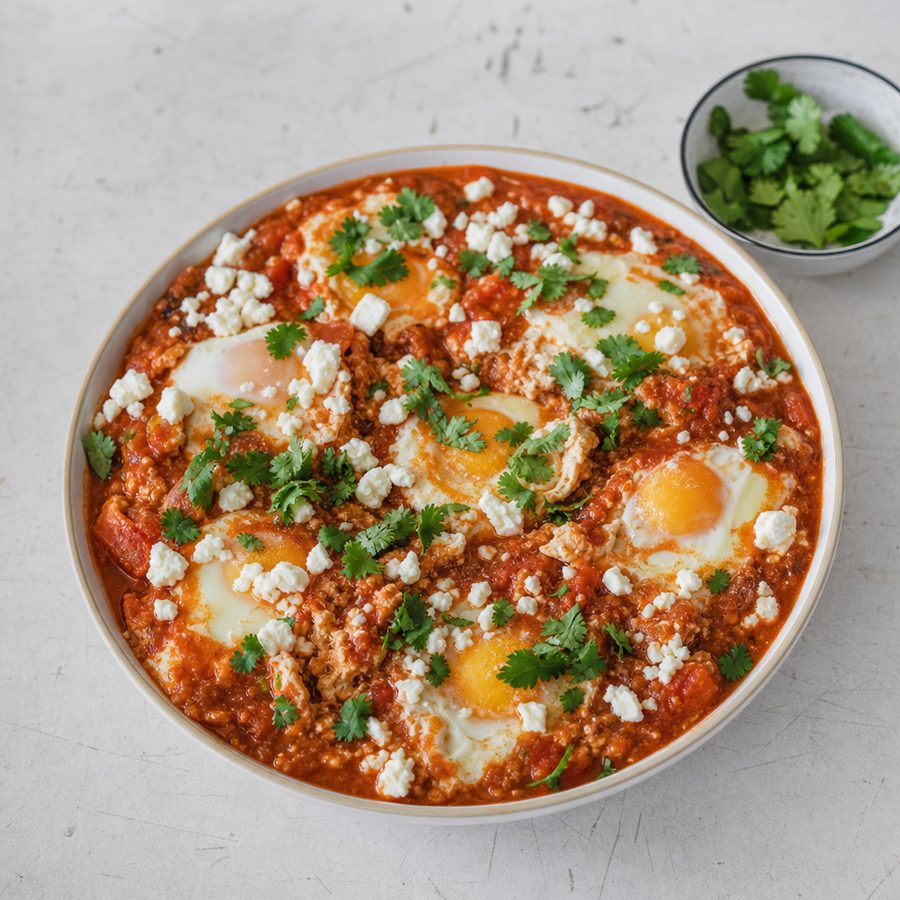
Eggs gently poached in a smoky, cumin-spiced tomato and red bell pepper sauce, finished with crumbled feta and fresh cilantro to scoop up straight from the pan.
Why You'll Love This Recipe
On the nights you want something warm and substantial, one pan does it without much fuss or cleanup. Eggs simmer directly in a spiced tomato and pepper sauce, so the whole meal comes together in a single skillet. It suits anyone cooking a meatless dinner that still eats like a real meal, and it is forgiving enough for a beginner while satisfying enough to serve to company.
The sauce is where it all lives. Sauteing the onion, bell peppers, and garlic first draws out their sweetness, and blooming the cumin and smoked paprika in the hot oil before the tomatoes go in wakes up the spices so they perfume the whole pan rather than tasting raw. Poaching the eggs gently under a lid lets the whites set in the tomato while the yolks stay soft, so each spoonful mixes rich yolk into the sauce. The feta is added off the heat so it stays in creamy, tangy crumbles instead of melting away.
The combination is filling and nourishing without feeling heavy. Eggs and feta bring protein that keeps you satisfied, while the tomatoes and peppers add fiber, color, and a bright, savory backbone. Olive oil rounds everything out and carries the spice flavor, and the fresh cilantro on top keeps each bite lively. It is the kind of dinner that feels cozy and indulgent yet leaves you fed.
Ingredients
- 8 large eggs
- 2 3/4 cups crushed tomatoes
- 1 cup crumbled feta
- 2 red bell peppers, diced
- 1 medium onion, diced
- 3 cloves garlic, minced
- 2 tsp ground cumin
- 2 tsp smoked paprika
- 1/4 cup chopped cilantro
- 3 1/2 tbsp olive oil
Instructions
- Prep the vegetables: Dice the onion and the red bell peppers into small, even pieces so they soften at the same rate. Mince the garlic. Roughly chop the cilantro and set it aside for finishing.
- Build the sauce base: Warm the olive oil in a wide, deep skillet over medium heat. Add the onion, bell peppers, and garlic and saute, stirring now and then, until the vegetables are soft and the onion is translucent, about 8 minutes.
- Bloom the spices and simmer: Stir in the ground cumin and smoked paprika and cook for about 30 seconds, until fragrant. Pour in the crushed tomatoes and stir well. Bring to a gentle simmer and let it cook, uncovered, for about 10 minutes, until slightly thickened and no longer watery. Leave the salt out, because the feta you crumble over the top seasons the whole pan.
- Nest the eggs: Use the back of a spoon to make eight shallow wells in the sauce, spacing them evenly. Crack one egg into each well so the yolks stay intact and the whites settle into the sauce.
- Poach the eggs: Cover the skillet and cook over medium-low heat for 8 to 10 minutes, until the whites are fully set and opaque but the yolks still jiggle and look runny when nudged. Check a little early, as eggs go from runny to firm quickly.
- Finish and serve: Turn off the heat. Sprinkle the crumbled feta and chopped cilantro over the top and serve straight from the pan, scooping up eggs and sauce together.
Variations
- Greens folded in: Stir a few big handfuls of baby spinach or chopped kale into the sauce and let it wilt before making the wells for the eggs. It adds color and extra vegetables without changing the character of the dish.
- Extra heat: Add a diced fresh chile or a pinch of red pepper flakes along with the garlic, or stir in a spoonful of harissa with the tomatoes for a smoky, spicy edge.
- Chickpea boost: Stir a drained, rinsed can of chickpeas into the simmering sauce for more heft and fiber, making the pan even more filling.
- Herb swap: Trade the cilantro for chopped fresh parsley, dill, or mint, or use a mix. Each gives the finished dish a different fresh note if cilantro is not to your taste.
- Creamy finish: Dot small spoonfuls of plain yogurt or a soft cheese over the top alongside the feta for a cooler, richer contrast to the spiced sauce. This adds dairy.
Storage & Leftovers
Shakshuka is best eaten fresh, since the yolks firm up on standing, but leftovers keep well. Store cooled portions in an airtight container in the refrigerator for up to 3 days. The sauce actually deepens in flavor overnight.
To reheat, warm a portion gently in a covered skillet or saucepan over low heat, or microwave in short bursts, until just heated through. Keep the heat low so the eggs do not turn rubbery, and expect the yolks to be fully set the second day.
To get ahead, make the tomato and pepper sauce completely, then cool and refrigerate it on its own. When you are ready to eat, bring the sauce back to a simmer, nest in the eggs, and poach them fresh, adding the feta and cilantro at the end.
Notes & Tips
- Use a wide, lidded pan: A wide skillet with a tight lid gives the eggs room to sit in their own wells and traps the steam that sets the whites evenly. A crowded pan makes the eggs run together.
- Judge doneness by the whites: The eggs are ready when the whites are fully opaque with no clear, jelly-like spots, but the yolks still wobble. Nudge the pan gently to check rather than poking each yolk.
- Pick a firm, briny feta: A block of feta packed in brine crumbles into creamier, tangier bits than the pre-crumbled kind, which tends to be drier. Crumble it yourself just before serving.
- Season the sauce before the eggs go in: Taste and adjust the salt once the sauce has simmered and thickened, since crushed tomatoes and feta vary in saltiness. It is much easier to balance before the eggs go in.
- Serve with something to scoop: Warm crusty bread, pita, or flatbread is ideal for mopping up the sauce and runny yolk, and it rounds the skillet into a full dinner.
- Cook eggs to order for a crowd: If you are not serving everyone at once, poach only as many eggs as you need and keep the rest of the sauce simmering, adding fresh eggs when the next plates go out so no one gets an overcooked yolk.
Nutrition & Mindful Eating
- The tomatoes, the peppers and the eggs build this in layers. The peppers and onion soften first, the tomatoes cook down around them into a thick sauce, and the eggs set into wells in the top so every serving gets both.
- Eggs cooked this way keep their yolks loose, and breaking one so it runs into the tomato is half the point. They also bring complete protein and choline into a pan that is otherwise all vegetable.
- Feta is salty and sharp enough that a small crumble seasons an entire skillet, and it softens rather than melts, leaving cool white pockets against the hot sauce. Calcium and a little protein come with it.
- Cumin and paprika go into the oil before the tomatoes so the heat opens them up, and that is where the warmth and the smoke you taste first come from. Cilantro scattered at the end is the green edge against it.
- Red bell peppers cook down sweet and slippery while the aromatics beneath them melt away into the sauce entirely. Between them they carry vitamin C and the kind of fiber your gut bacteria live on.
- As you eat, break a yolk into the sauce and watch it run, notice the cumin coming up with the steam, and leave the skillet in the middle of the table so the meal takes as long as it takes.
Frequently Asked Questions
How do I keep the yolks runny but the whites fully cooked?
Cook the eggs covered over medium-low heat and start checking at the 8 minute mark. The whites should look opaque with no clear spots while the yolks still jiggle. The residual heat keeps cooking them after you turn off the burner, so it is better to pull them a touch early.
Can I make this without a lid on the pan?
The lid is what steams the tops of the eggs so the whites set. Without one, the bottoms cook while the tops stay raw. If you have no lid, cover the skillet with a baking sheet or a piece of foil, or slide the pan into a hot oven until the whites set.
Why is my sauce watery around the eggs?
The tomato sauce needs to simmer and thicken before the eggs go in. If it still looks thin, let it reduce a few more minutes uncovered so it holds the shape of the wells. Adding eggs to a loose sauce leaves everything soupy.
Can I serve this for breakfast or brunch instead of dinner?
Yes. The method is identical no matter when you eat it. It reheats and scales nicely, so it works just as well for a weekend brunch with bread as it does for a weeknight meal.